
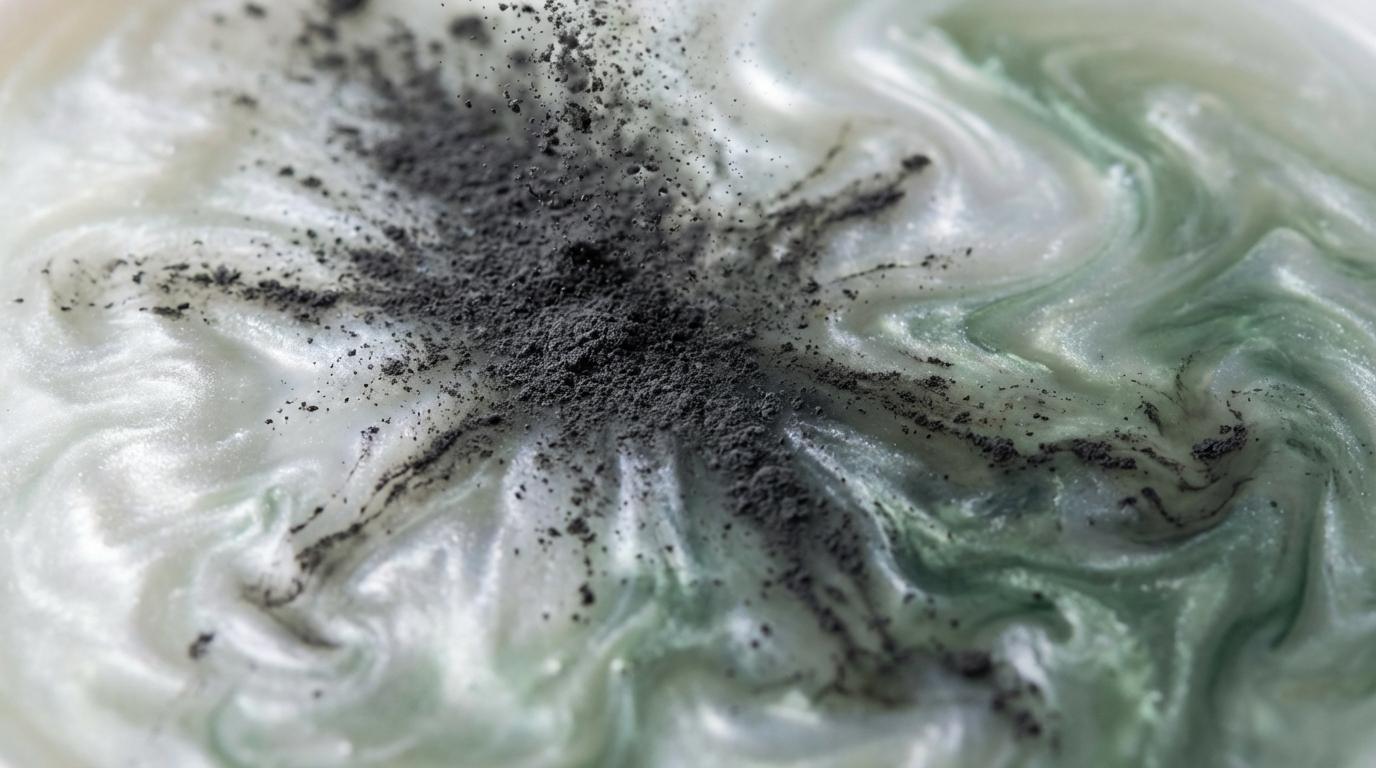
Charcoal won’t detox your skin. Before you come at me in the comments, hear me out. This ingredient has been marketed to death as some kind of deep-cleaning miracle worker that sucks toxins out of your pores like a tiny vacuum. But the science? It’s way more complicated than the black-mask Instagram posts would have you believe.
What Activated Charcoal Actually Is
Activated charcoal is regular charcoal that’s been treated with oxygen at high temperatures. This process creates millions of tiny pores in the charcoal, giving it an incredibly high surface area. We’re talking about one gram having a surface area equivalent to several tennis courts. Wild, right?
This porous structure is what makes activated charcoal useful in medicine. It’s been used for decades in emergency rooms to treat certain types of poisoning because it can bind to toxins in the stomach before they’re absorbed into the bloodstream. That part is legit and well-documented.
The skincare industry saw this and thought: if it can absorb toxins internally, surely it can absorb toxins externally? And thus, a million charcoal face masks were born.
The “Detox” Claim Is Mostly Marketing
Let’s get something straight. Your skin doesn’t need to be “detoxed.” That word gets thrown around so much in beauty that it’s basically meaningless at this point. Your liver and kidneys handle the actual detoxification process in your body. Your skin? It’s a barrier. It’s not storing a bunch of toxins waiting to be sucked out by a charcoal mask.
The American Academy of Dermatology doesn’t even recognize “detoxing” as a legitimate skincare concept. When brands tell you their charcoal product will “draw out impurities and toxins,” they’re using vague language that sounds scientific but doesn’t actually mean much.
What charcoal products might do is absorb some excess oil from the surface of your skin. That’s not nothing. But it’s also not the deep-pore purification that marketing materials promise.
How Charcoal Actually Works on Skin
The absorption properties of activated charcoal do have some relevance for topical use. When applied to skin, it can:
- Absorb excess sebum from the skin’s surface
- Potentially bind to some dirt and debris
- Create a mattifying effect for oily skin types
However, here’s what the marketing doesn’t tell you. The contact time matters enormously. In medical settings, activated charcoal works because it stays in the stomach long enough to bind to toxins. A face mask that sits on your skin for 10-15 minutes? The evidence for significant absorption is pretty thin.
A review of studies on PubMed shows limited clinical research on topical charcoal for skincare specifically. Most of the evidence is extrapolated from its internal medical uses, which isn’t exactly a one-to-one comparison.
Those Peel-Off Masks Are a Problem
Can we talk about the black peel-off charcoal masks for a second? You know the ones. They promise to rip out blackheads and went viral a few years back because of those satisfying-but-horrifying peel videos.
These masks are often too adhesive. They don’t discriminate between “impurities” and, you know, the healthy top layer of your skin. Ripping them off can damage your skin barrier, cause broken capillaries, and actually make your skin worse in the long run.
Those little dots you see on the mask strip after peeling? Hate to break it to you, but most of those aren’t blackheads. They’re sebaceous filaments, which are normal and will refill within a day or two. Your actual blackheads are oxidized plugs that typically require more targeted treatment to address, like retinol for cell turnover or proper exfoliation.
When Charcoal Might Make Sense
I’m not saying charcoal products are completely useless. There are some scenarios where they might work for you:
If you have very oily skin. A charcoal cleanser or mask used occasionally might help manage excess oil. The key word is occasionally. Using these products daily can strip your skin and trigger even more oil production as your skin tries to compensate.
If you’re dealing with body breakouts. Charcoal soaps and body washes might be more useful here than on your face. The skin on your body is thicker and can handle more aggressive ingredients. A charcoal body bar could help if you’re prone to back or chest acne.
If you genuinely enjoy the experience. Skincare has a psychological component too. If using a charcoal mask makes you feel like you’re doing something good for your skin and it doesn’t irritate you, that’s not worthless. Just don’t expect miracles.
What Actually Helps with Clogged Pores
If you’re reaching for charcoal because you want cleaner pores, there are ingredients with way more evidence behind them.
Salicylic acid is oil-soluble, meaning it can actually get into your pores and break up the gunk inside. This is what you want if you’re dealing with blackheads or congestion. Most charcoal products can’t penetrate the way BHAs can.
Niacinamide helps regulate oil production over time and can minimize the appearance of pores. It’s gentle enough for daily use and plays well with other ingredients.
Clay masks (like kaolin or bentonite) have similar oil-absorbing properties to charcoal but have been used in skincare much longer and have more established safety profiles. If oil control is your goal, a clay mask might actually serve you better.
For those dealing with skin that gets oily but also has dry patches, the answer usually isn’t more oil-absorbing products. It’s addressing the underlying dehydration issue that’s causing your skin to overcompensate.
The Ingredient List Game
Here’s something else to consider. In many charcoal skincare products, activated charcoal is pretty far down the ingredient list. That means there’s not that much of it in there. You’re often paying a premium for the “charcoal” marketing when the product might contain more fragrance than actual charcoal.
Always check where charcoal falls on the ingredient list. If it’s after fragrance or preservatives, you’re essentially paying for black-colored marketing. The first five ingredients are what make up most of any product.
What the Research Actually Shows
A 2019 literature review published in the National Library of Medicine looked at claims made about activated charcoal in cosmetic products. The conclusion? There’s limited clinical evidence to support most of the marketing claims. The studies that do exist are often small, not peer-reviewed, or funded by companies selling charcoal products.
This doesn’t mean charcoal is harmful or that it does nothing. It means we should be appropriately skeptical of grandiose claims and understand that “may help absorb some oil” is very different from “detoxifies your pores.”
The Sustainability Question
One thing that doesn’t get talked about enough is where charcoal comes from. Most activated charcoal is made from coconut shells, wood, or bamboo. The demand created by the charcoal-in-everything trend has environmental implications.
If you’re going to use charcoal products, look for ones that source sustainably. Some brands are more transparent about this than others. It’s worth asking the question since you’re not getting a massive skincare benefit anyway.
My Actual Recommendation
If you already have a charcoal product you like and it doesn’t irritate your skin, keep using it. No need to throw it away. Just don’t expect it to do more than provide some mild oil control and maybe make you feel like you’re treating yourself.
If you’re shopping for something to address clogged pores or oily skin, skip the charcoal aisle and head straight for products with salicylic acid, niacinamide, or tried-and-true clay masks. Your wallet will thank you and your skin will probably see better results.
The skincare industry loves a trendy ingredient. Charcoal had its moment. It’s not bad. It’s just been oversold. And in an industry that thrives on making us feel like our skin needs constant fixing and detoxing and purifying, sometimes the most radical thing you can do is see through the marketing and stick with what actually works.
Want to simplify your approach instead of chasing trends? Check out the two-week skin reset routine to strip things back to basics and figure out what your skin actually needs.