
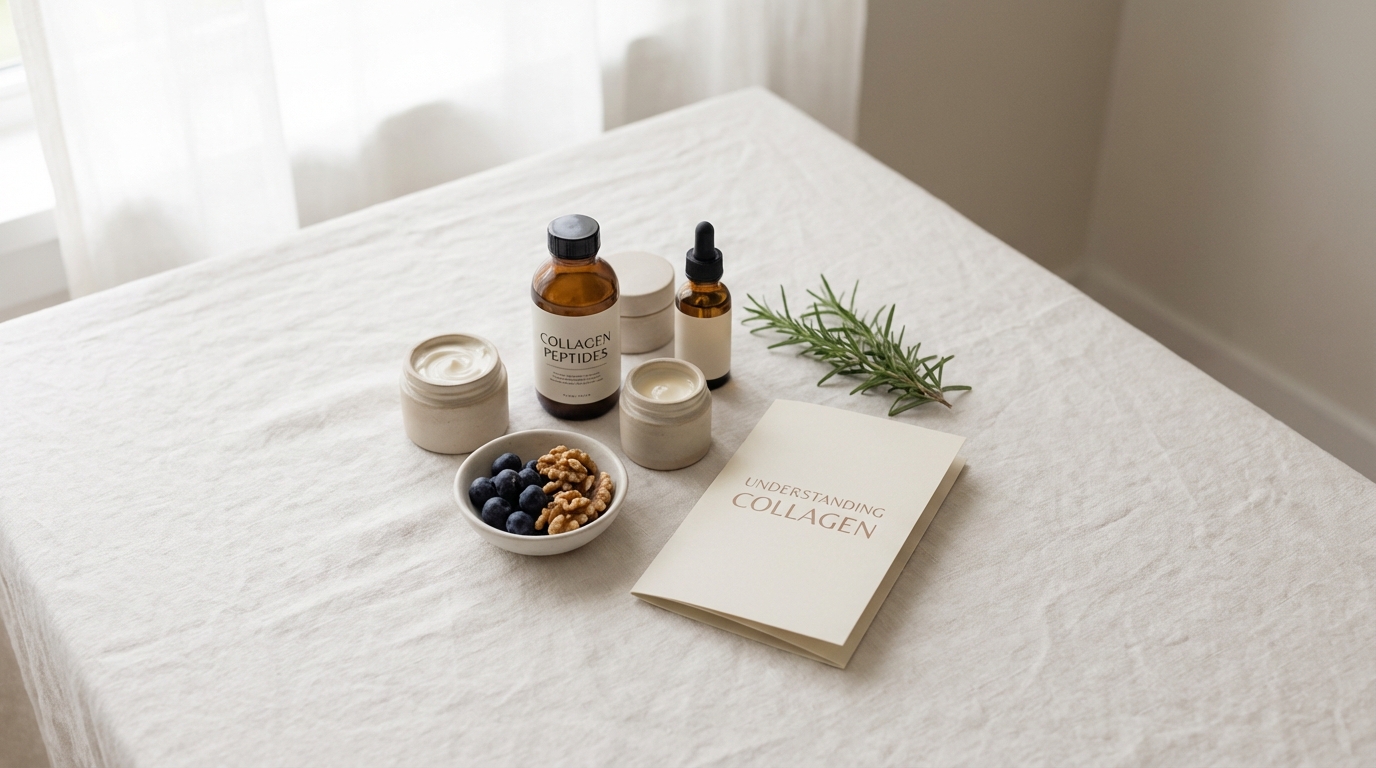
If you’ve spent any time in a skincare aisle or scrolled through beauty content online, you’ve probably noticed collagen is everywhere. It’s in serums, supplements, powders, and just about every product promising firmer, more youthful skin. But beneath all the marketing noise, collagen is actually something worth understanding, because it’s a fundamental part of how your skin works, not just a trend or a selling point.
When I first started learning about skin health, I was overwhelmed by all the claims and counter-claims about ingredients. Collagen seemed especially confusing because it was presented as both a miracle and a mystery. Over time, I’ve come to appreciate that the truth is quieter and more grounded than the hype suggests. So let’s talk about what collagen really is, why it matters, and how you can support your skin in a way that feels sustainable and genuine.
What Collagen Actually Is (And Why Your Skin Needs It)
Collagen is a protein, and it’s the most abundant protein in your entire body. Think of it as the structural scaffolding that holds everything together. In your skin specifically, collagen fibers create a supportive network in the dermis, the middle layer of skin beneath what you see in the mirror. This network gives skin its strength, resilience, and that plump quality we often associate with youthful complexions. According to research published in the International Journal of Molecular Sciences, collagen makes up roughly 75-80% of your skin’s dry weight, which gives you a sense of just how central it is to skin structure.
Your body produces collagen naturally through a process that involves amino acids, vitamin C, and other co-factors working together. The collagen in your skin is primarily Type I and Type III, and these fibers are constantly being broken down and rebuilt as part of your skin’s normal renewal cycle. When you’re young, this process hums along efficiently. Your skin stays firm and bounces back easily because the collagen network is dense and well-organized.
But collagen isn’t just about appearance. It also plays a role in wound healing, skin hydration, and maintaining the skin barrier. When collagen production is healthy, your skin has the structural integrity it needs to function well and protect you from environmental stressors.
Why Collagen Production Declines Over Time
Here’s the part nobody really wants to hear, but it’s important to understand: collagen production naturally slows down as we age. Starting in our mid-twenties, the body begins producing less collagen each year, roughly 1% less annually according to the American Academy of Dermatology. At the same time, the enzymes that break down collagen become more active. This shift means that over time, the collagen network becomes thinner and more fragmented.
The visible signs of this process are familiar: fine lines, loss of firmness, and skin that doesn’t quite have the same resilience it used to. But age isn’t the only factor at play. UV exposure is one of the biggest accelerators of collagen breakdown. Sunlight triggers enzymes called matrix metalloproteinases (MMPs) that actively degrade collagen fibers. Smoking, pollution, high sugar intake, and chronic stress also contribute to faster collagen loss.
I find it helpful to think of collagen as a renewable resource that needs protection and support rather than something you can simply replace from the outside. Understanding what breaks it down helps you make choices that preserve what you have, which is honestly more effective than trying to rebuild from scratch.
Topical Collagen vs. Supplements vs. Professional Treatments
This is where things get interesting, because not all collagen products work the same way, and some don’t work the way you might expect at all.
Topical collagen in creams and serums has a fundamental limitation: collagen molecules are too large to penetrate the skin barrier effectively. When you apply a collagen cream, the collagen sits on the surface and provides hydration and a temporary plumping effect, but it doesn’t integrate into your dermis or boost your natural collagen production. That’s not necessarily bad; hydration is valuable, and there’s nothing wrong with enjoying how a product feels and looks on your skin. Just know what you’re getting. Some brands now use hydrolyzed collagen or collagen peptides in topical formulas, which have smaller molecular sizes. While these may penetrate slightly better, Harvard Health notes that evidence for topical collagen boosting skin collagen is still limited.
Collagen supplements, usually in powder or capsule form, take a different approach. When you ingest collagen peptides, they’re broken down into amino acids and absorbed through your digestive system. Some studies suggest that these amino acids may signal your body to produce more collagen, and there is research showing modest improvements in skin hydration and elasticity with consistent supplementation over several weeks. However, results vary between individuals, and supplements are not regulated as strictly as medications, so quality and efficacy can differ widely between brands. If you choose to try them, look for hydrolyzed collagen peptides from reputable sources and give it at least 8 to 12 weeks before evaluating results.
Professional treatments like microneedling, laser therapy, and radiofrequency devices work by creating controlled micro-injuries or heat that stimulate your skin’s wound-healing response, which includes ramping up collagen production. These approaches can be effective, but they require multiple sessions, downtime, and a financial investment. They’re worth considering if you’re looking for more significant results, but they’re certainly not the only path forward.
What Actually Helps Your Skin Make More Collagen
If I could share just one insight from everything I’ve learned, it would be this: protecting and supporting your existing collagen is more impactful than most products that claim to add collagen. Here are the approaches that genuinely make a difference.
Sun protection is non-negotiable. Daily SPF, even when it’s cloudy, even when you’re indoors near windows, is the single most effective way to slow collagen breakdown. UV damage is cumulative and largely preventable. This one habit will do more for your skin over the next decade than almost anything else you could buy.
Vitamin C is a proven collagen supporter. Topical vitamin C (L-ascorbic acid) is a co-factor in collagen synthesis and also provides antioxidant protection against free radical damage. Look for stable formulations in the 10-20% range, and use it in the morning before sunscreen. The Skin Cancer Foundation highlights vitamin C’s role in both collagen production and photoprotection.
Retinoids stimulate collagen production. Whether you use prescription tretinoin or over-the-counter retinol, these vitamin A derivatives have decades of research supporting their ability to boost collagen synthesis and improve skin texture. Start slowly, be patient with the adjustment period, and always pair with sunscreen.
Nutrition matters. Your body needs amino acids (from protein), vitamin C, zinc, and copper to manufacture collagen. Eating a balanced diet with adequate protein, colorful vegetables, and minimizing excessive sugar (which can cause glycation, damaging collagen fibers) supports your skin from the inside. As Mayo Clinic notes, your diet provides the building blocks your body needs for collagen synthesis.
Sleep and stress management. Cortisol, the stress hormone, can inhibit collagen production and accelerate breakdown. Prioritizing rest and finding ways to manage stress aren’t just feel-good advice; they have real effects on your skin’s ability to repair and renew itself.
The truth about collagen is that it’s less about finding a magic product and more about consistent, gentle care over time. Your skin already knows how to make collagen; your job is to give it the conditions and resources it needs to keep doing that work. There’s something reassuring about that, I think. You don’t need to chase every new trend or feel anxious about what you might be missing. A simple routine built on protection, proven actives, and good nourishment will serve you well for years to come.