
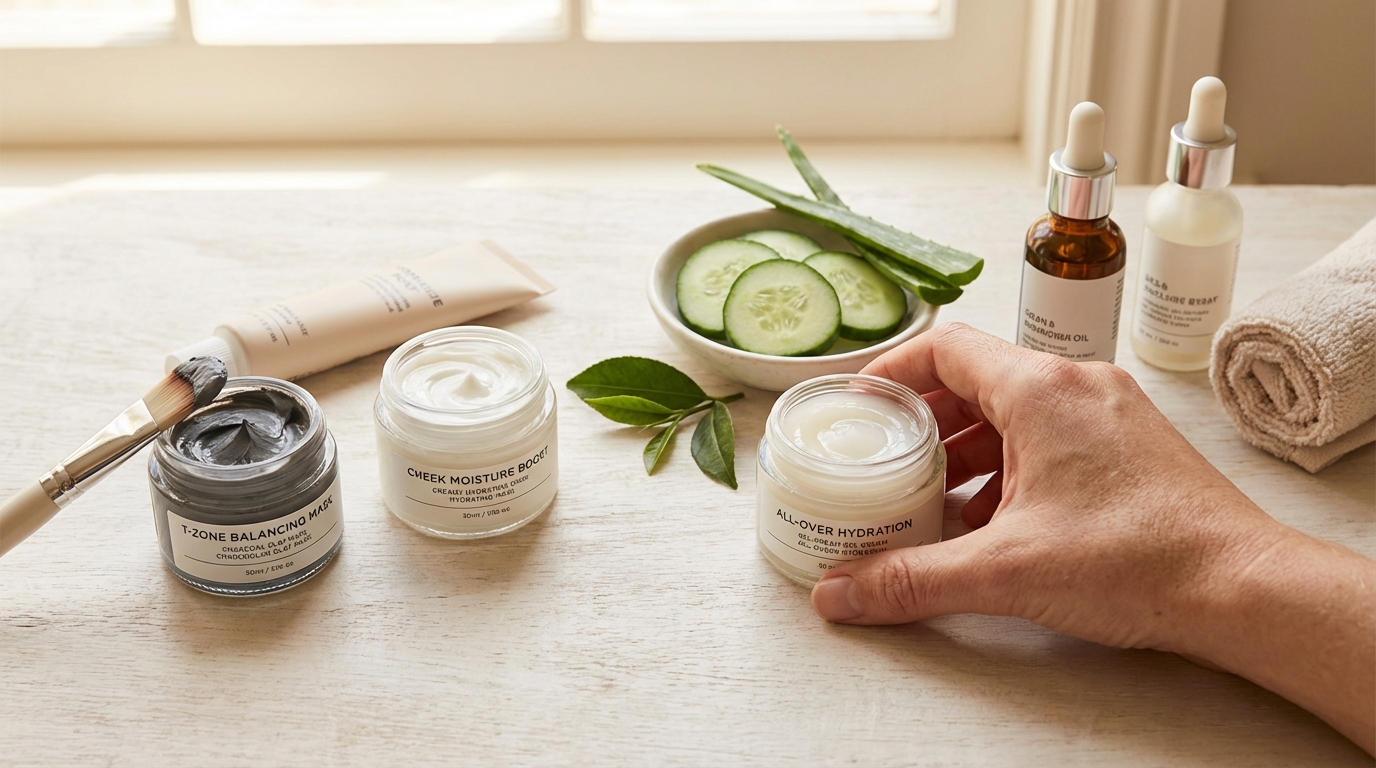
So your forehead could fry an egg by noon, but your cheeks are so dry they’re practically begging for mercy? Welcome to the combination skin club. It’s not exclusive (sorry), but at least you’re in good company. The whole “oily here, dry there” situation feels like your face can’t make up its mind, and honestly? It’s exhausting trying to figure out what products won’t make one zone worse while fixing the other.
The good news is that combination skin isn’t some unsolvable puzzle. It just requires a slightly different approach than slapping one product all over your face and hoping for the best. Once you understand what each zone actually needs (and stop treating your whole face like one uniform canvas), things get way easier. Promise.
Why Your Face Is Doing This to You
First, let’s talk about why combination skin happens in the first place. Your T-zone (forehead, nose, chin) has more sebaceous glands than your cheeks. That’s just biology being biology. These glands produce sebum, which is your skin’s natural oil. More glands equals more oil equals that shiny situation by lunchtime.
Your cheeks, on the other hand, have fewer of these glands. So while your T-zone is basically running a slip n’ slide operation, your cheeks are over there like “moisture? don’t know her.” Add in factors like weather changes, hormones, or using products that are too harsh, and the imbalance gets even more pronounced.
Here’s what a lot of people get wrong: they try to treat the oily parts so aggressively that they strip away all the natural oils. Your skin panics and produces MORE oil to compensate. Meanwhile, the dry areas get even drier from all that stripping. It’s a vicious cycle, and breaking it starts with treating different zones like the separate concerns they actually are.
The Multi-Masking Approach (It’s Not Extra, It’s Strategic)
Multi-masking sounds like something influencers made up to sell more products, but it’s actually a legitimately useful strategy for combination skin. The concept is simple: use different masks on different parts of your face at the same time.
For your oily zones, reach for a clay mask. Kaolin clay is gentle and absorbs excess oil without completely drying you out. Bentonite clay is more powerful if you’re dealing with serious shine. Apply it to your T-zone and let it work while your cheeks get something else entirely.
For those drier areas, you want something hydrating. Look for masks with hyaluronic acid, honey, or aloe. These ingredients draw moisture in and help your skin hold onto it. While your T-zone mask is pulling out the excess, your cheek mask is putting moisture back where it belongs.
Some multi-masking tips that actually matter:
- Don’t let clay masks dry completely (they’ll pull moisture from your skin instead of just oil)
- Start with your hydrating mask first since they usually need more time
- Once a week is plenty for most people
- Rinse the clay mask areas first with lukewarm water, then do the hydrating sections
Daily Routines That Don’t Pick Favorites
Your morning and evening routine needs to work for both zones without aggravating either. This is where a lot of combination skin folks struggle (myself included, for years). The trick is choosing products that balance rather than target extremes.
Cleansing: Go for a gel cleanser that’s gentle but effective. Foaming cleansers can be too stripping for dry areas, while cream cleansers might not cut through the oil in your T-zone. A gel formula usually hits that sweet spot. If you’re dealing with makeup or sunscreen, double cleansing works great. Use an oil cleanser first (yes, even on oily skin, it won’t make things worse), then follow with your gel cleanser.
Toning: Skip anything with alcohol at the top of the ingredient list. You want something that hydrates and balances. Ingredients like niacinamide are perfect here because they help regulate oil production while also strengthening the skin barrier everywhere.
Moisturizing: This is where you can get zone-specific if you want. A lightweight gel moisturizer on your T-zone and something richer on your cheeks works well. Or find one product that does both (gel-cream hybrids are great for this). The key is that both zones need moisture. Yes, even the oily parts. Skipping moisturizer on oily skin is how you end up with dehydrated oily skin, which is somehow worse.
SPF: Non-negotiable, obviously. Look for a mattifying sunscreen if the shine bothers you, or a hydrating one if your dry patches need more love. Our other routine guides go deeper on sunscreen options if you need more help here.
Products That Understand the Assignment
Finding products that work for combination skin means looking for specific ingredients and formulations. Here’s what to keep an eye out for:
Niacinamide: I mentioned this already but it deserves more attention. This vitamin B3 derivative does double duty by regulating sebum production in oily areas while improving hydration and barrier function everywhere. It’s in a ton of affordable products these days. CeraVe and The Ordinary both have accessible options.
Hyaluronic acid: Hydrates without adding oil. It pulls water into your skin, which oily zones need just as much as dry ones. Layer it under your moisturizer for best results.
Salicylic acid: Use this only where you need it (oily, congested areas). A low percentage (0.5-2%) can help keep pores clear without wreaking havoc on your dry zones. Don’t put it everywhere.
Squalane: An oil that doesn’t feel oily. It mimics your skin’s natural sebum, so it absorbs well and helps balance things out on both oily and dry areas. Weird but true.
What to avoid (or at least use carefully):
- Heavy occlusives like petroleum jelly on your T-zone
- High percentages of alcohol in leave-on products
- Super rich creams all over your face
- Harsh physical scrubs (they irritate dry patches and can stimulate more oil production)
When Seasons Change, Your Routine Should Too
Combination skin gets even more “combination” with weather shifts. Winter might make your cheeks painfully dry while your T-zone stays its oily self. Summer could have everything producing more oil, even those usually-dry areas.
Pay attention to what your skin is doing and adjust accordingly. Maybe you need a heavier moisturizer on your cheeks in winter. Maybe you need to blot more in summer. The foundation of your routine stays the same, but the specific products might shift. The American Academy of Dermatology has solid guidance on adapting routines seasonally if you want more detailed info.
The biggest thing? Stop treating combination skin like a problem to solve and start thinking of it as a skin type to work with. Once you accept that different parts of your face need different things (and that’s totally normal), the whole process becomes less frustrating. Your skin isn’t broken. It’s just complicated. And honestly? Same.