
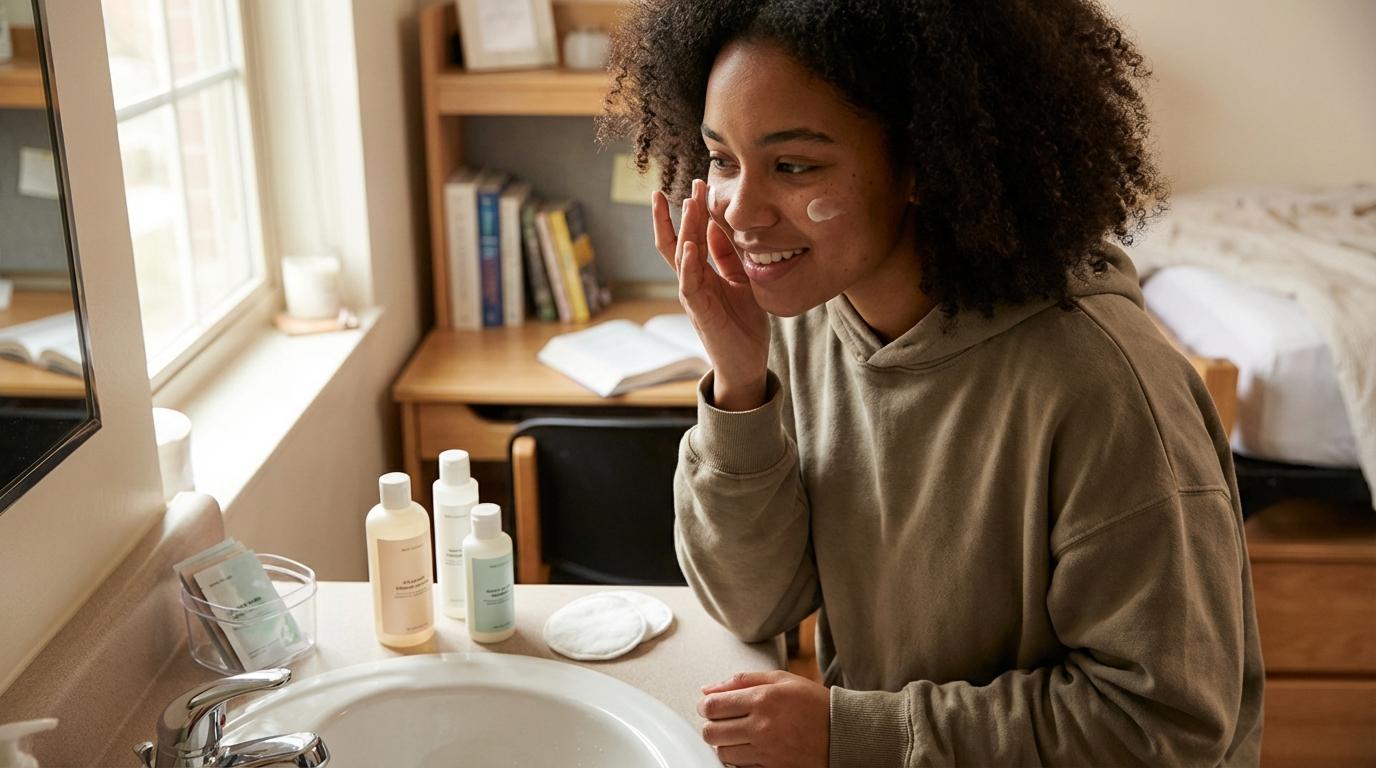
Look, I get it. You’re juggling tuition, textbooks, and trying to have some semblance of a social life. The last thing you want to hear is that you need a $200 skincare routine. Good news: you don’t. I’ve been surviving on instant noodles and still managing to keep my skin looking decent, and I’m going to show you exactly how to do the same.
The beauty industry wants you to believe you need 47 different products. That’s marketing, not skincare. The truth is, most dermatologists agree that a simple routine with the right products will outperform a complicated one with the wrong ones every single time.
The Only 3 Products You Actually Need
Here’s the brutal truth: you can build a complete skincare routine for under $25. I’m not talking about some watered-down, ineffective setup either. These are products that dermatologists actually recommend.
1. A Gentle Cleanser ($5-8)
The CeraVe Foaming Facial Cleanser or Cetaphil Daily Facial Cleanser are both available at basically every drugstore, Target, and Walmart. They remove dirt and oil without stripping your skin or leaving it feeling tight. One bottle lasts 2-3 months if you’re using it twice a day.
2. A Basic Moisturizer ($8-12)
CeraVe Moisturizing Cream is the move here. Yes, it comes in a tub that looks like something your grandma would use. No, it doesn’t have cute packaging or smell like roses. But it contains ceramides and hyaluronic acid, which are the same ingredients you’ll find in moisturizers that cost five times as much. The 16oz tub will last you an entire semester.
3. Sunscreen ($7-10)
I know, I know. Sunscreen feels like an extra step. But UV damage is cumulative, and the wrinkles you’re preventing now won’t show up until your 30s. Neutrogena Clear Face SPF 30 is oil-free and won’t cause breakouts, which is huge for acne-prone skin. If you only buy one “extra” product, make it this one. Want more options? I’ve tested and ranked the best drugstore sunscreens by performance and price.
Total cost: Around $20-30, and these products will last you 2-3 months each.
Dorm-Friendly Routine That Takes 5 Minutes
Between 8 AM classes and late-night study sessions, nobody has time for a 45-minute skincare ritual. Here’s a routine that works with your chaotic schedule.
Morning (2 minutes):
- Splash your face with water (you can skip cleansing in the morning if your skin isn’t oily)
- Apply moisturizer while your face is still slightly damp
- Layer sunscreen on top
Night (3 minutes):
- Cleanse your face (seriously, even if you’re exhausted, do this one thing)
- Apply moisturizer
- That’s it. Go to bed.
If you’re dealing with specific issues like acne, you can add a treatment product. The Ordinary’s Niacinamide 10% + Zinc 1% is about $6 and helps with breakouts and oil control. Apply it before your moisturizer at night.
One thing that makes dorm life easier: keep your products in a small caddy or toiletry bag. Shared bathrooms mean your stuff might walk away if you leave it out. Trust me on this one.
How to Make Products Last Longer
When money is tight, you need to stretch every dollar. Here are some tricks I’ve learned:
Use the right amount. Most people use way too much product. For cleanser, you need about a dime-sized amount. For moisturizer, a pea-sized amount for your whole face is plenty. Sunscreen is the exception: you need about two finger-lengths for proper protection.
Store products properly. Keep them away from direct sunlight and the steamy bathroom environment when possible. Heat and humidity break down active ingredients faster. Your desk or closet is a better storage spot than the shower caddy.
Buy larger sizes. The cost per ounce is almost always lower with bigger containers. That 16oz CeraVe tub costs about $16, while the 3oz version costs $12. Do the math.
Skip what you don’t need. Toner? Optional. Eye cream? Just use your regular moisturizer. Fancy essences and serums? Only if you have specific concerns and extra cash. A basic routine done consistently beats an elaborate routine done sporadically.
Double-check expiration dates. Expired products don’t work as well and can irritate your skin. Most skincare products are good for 6-12 months after opening. If you can’t remember when you opened something, it’s probably time to replace it.
Free Samples and Where to Find Them
This is where being a broke college student actually works in your favor. Companies want young customers, and they’re willing to give away free stuff to get you hooked.
Sephora and Ulta
Both let you pick free samples with any order. Sephora’s Beauty Insider program is free to join, and you get two samples per order plus birthday gifts. You don’t even have to buy anything expensive. Order a single $5 item and grab your samples.
Sample Websites
SampleSource sends out free sample boxes a few times a year. Sign up and fill out your profile to get matched with relevant products. FreeFlys aggregates free beauty samples from various brands and updates their list daily.
Product Testing Programs
BzzAgent and Influenster send free products in exchange for honest reviews. It takes some time to build up your profile and get selected for campaigns, but once you’re in, you can get full-sized products regularly. These aren’t just samples either, they’re legit products you’d normally pay for.
Brand Websites
Many brands offer free samples directly on their websites. CeraVe has been known to send out free product samples. Check brand Instagram pages too, as they often announce giveaways there.
Department Store Counters
This feels awkward but it works. Walk up to any skincare counter at Nordstrom, Macy’s, or even Sephora and ask for samples of products you’re interested in. Most sales associates will happily give you a few foil packets or even decant a small amount into a sample jar. You don’t have to buy anything.
Your School
Some universities have wellness programs that give away basic skincare and hygiene products. Check with your student health center or campus resource centers. It’s worth asking.
When to Spend More
I’ve been preaching budget products, but let’s be real: sometimes it makes sense to invest a bit more. If you have persistent acne that won’t budge with over-the-counter products, see a dermatologist. Most student health plans cover dermatology visits, and prescription treatments like tretinoin or adapalene actually work.
Also, if you have specific skin conditions like eczema or rosacea, your basic drugstore products might not cut it. Again, that’s what your student health insurance is for.
But for general skin maintenance? Drugstore products are absolutely fine. Dermatologists consistently recommend brands like CeraVe, Cetaphil, and The Ordinary because the formulations actually work.
The Bottom Line
Good skincare doesn’t require a trust fund. Three products, five minutes a day, and about $25 every couple of months. That’s it. Everything else is optional.
Focus on consistency over complexity. Washing your face before bed and using moisturizer regularly will do more for your skin than any expensive serum you use once and forget about. Start simple, be consistent, and add products only when you identify a specific problem that needs solving.
Your future self will appreciate that you took care of your skin while you were young. And your current self will appreciate having extra money for, you know, actual ramen.