
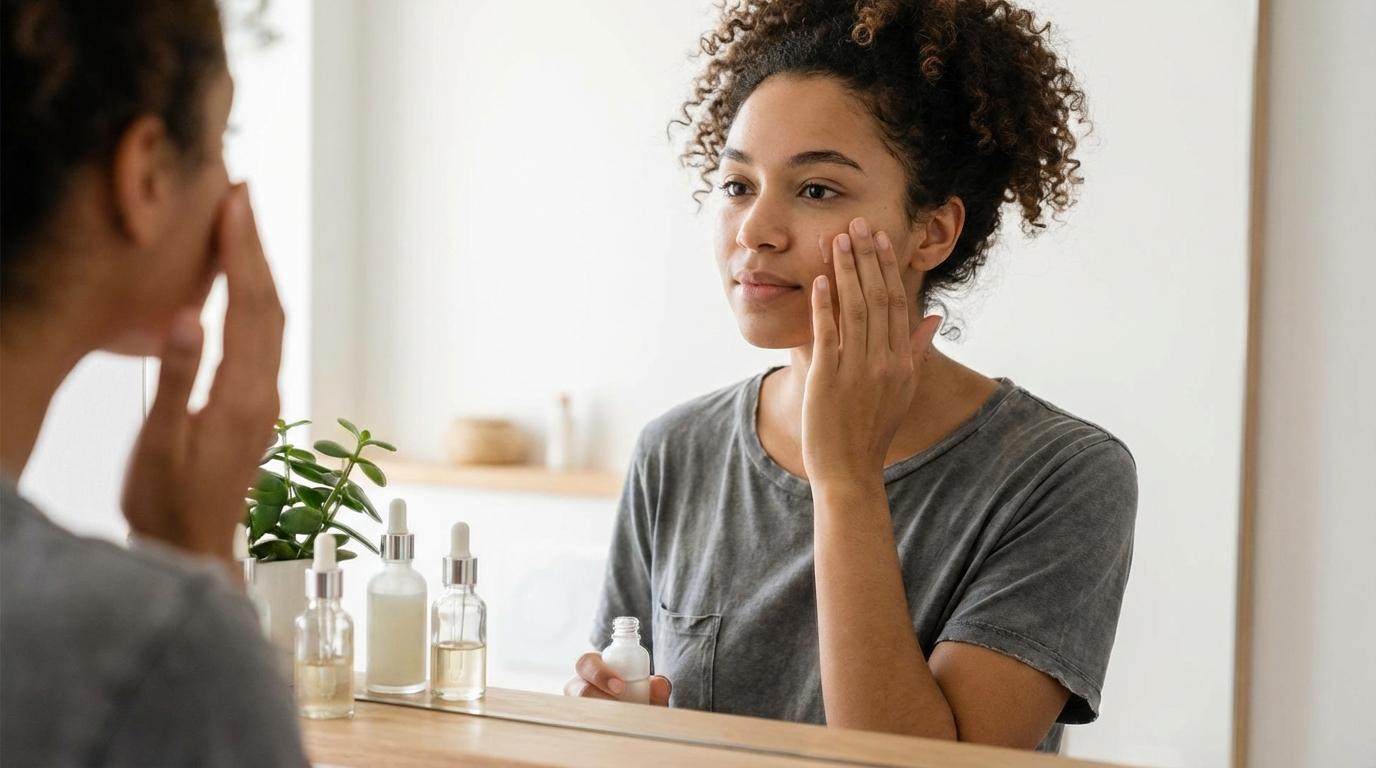
Niacinamide has been everywhere lately. Your favorite skincare influencer swears by it. The drugstore aisle is packed with serums featuring it. But when you’re dealing with breakouts, you need to know if an ingredient actually works or if it’s just another overhyped trend that’ll collect dust in your bathroom cabinet.
So here’s the real story on niacinamide and acne, backed by actual research and not just marketing hype.
What Even Is Niacinamide?
Niacinamide is a form of vitamin B3 (also called nicotinamide). Unlike some fancy-sounding ingredients that got discovered yesterday, this one has decades of research behind it. It’s water-soluble, which means it dissolves easily in formulations and penetrates skin without needing a bunch of extra ingredients to help it along.
What makes it interesting for acne-prone skin is that it works on multiple fronts simultaneously. We’re talking sebum control, inflammation reduction, and barrier support, all from one ingredient. That’s pretty rare in skincare, where most actives specialize in one thing.
The Sebum Situation: Why Your Skin Gets So Oily
Let’s talk about sebum first because this is where niacinamide really shines. Your sebaceous glands produce oil to keep your skin protected and moisturized. But when they go into overdrive, you end up with that greasy midday look and clogged pores that turn into breakouts.
A clinical study published in the International Journal of Dermatology found that 2% niacinamide applied topically reduced sebum production significantly over a four-week period. The participants weren’t just imagining things. They measured actual sebum output, and it dropped.
Here’s why this matters: when you produce less sebum, there’s less oil mixing with dead skin cells in your pores. That combo is what creates the perfect environment for acne-causing bacteria. Less of the raw materials means fewer breakouts.
But niacinamide doesn’t strip your skin dry like some harsh acne treatments. It regulates sebum production rather than eliminating it completely. Your skin still stays moisturized; it just stops being an oil slick by noon.
Inflammation: The Hidden Culprit Behind Red, Angry Pimples
If you’ve ever had a pimple that was painful, red, and swollen, you’ve met inflammation up close. Inflammation is your immune system’s response to bacteria and damage, but when it goes overboard, it makes acne way worse and increases the risk of scarring.
Niacinamide is a known anti-inflammatory. It suppresses the production of inflammatory cytokines and helps calm down overactive immune responses in the skin. In practical terms, this means your breakouts are less red, less painful, and less likely to leave marks.
This anti-inflammatory action is particularly helpful for people dealing with hormonal acne. Those deep, cystic bumps along your jawline are heavily driven by inflammation, and ingredients that target that process can make a noticeable difference.
Research from the Indian Dermatology Online Journal showed that niacinamide helps reduce redness and blotchiness in multiple skin conditions involving inflammation. It’s not a magic eraser, but it consistently takes the edge off.
What Concentration Actually Works?
This is where things get practical. You’ll find niacinamide products ranging from 2% all the way up to 20%. More isn’t necessarily better.
For acne concerns, most research shows benefits starting at 2% concentration. The sweet spot for most people is between 4% and 5%. This gives you the sebum-regulating and anti-inflammatory benefits without overwhelming your skin.
Higher concentrations like 10% can work, but they come with increased risk of irritation, especially if you’re already using other actives. Some people experience flushing, tingling, or even breakouts from high-percentage niacinamide products. If you’re new to the ingredient, start at 5% or below.
The good news is that niacinamide works cumulatively. You don’t need a high concentration to see results; you need consistent use over time. A 4% serum used daily for eight weeks will likely outperform a 10% serum that irritates you into abandoning it after two weeks.
Also worth noting: the vehicle matters. A well-formulated serum at 5% will often outperform a poorly formulated one at 10%. Look for products with a pH around 5-7 where niacinamide is most stable.
Playing Well With Others: Pairing Niacinamide With Other Actives
One of the best things about niacinamide is that it’s a team player. Unlike some acne-fighting ingredients that demand the spotlight and don’t mix well with others, niacinamide plays nice with most of your routine.
Niacinamide + Salicylic Acid: This is a solid pairing. Salicylic acid clears out your pores while niacinamide controls oil and calms inflammation. You can use them in the same routine, either in separate products or in combined formulations.
Niacinamide + Retinol: Another good match. Retinol can be irritating, especially when you’re starting out, and niacinamide actually helps buffer some of that irritation while maintaining skin barrier function. If you’re combining these ingredients, proper layering technique makes all the difference.
Niacinamide + Vitamin C: There’s an old myth floating around that you can’t combine these two. It came from a decades-old study done under conditions that don’t exist in modern skincare products (extremely high heat over long periods). In real-world use, they’re fine together. That said, if you want to be extra cautious, use vitamin C in the morning and niacinamide at night.
Niacinamide + Benzoyl Peroxide: This works well too. Benzoyl peroxide kills acne bacteria while niacinamide manages the aftermath (redness, oiliness). If benzoyl peroxide dries you out, niacinamide helps keep your barrier intact.
The only combination to approach carefully is niacinamide with AHAs at high concentrations. Both can be slightly sensitizing, so if you’re using a strong glycolic acid product, maybe don’t layer a niacinamide serum directly on top. Space them out or use on alternate nights.
Preventing Future Breakouts: The Long Game
Getting clear skin is one thing. Keeping it clear is another. Niacinamide supports long-term skin health in ways that help prevent the cycle of breakouts from starting again.
First, it strengthens your skin barrier. A compromised barrier is more prone to irritation, infection, and yes, breakouts. Niacinamide supports the production of ceramides, which are the lipids that hold your skin cells together. A stronger barrier means more resilient skin overall.
Second, it helps with post-acne marks. Those red or brown spots left behind after a pimple heals? Niacinamide can help fade them faster by interfering with melanin transfer to skin cells. So not only do you get fewer new breakouts, the evidence of old ones fades quicker.
Third, the consistent sebum regulation keeps your pores from getting reclogged. This is huge for people who clear up their skin only to have it break out again within weeks. Maintaining stable, moderate oil production prevents that boom-and-bust cycle.
A study in the Journal of the American Academy of Dermatology showed that niacinamide used consistently helped maintain improvements in skin clarity over extended periods. It’s not a quick fix ingredient; it’s a maintenance ingredient.
Real Expectations: What Niacinamide Can and Can’t Do
Let’s be honest about what you’re working with here. Niacinamide is a solid, well-researched ingredient with multiple benefits for acne-prone skin. But it’s not a stand-alone acne treatment for moderate to severe acne.
If you have mild acne with occasional breakouts and oily skin, niacinamide alone might be enough to keep things under control. It’s gentle enough for daily use and won’t disrupt your barrier the way some stronger treatments can.
If you have persistent, moderate acne, niacinamide works best as part of a comprehensive routine. Pair it with a proper cleanser, a targeted treatment like benzoyl peroxide or salicylic acid, and use it consistently. It supports everything else you’re doing rather than replacing it.
For severe or cystic acne, see a dermatologist. Niacinamide can be part of your routine, but you likely need prescription-strength treatments to get things under control first.
How to Actually Use It
If you’re ready to give niacinamide a shot, here’s a straightforward approach:
Morning routine: After cleansing, apply your niacinamide serum to damp skin. Follow with moisturizer and sunscreen. The sebum-controlling effects are helpful during the day when oil production peaks.
Evening routine: You can also use niacinamide at night, especially if you’re pairing it with retinol. Apply after cleansing, before heavier treatments or moisturizers.
Start with once daily application for the first week to make sure your skin tolerates it well. Most people have zero issues, but it’s always smart to introduce new products gradually.
Give it at least 8-12 weeks before judging results. Skincare ingredients that work on oil production and cell turnover take time to show their full effects. If you’re not seeing any improvement after three months of consistent use, it might not be the right ingredient for your specific skin concerns.
Is It Worth the Hype?
Here’s my take: niacinamide isn’t overhyped, but it might be misdescribed. It’s not a miracle cure that’ll transform your skin overnight. It’s a well-researched, genuinely useful ingredient that addresses several root causes of acne-prone skin.
For managing oil, reducing inflammation, and supporting long-term skin health, it delivers. The research backs it up. The price point is accessible (you can find effective niacinamide serums at every budget level). And it plays well with basically everything else in your routine.
Is it worth trying if you have acne-prone skin? Absolutely. Just go in with realistic expectations and a commitment to using it consistently. That’s how you’ll actually see what it can do.