
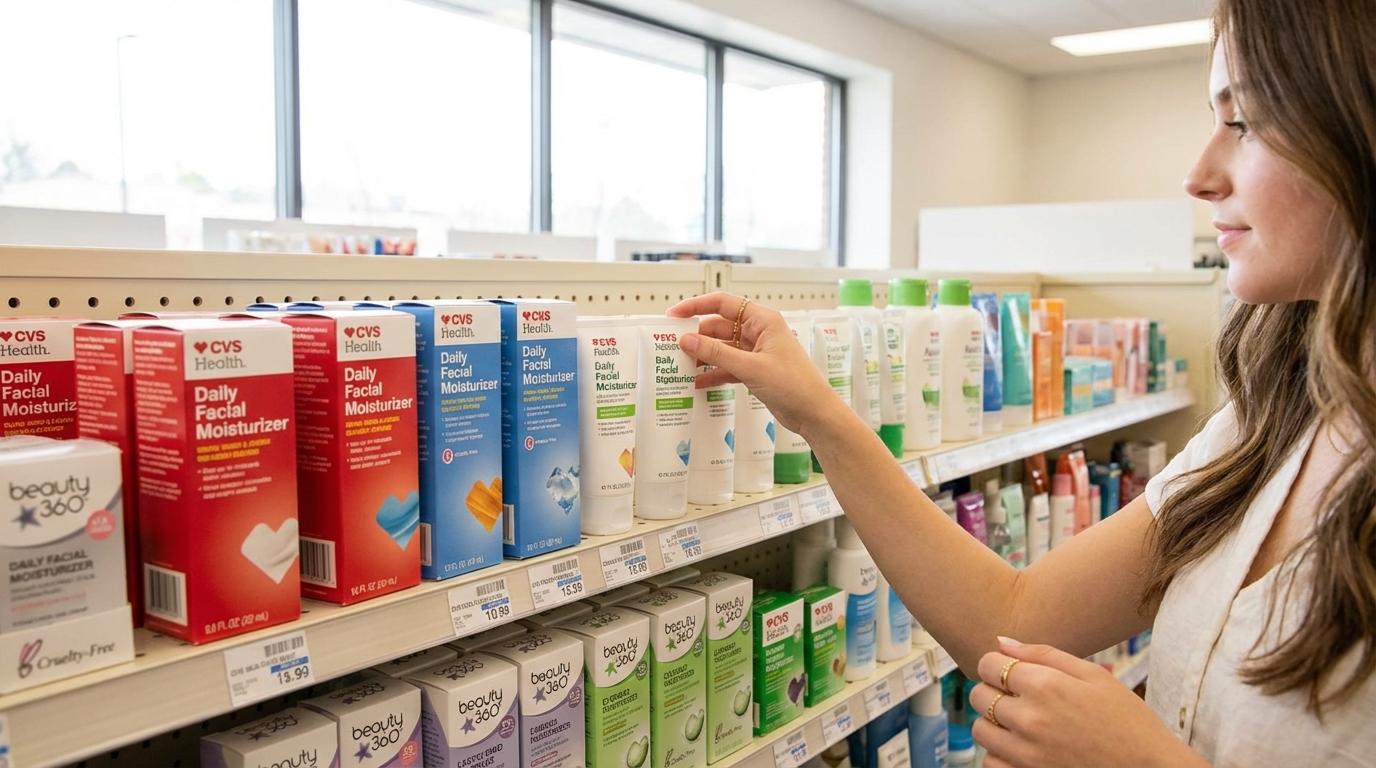
Walking into a CVS beauty aisle feels like entering a skincare maze where every product is screaming for your attention. I’ve spent countless hours wandering those fluorescent-lit aisles, calculator app open, trying to figure out which products are actually worth it. After years of trial, error, and way too many receipt surveys, I’ve cracked the code on how to shop CVS like a budget beauty pro.
The ExtraCare Rewards System is Your Best Friend
If you’re not signed up for CVS ExtraCare, you’re leaving money on the table. The program is free, and the savings stack up fast when you know how to work it. Here’s what most people miss about maximizing their rewards.
First, always check the app before you shop. CVS sends personalized coupons to your account every week, and some of these are genuinely wild deals. I’ve gotten 40% off CeraVe, $5 off $15 beauty purchases, and even free products just for checking in. The key is to send these coupons to your card before you’re in the checkout line panicking.
The quarterly ExtraBucks rewards are where the real magic happens. CVS tracks your spending in certain categories and gives you back money on the things you buy most. If you’re consistently buying skincare, they start rewarding you for it. I’ve gotten $10 back just from my moisturizer purchases over a quarter.
Here’s a pro tip that changed my CVS game: look for products with ExtraBucks attached. These are items where you get money back after purchase. Buy a CeraVe cleanser for $15, get $4 ExtraBucks back, and suddenly that cleanser only cost you $11. Stack a coupon on top of that? Even cheaper. The trick is treating ExtraBucks as real money and using them before they expire.
CVS Store Brand Products That Actually Deliver
The CVS Health and Beauty 360 lines get overlooked, but some of these products are nearly identical to name brands at a fraction of the price. I’ve compared ingredients lists side by side, and the similarities are sometimes shocking.
The CVS Health Gentle Skin Cleanser is basically a CeraVe cleanser dupe. Same ceramides, same gentle surfactants, same results. The texture is slightly different, but for someone on a tight budget, we’re talking about saving $4-5 per bottle for essentially the same product.
Beauty 360 cotton pads and rounds are another steal. They’re soft, don’t shed fibers everywhere, and cost significantly less than brand-name options. Since you’re using these every single day for toner application or makeup removal, those savings add up to real money over time.
One area where I’d stick with name brands? Active treatments like retinol and vitamin C serums. The formulation matters too much with these ingredients, and the store brand versions sometimes don’t have the same stability or concentration. Save your store brand purchases for basics and splurge strategically on actives.
Best Drugstore Finds Hiding in Plain Sight
CVS carries some genuinely excellent brands that don’t get the attention they deserve. Beyond the obvious choices like CeraVe and Cetaphil, there are hidden gems worth seeking out.
La Roche-Posay has expanded its CVS presence significantly, and their products are dermatologist favorites for a reason. The Toleriane line is perfect for sensitive skin, and the Lipikar Balm is an affordable body moisturizer that works for face too. Watch for sales because this brand goes on promo pretty regularly.
Neutrogena Hydro Boost is another CVS staple that lives up to the hype. The hyaluronic acid gel cream provides lightweight hydration without feeling heavy or breaking you out. It’s not the cheapest option, but the price per use makes it reasonable when you consider how long a jar lasts.
Don’t sleep on Aveeno either. Their oat-based formulas are gentle enough for eczema-prone skin and affordable enough for daily use. The Calm + Restore line specifically targets sensitive skin without irritating active ingredients.
If you’re building out your routine on a budget, check out our guide on putting together a complete routine for under $30. It’s totally doable with strategic CVS shopping.
The Price Per Use Calculation That Changes Everything
This is where most budget shoppers go wrong. We look at the sticker price and grab the cheapest option without thinking about how long the product will last. A $12 cleanser that lasts two months is actually cheaper than an $8 cleanser you burn through in three weeks.
Let me break down how I calculate price per use. Take the total cost, divide by how many uses you’ll get from the product. A typical face wash bottle gives you about 60 uses (twice daily for a month). That $12 CeraVe cleanser? About $0.20 per use. That $8 smaller bottle of something else that lasts half as long? $0.27 per use.
This math matters even more with products you use sparingly. A good vitamin C serum might cost $25, but if you’re using 3-4 drops daily and the bottle lasts six months, that’s around $0.14 per use. Suddenly that “expensive” serum is one of the cheapest parts of your routine.
For actives and treatments, The Ordinary remains unbeatable on price per use. CVS carries a limited selection now, and if you want to know which ones are worth it, here’s a breakdown of The Ordinary products that actually deliver.
Timing Your CVS Purchases Strategically
CVS runs on a predictable sale cycle once you start paying attention. Major skincare brands go on sale roughly every 4-6 weeks, and the discounts are often significant. Learning this rhythm saves serious money.
The CVS weekly ad drops every Sunday. Check it before you head to the store because beauty deals rotate constantly. One week CeraVe is buy one get one 50% off, the next week it’s Neutrogena with ExtraBucks attached. Patience pays off when you can wait for your favorites to go on sale.
Holiday weekends bring the best promotions. Memorial Day, Labor Day, and Black Friday weekend all feature stacked deals where you can combine coupons, ExtraBucks, and sale prices. I’ve gotten full-size products for pennies during these events by playing the coupon game right.
The clearance endcaps are worth checking every visit. Products get marked down for various reasons, including package redesigns, discontinued shades, or overstock. I’ve found perfectly good moisturizers and cleansers for 75% off just because the brand updated their packaging.
What to Skip at CVS
Not everything at CVS is a good deal, and being honest about this saves you from wasting money. Some products are consistently overpriced compared to other retailers.
Sheet masks are rarely a good CVS purchase unless they’re on clearance. The markup on single-use masks is wild, and you can find the same brands cheaper at Target, Ulta, or online. Save your CVS beauty budget for products that are actually competitively priced.
Prestige-adjacent brands like some of the Olay collections are often cheaper at other stores. Always price check online before buying anything over $20. CVS knows people grab skincare during convenience trips, so they don’t always compete on price for premium items.
Sunscreen is another category where Costco, Target, or even Amazon often beat CVS prices. Unless there’s a stellar sale or you need sunscreen urgently, shop around for your SPF.
Building Your CVS Shopping Strategy
The best CVS shoppers go in with a plan. Keep a running list of products you need and their typical prices. When something goes on sale below your target price, stock up. When it’s full price, wait it out or find an alternative.
Here’s my actual shopping routine: Sunday morning, check the new weekly ad. Monday, open the app and send any relevant coupons to my card. Throughout the week, check for personalized deals that pop up. When something I need aligns with a good coupon or ExtraBucks deal, that’s when I buy.
Don’t underestimate the power of stacking. In a single transaction, you can combine a manufacturer coupon, a CVS coupon from the app, a percentage-off beauty coupon, and get ExtraBucks back. I’ve walked out with $50 worth of products for under $20 using this method.
The receipt coupon machine is also worth paying attention to. Those long receipts with coupons at the bottom often include deals specific to products you buy or related items. I keep mine in my wallet until the next trip.
Making It Work Long Term
Saving money at CVS isn’t about one perfect shopping trip. It’s about building habits that compound over time. Small savings on every cleanser, every moisturizer, every sunscreen purchase add up to serious money by the end of the year.
Start simple: download the app, sign up for ExtraCare, and pay attention to one product you use regularly. Learn its typical price and sale patterns. Once you’ve mastered that, expand to other products. Before long, you’ll have an intuitive sense of what’s a deal and what’s overpriced.
Your skin doesn’t care whether your cleanser came with a fancy marketing campaign or a coupon. Good ingredients are good ingredients, and CVS has plenty of them at prices that won’t wreck your budget. The key is shopping smart, staying patient, and never paying full price for something that goes on sale every month.