
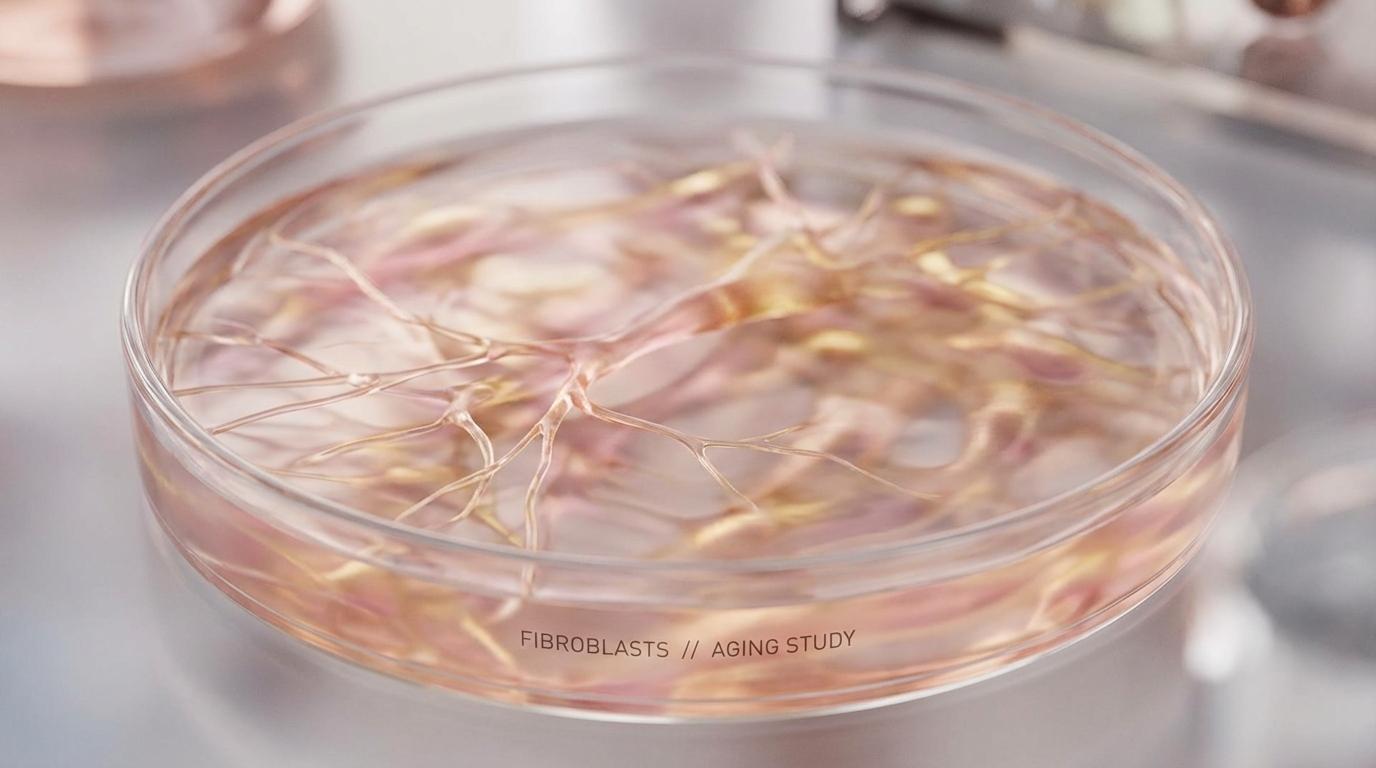
90% of the visible signs of aging happen in the dermis, the middle layer of your skin where collagen and elastin live. And the cells responsible for making those structural proteins? Dermal fibroblasts. Understanding what happens to these cells as we age completely changed how I approach skincare, and I think it might shift your perspective too.
What Are Dermal Fibroblasts?
Fibroblasts are the construction workers of your skin. They’re the cells that produce collagen (the protein that gives skin its firmness), elastin (what makes skin bounce back), and hyaluronic acid (which keeps skin hydrated and plump). They also help repair wounds and maintain the structural integrity of your dermis.
When you’re young, these cells are active, abundant, and efficient. They’re constantly producing new matrix proteins and breaking down old ones in a balanced cycle. But like most things in our bodies, fibroblasts change with age.
Fibroblast Senescence: When Cells Retire
Cellular senescence is basically when cells stop dividing but don’t die. They enter this zombie-like state where they’re still present in your tissue but no longer doing their job properly. For fibroblasts, this is a significant problem.
Senescent fibroblasts don’t just become lazy. They actively cause problems by secreting inflammatory molecules called SASP (senescence-associated secretory phenotype). These molecules can damage surrounding healthy cells and accelerate aging in nearby tissue.
Research has shown that the number of senescent fibroblasts in skin increases significantly with age. By the time you’re in your 60s, you have substantially more of these non-functional cells compared to your 20s. They take up space, create inflammation, and don’t produce the collagen your skin needs.
Check out peptide signaling.
Reduced Collagen Production: The Numbers
Here’s where it gets real. After age 20, your skin produces approximately 1% less collagen each year. By 40, you’ve lost a noticeable amount of your skin’s collagen network. Post-menopause, the decline accelerates even more dramatically due to estrogen loss.
But it’s not just about making less collagen. Aging fibroblasts also produce collagen that’s structurally different. The collagen fibers tend to be more disorganized and fragmented. This contributes to the loss of that firm, smooth texture younger skin has.
The enzyme that breaks down collagen (MMP-1 or collagenase) also becomes more active with age and sun exposure. You end up with a double problem: making less collagen while breaking down more. Not exactly a winning combination.
I covered EGF here.
What Damages Fibroblasts?
Understanding what ages fibroblasts faster can help you make better choices for your skin:
- UV radiation: This is the big one. Sun exposure directly damages fibroblast DNA and accelerates senescence. It also increases collagen-degrading enzymes. Every sunburn you’ve ever had impacted your fibroblasts.
- Oxidative stress: Free radicals from pollution, smoking, and even normal metabolism damage cellular components over time. Fibroblasts are particularly vulnerable.
- Chronic inflammation: Persistent low-grade inflammation (from diet, stress, or skin conditions) can push fibroblasts toward senescence faster.
- Glycation: High blood sugar causes proteins to become “sticky,” forming AGEs (advanced glycation end products) that stiffen collagen and impair fibroblast function.
Stimulating Aging Fibroblasts: What Actually Works
The good news is that older fibroblasts aren’t completely beyond help. Research shows they can be “woken up” to some degree with the right signals.
Retinoids (Vitamin A derivatives) remain the gold standard. Prescription tretinoin has decades of research showing it can increase collagen production by stimulating fibroblast activity. It works by binding to receptors on fibroblasts and essentially telling them to get back to work. Even over-the-counter retinol, though weaker, can have similar effects over time. Understanding how to read ingredient lists helps you identify effective retinoid products.
Vitamin C (L-ascorbic acid) does double duty. It’s a necessary cofactor for collagen synthesis (fibroblasts literally can’t make proper collagen without it) and it’s also an antioxidant that protects fibroblasts from damage. Studies have shown topical vitamin C can increase collagen production in aging skin.
Peptides are signaling molecules that can communicate with fibroblasts. Certain peptides like Matrixyl (palmitoyl pentapeptide-4) have been shown in studies to boost collagen synthesis, though the effects are generally milder than retinoids.
Growth factors in skincare (EGF, TGF-beta) aim to mimic the natural signals that stimulate fibroblast activity. The research is still mixed on topical application effectiveness, but the mechanism is sound.
Protective Measures: Prevention Over Repair
Preventing fibroblast damage is way more effective than trying to reverse it later. I wish someone had hammered this into my head at 18.
Sunscreen daily: Non-negotiable. UV protection is the single most impactful thing you can do for your fibroblasts. SPF 30 minimum, reapplied throughout the day. Every day. Even when it’s cloudy.
Antioxidants: Topical antioxidants like vitamin C, vitamin E, and green tea extract help neutralize free radicals before they can damage fibroblast DNA. Using them under sunscreen gives you extra protection layers.
Avoid smoking: Cigarette smoke is incredibly damaging to fibroblasts. Studies show smokers have significantly more collagen breakdown and faster skin aging than non-smokers. It’s one of the few completely controllable factors.
Blood sugar management: Keeping blood sugar stable reduces glycation, which helps preserve collagen integrity and fibroblast function. This doesn’t mean cutting all sugar, just being mindful about extreme spikes.
Sleep: Your body does significant repair work during sleep, including skin repair. Chronic sleep deprivation has been linked to accelerated skin aging and impaired wound healing, both of which involve fibroblast function.
Future Treatment Directions
Research into fibroblast-targeted aging treatments is genuinely exciting. Here’s what’s being explored:
Senolytics: These are drugs designed to selectively destroy senescent cells, including tired old fibroblasts. The idea is that removing these zombie cells could allow healthier cells to function better. Some research has shown promising results in animal models, though human applications for skin are still in early stages. Publications like Allure have covered emerging senolytic skincare ingredients.
NAD+ precursors: Compounds like NMN (nicotinamide mononucleotide) and NR (nicotinamide riboside) are being researched for their potential to boost cellular energy and function, including in skin cells. Some early studies suggest they may help aging fibroblasts perform better.
Exosomes and growth factors: These are becoming popular in high-end skincare. The theory is that exosomes from young or healthy cells could deliver signals that help aging fibroblasts function more youthfully. Research is ongoing.
Fibroblast transplants: Some medical spas offer procedures involving injecting your own fibroblasts (grown from a small skin sample) back into your skin. The FDA has approved at least one such treatment for nasolabial folds. Results vary.
Red light therapy: LED treatments at specific wavelengths (particularly 630-660nm) have been shown in some studies to stimulate fibroblast activity and collagen production. The research is promising, though optimal protocols are still being determined.
Realistic Expectations
I want to be straight with you: we can support fibroblast function and slow decline, but we can’t completely stop or reverse aging. Anyone telling you otherwise is selling something that doesn’t exist yet.
What good skincare and lifestyle habits CAN do:
- Slow the rate of collagen loss
- Protect remaining fibroblasts from damage
- Mildly stimulate collagen production
- Reduce inflammation that accelerates aging
- Maintain skin barrier function
What they CAN’T do (currently):
- Restore collagen to youthful levels
- Reverse fibroblast senescence
- Give you 20-year-old skin at 50
A Practical Approach
Based on all this fibroblast knowledge, here’s what actually makes sense:
In your 20s: Focus on prevention. Sunscreen, antioxidants, and basic healthy habits. Your fibroblasts are still in good shape. Keep them that way.
In your 30s: Add a retinoid. Start stimulating collagen production before the decline becomes significant. This is when prevention starts becoming maintenance.
In your 40s and beyond: Full protection mode plus active stimulation. Consistent retinoid use, antioxidants, peptides, and possibly professional treatments if desired. Supporting what you have while encouraging what production is still possible.
At every age, the basics matter most: sun protection, not smoking, adequate sleep, and consistent use of proven active ingredients.
The Bigger Picture
Learning about fibroblasts helped me see aging as a biological process rather than a failure. These cells have been working for you your entire life. They’ve healed every cut, maintained your skin through seasons and stress, and they’re still doing their best with the resources available.
Taking care of your skin isn’t about fighting your biology. It’s about supporting it. Giving your fibroblasts the protection and signals they need to keep doing their job as long as possible.
Your skin will change. That’s not optional. But how it changes, how much it changes, and how you feel about it? That’s where you have real influence.