
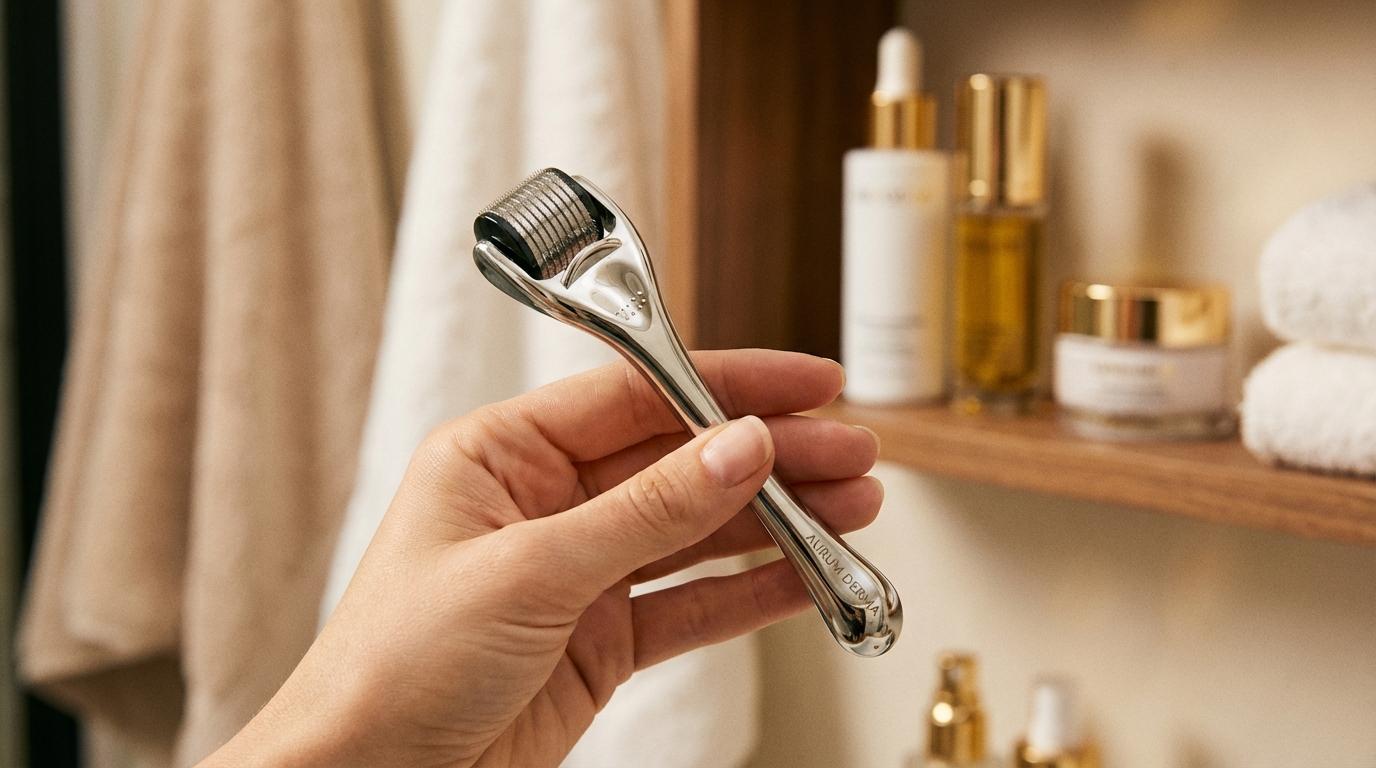
Put down that dermaroller you bought on Amazon. I know the before-and-after photos look convincing, and the price tag seems reasonable compared to professional treatments. But rolling hundreds of tiny needles across your face at home carries risks that most DIY tutorials conveniently skip over. Let me break down why at-home dermarolling for acne scars is rarely worth it.
The Infection Risk Is Real
You’re creating micro-wounds across your entire face. Every puncture opens a pathway for bacteria to enter your skin. Unless you’re sterilizing your roller in an autoclave (you’re not), those needles aren’t truly sterile after the first use. Dunking them in rubbing alcohol doesn’t cut it. Professional microneedling happens in controlled environments with single-use, medical-grade needles for a reason.
I’ve seen infections from at-home dermarolling. They’re not pretty. We’re talking redness, swelling, pustules, and in some cases, scarring worse than what existed before. The irony of creating new scars while trying to treat old ones should be enough to give anyone pause.
Technique Matters More Than You Think
Professionals train to use consistent pressure and controlled patterns across the face. They know which areas require gentler treatment and which can handle more aggressive passes. They adjust needle depth based on skin thickness, scar type, and treatment goals. At home, you’re guessing. Pressing too hard in one area and too soft in another produces uneven results at best and permanent damage at worst.
Those consumer-grade rollers typically use shorter needles than professional devices. The logic seems sound: shorter needles, lower risk. But shorter needles also mean less collagen remodeling, which is the entire point of the treatment for scars. You end up with all the irritation and none of the meaningful structural improvement. If you understand the difference between temporary texture and true scarring, you know that real scars require reaching the dermal layer, something shallow at-home needles can’t reliably do.
Professional Treatments Actually Work
Dermatologists and licensed aestheticians use devices with adjustable needle depths, often reaching 1.5 to 2.5 millimeters for scar treatment. They can target specific scar types with appropriate depths. Studies on professional microneedling show significant improvement in acne scarring when performed correctly. At-home devices with fixed 0.25 to 0.5 millimeter needles simply can’t replicate these results.
Yes, professional treatments cost more upfront. But consider the math: if you need three to six professional sessions at $200-400 each, you’re looking at $600-2400 total. That sounds steep until you factor in the cost of fixing a botched at-home treatment, both financially and in additional scarring. Sometimes the cheaper option ends up being far more expensive.
What Actually Happens During Professional Microneedling
The provider cleanses your skin thoroughly and applies a topical numbing cream. They use a pen-style device (not a roller) that stamps the needles vertically into your skin at controlled depths. This vertical motion is key: it creates clean channels rather than the tearing motion that roller-style devices can produce. After treatment, they apply targeted serums that penetrate more effectively through the micro-channels.
Recovery takes a few days of redness and sensitivity. You avoid active ingredients and sun exposure during healing. Then your skin starts doing its job, laying down new collagen to repair the controlled injury. Over the following weeks and months, scar tissue gradually remodels. Results build with each session.
The Alternatives Worth Considering
If professional microneedling isn’t in your budget right now, other options exist. Chemical peels, both professional and carefully selected at-home versions, can improve superficial scarring and overall skin texture. Retinoids prescribed by a dermatologist promote collagen production and cell turnover over time. Even consistent use of vitamin C and niacinamide supports skin health while you save for more intensive treatments.
Accepting that some concerns require professional intervention isn’t failure. It’s recognizing that certain skin conditions exist beyond what at-home care can address. Spending money on ineffective (and potentially harmful) DIY treatments delays actual progress toward your goals.
When At-Home Rolling Might Be Okay
I’m not saying all at-home microneedling devices are useless. For enhancing product absorption and potentially improving very mild surface texture, the shortest needle lengths (0.25mm) carry minimal risk when used properly on unbroken skin. This won’t help with acne scars. It might help your serum absorb slightly better. Whether that’s worth the hassle is debatable.
If you insist on trying at-home devices, follow these minimums: use a new roller head frequently, never roll over active acne or broken skin, sanitize obsessively, go gently, and stop immediately if you see signs of infection. Better yet, save that money toward professional treatment that will actually address your scars.
Real Talk
Marketing for at-home beauty devices is extremely persuasive. They show dramatic results and use phrases like “professional results at home.” The reality rarely matches the advertising. For something like acne scarring, where we’re talking about permanent structural changes to collagen, the gap between DIY and professional outcomes is vast.
Your face isn’t the place to gamble on saving money. If scars bother you enough to take action, take action that works. Consult with a dermatologist about your specific scar types and appropriate treatment options. Get real information about what professional treatment involves and costs. Then make an informed decision rather than an impulse purchase.