
Sebum, your skin’s natural oil, becomes a totally different beast when temperatures rise. It gets thinner and spreads more easily across your face, mixing with the extra sweat you’re producing and creating a slick environment where bacteria thrive and pores clog faster than in any other season. Summer acne hits different, and pretending your winter routine will cut it is setting yourself up for frustration.
Let’s get into what’s actually happening to your skin when it’s hot and what you can realistically do about it without overhauling your entire life.
The Sweat Problem Nobody Wants to Talk About
Sweating itself doesn’t cause acne. That’s a myth. What does cause problems is when sweat sits on your face, mixes with oil and dead skin cells, and gets trapped. The combination creates a film that can block pores and feed the bacteria already living on your skin.
Eccrine sweat glands, the ones activated by heat, are distributed all over your face. When you’re hot, they work overtime. The sweat they produce is mostly water and salt, which is fine on its own. The issue is what happens when that sweat evaporates. It leaves behind a salty residue that can irritate skin, especially if you’ve got any barrier damage going on.
The real troublemaker is when sweat drips or pools in areas where it can’t evaporate quickly, like your hairline, around your nose, and along your jaw where you might rest your hand. These zones become breeding grounds for bacteria. Add friction from hats, sunglasses, or your own fingers constantly wiping your face, and you’ve got inflammation waiting to happen.
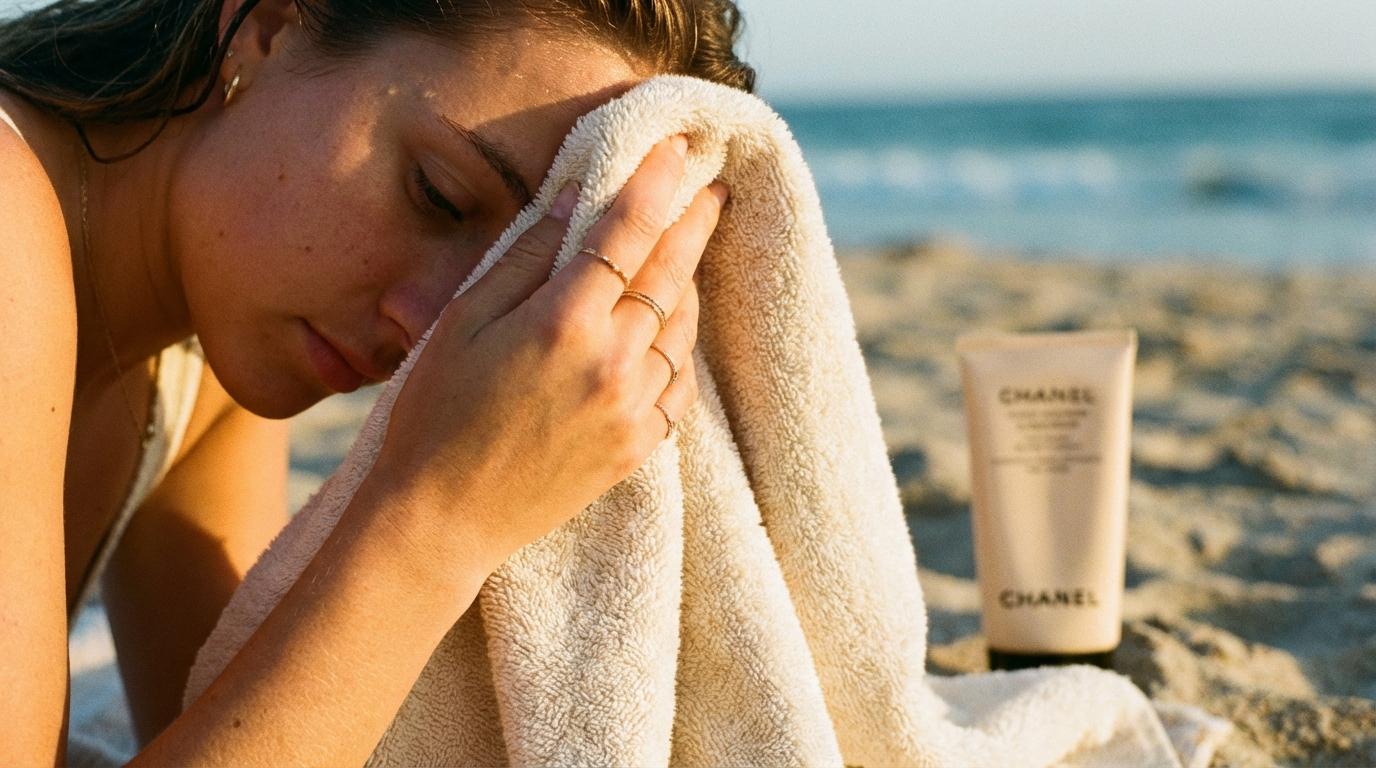
Wiping sweat with your hand or a towel isn’t helping either. You’re pushing that mixture of sweat, oil, and whatever’s on your hands or the towel back into your pores. Blotting papers absorb oil without spreading it around, which makes them way more useful than wiping.
Sunscreen and Your Pores
I’m not going to tell you to skip sunscreen. That would be stupid. UV damage is worse for your skin long-term than any summer breakout. But we need to be honest about the fact that some sunscreens absolutely contribute to clogged pores, and summer is when you’re using the most of it.
Chemical sunscreens absorb UV light and convert it to heat. That process happens right on your skin. Some people find the added warmth increases their oil production. Others react to specific UV filters like avobenzone or octocrylene with irritation or breakouts. Mineral sunscreens, which use zinc oxide or titanium dioxide, sit on top of skin and reflect light instead. They’re generally better tolerated by acne-prone types, though they can leave a white cast that’s more noticeable when you’re sweating.
The formulation matters as much as the active ingredients. Sunscreens marketed as “lightweight” or “oil-free” often use silicones to create a smooth finish. Silicones don’t necessarily clog pores, but they can trap sweat and oil underneath if you’re applying sunscreen over an already sweaty face. Applying sunscreen to clean, dry skin gives you better protection and less pore congestion.
Reapplication is where things get messy, literally. You’re supposed to reapply every two hours when you’re in the sun, but layering sunscreen over sweat and oil is asking for problems. The move is to blot your face first, or better yet, use a facial mist or cleansing wipe to reset your skin before adding more sunscreen. Yeah, it’s extra steps. But so is dealing with a breakout for the next two weeks.
Why Your Winter Products Aren’t Working
Heavy moisturizers that felt perfect in January become suffocating in July. Your skin’s needs change seasonally, and ignoring that is setting yourself up for clogged pores and an oily mess by noon.
In cold, dry weather, your skin loses moisture faster, so thicker creams with occlusive ingredients help seal it in. Summer humidity means your skin doesn’t lose as much water to the air, so those same occlusive ingredients just sit on top of your face, trapping sweat and sebum underneath.
Switch to a lighter moisturizer with humectants like hyaluronic acid or glycerin. These pull water into your skin without creating a heavy layer on top. Gel textures work well for most people in summer because they absorb quickly and don’t leave a film.
Your cleanser might need to work harder too. If you’re using a gentle, low-foam cleanser year-round, consider stepping up to something with a bit more surfactant power during summer months. The extra sweat, oil, and sunscreen require a cleanser that can actually remove them. That said, don’t go overboard. Stripping your skin with harsh cleansers triggers rebound oil production, which makes everything worse. A balanced approach is finding a cleanser that removes the day without leaving your face tight and dry.
The Bacteria Factor
Cutibacterium acnes, the bacteria primarily responsible for inflammatory acne, thrives in warm, oily, low-oxygen environments. Summer gives it exactly what it wants. Higher temperatures speed up bacterial reproduction. More sebum provides more food. Sweat creates moisture that bacteria love.
This is why some people who keep their acne under control for most of the year suddenly break out every summer. The bacterial load on their skin increases, overwhelming whatever balance their routine usually maintains.
Products with benzoyl peroxide or salicylic acid become more important in summer because they directly address bacterial growth and pore clogging. If you don’t use these ingredients regularly, consider adding them as a targeted treatment during warmer months. A benzoyl peroxide wash used a few times a week can keep bacterial levels in check without over-drying your skin. Salicylic acid helps clear out pores and prevent dead skin cells from trapping oil inside.
Watch out for fungal acne, which looks similar to regular acne but has a different cause. Malassezia, a yeast that lives on everyone’s skin, also thrives in hot, humid conditions. If your breakouts look like uniform small bumps and don’t respond to your usual acne treatments, you might be dealing with fungal acne instead. That requires different products, typically ones that are antifungal or at least don’t contain ingredients that feed yeast.
What Actually Helps
Keep your face clean, but not obsessively. Washing twice a day plus once after heavy sweating is reasonable. More than that and you’re stripping your barrier.
Blot, don’t wipe. Oil-absorbing sheets remove excess shine without spreading bacteria around or irritating your skin.
Look at your sunscreen with fresh eyes. If you break out every summer and you’re using the same sunscreen year-round, try switching to a different formula. Mineral sunscreens labeled non-comedogenic are usually a safe bet.
Adjust your products seasonally. Lighter moisturizers, possibly a more effective cleanser, and treatments that target bacteria and oil production.
Stay out of the peak heat when possible. Your skin produces more oil when it’s hot, full stop. Air conditioning is your friend for your face, even if it’s not great for the environment.
Change your pillowcase more often. You’re sweating at night too, and all that ends up on your pillowcase getting pressed back into your skin for hours. Once a week minimum during summer, twice if you can manage it.
When to Call It
If you’re doing everything right and still breaking out badly every summer, it might be time to see a dermatologist. Some people need prescription treatments during warmer months that they can back off from the rest of the year. There’s no shame in seasonal prescriptions. Plenty of people use tretinoin or antibiotics during their worst acne periods and maintain with over-the-counter stuff otherwise.
Summer breakouts are annoying, but they’re also predictable. Once you understand that heat and humidity change the rules for your skin, you can adjust your approach accordingly. Your winter routine isn’t lazy or wrong. It just wasn’t built for this.