
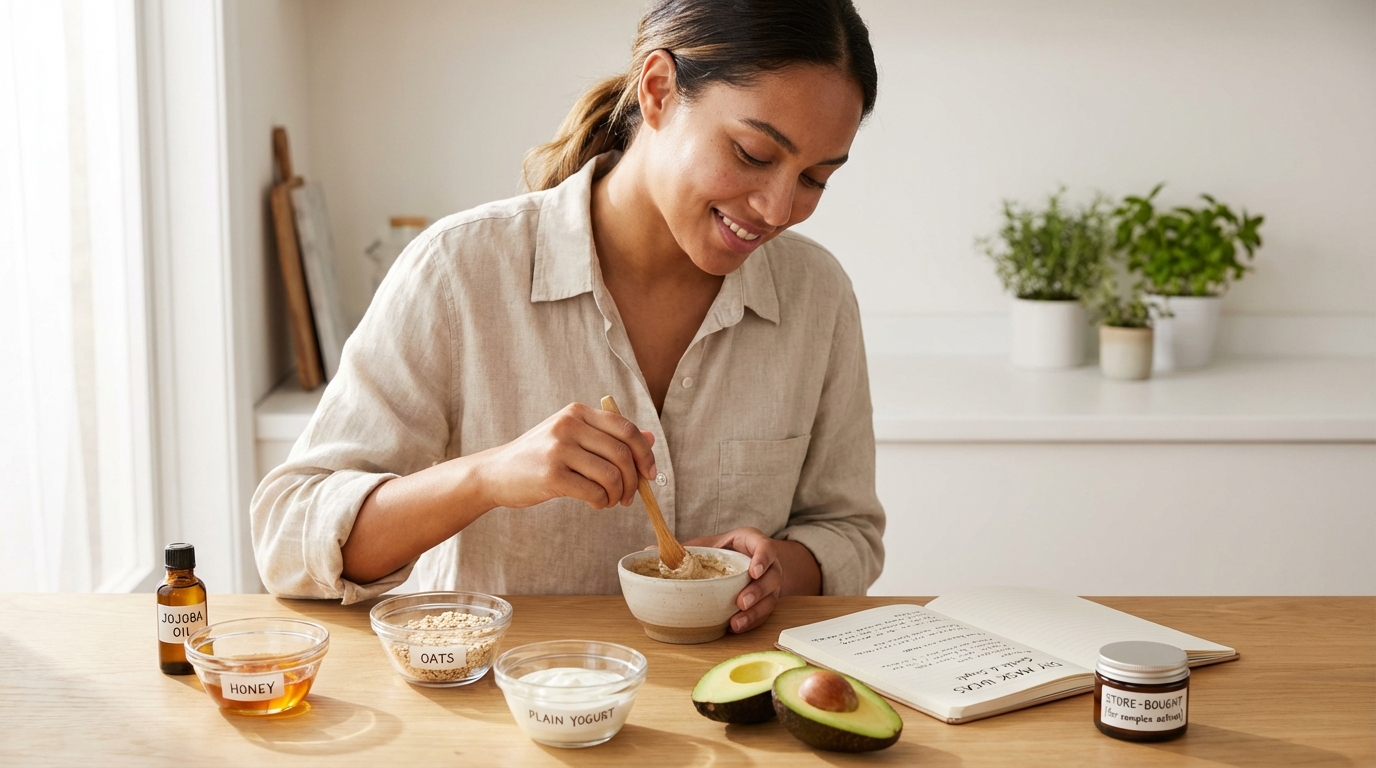
Look, I get it. You’re scrolling through Pinterest at 2 AM, finals are destroying you, and suddenly a DIY avocado honey oatmeal turmeric situation seems like the answer to all your skin problems. I’ve been there. I’ve also been there scrubbing dried oatmeal out of my bathroom sink while my face looked like a tomato.
So let’s talk about DIY face masks: which ones actually work, which ones will wreck your skin, and when you should just save your grocery money for something that comes in a jar.
The Kitchen Ingredients That Are Actually Safe
Not everything in your kitchen belongs on your face. But some things? They’re totally fine and can genuinely help your skin without causing a meltdown.
Honey (raw, if you can swing it) is basically nature’s humectant. It draws moisture into your skin and has antibacterial properties that research actually supports. Just don’t use the stuff that comes in a bear-shaped bottle, that’s mostly corn syrup. Real honey costs a bit more but actually does something.
Plain yogurt contains lactic acid, which is a gentle exfoliant. Full fat works best because the fat content helps with moisture. Greek yogurt is fine too. Just make sure it’s unflavored because strawberry banana is for your smoothie, not your face.
Oatmeal (colloidal or finely ground) is legitimately soothing. The American Academy of Dermatology actually recommends oatmeal baths for eczema, so using finely ground oats in a mask isn’t some random Pinterest nonsense. Just blend it to a powder first so you’re not scratching your face with chunky bits.
Aloe vera gel (from the actual plant or 100% pure) is cooling and hydrating. Great if your skin is irritated or you got a little too much sun. Check the ingredients if you’re buying a tube because some “aloe gels” are mostly alcohol and dyes.
What to Absolutely Avoid Putting on Your Face
This is where Pinterest really lets us down. Some of these DIY ingredients are actively harmful, and no amount of “but it’s natural!” makes them okay.
Lemon juice is way too acidic. Your skin’s pH is around 4.5 to 5.5, and lemon juice is around 2. That’s a big gap. It can cause chemical burns, make your skin photosensitive (hello, sun damage), and mess with your moisture barrier. The vitamin C angle? Just get a proper vitamin C serum. A good one costs less than you’d spend on lemons over a month anyway.
Baking soda is the opposite problem. It’s too alkaline. It disrupts your skin’s acid mantle, which is basically your natural defense system. I know it feels “clean” but that tight feeling is your skin screaming.
Cinnamon is a known irritant. Sure, it tingles, but that tingle is irritation, not “working.” Same goes for other spicy stuff like cayenne. Your face isn’t a chili.
Apple cider vinegar (undiluted) can cause burns. Even diluted, it’s risky. If you want an acid exfoliant, buy one that’s been formulated to the right pH and concentration. Paula’s Choice has good info on safe acid exfoliants if you want to learn more.
Toothpaste on pimples needs to stop. Toothpaste is for teeth. It contains ingredients like sodium lauryl sulfate that can seriously irritate skin. A $4 tube of benzoyl peroxide from the drugstore actually works.
Simple Recipes That Actually Work
Okay, so you still want to DIY. Fair. Here are three masks that I’ve actually used and that won’t destroy your face.
The Soothing Oat Mask
- 2 tablespoons finely ground oatmeal
- 1 tablespoon plain yogurt
- 1 teaspoon honey
Mix it up, apply to clean skin, leave on for 10 to 15 minutes, rinse with lukewarm water. Good for when your skin is irritated or dry. The oats calm things down, the yogurt provides gentle exfoliation, and the honey adds moisture.
The Simple Honey Mask
- 1 to 2 tablespoons raw honey
That’s it. Just honey. Apply to damp skin, leave for 15 to 20 minutes, rinse off. It’s sticky and weird but genuinely hydrating. Good for when you’ve been too aggressive with actives and your skin needs a break.
The Calming Aloe Mask
- 2 tablespoons pure aloe vera gel
- 1 teaspoon honey
Mix and apply for 10 to 15 minutes. Great after too much sun or when your skin feels hot and angry. Keep the aloe in the fridge for extra cooling points.
When DIY Just Isn’t Worth It
Here’s the thing about DIY masks: they’re fun, they’re cheap per use, and they can provide some temporary benefits. But they have real limitations.
For acne: DIY masks aren’t going to clear breakouts. You need actual active ingredients like salicylic acid or benzoyl peroxide that penetrate pores. A honey mask might soothe redness, but it won’t prevent new pimples.
For anti-aging: Kitchen ingredients aren’t going to boost collagen or reduce fine lines. That requires retinoids, vitamin C serums, or other formulated products. Sorry, but an avocado mask isn’t doing what a $10 retinol serum does.
For hyperpigmentation: You need targeted ingredients like niacinamide, vitamin C, or azelaic acid. Lemon juice will make dark spots worse because of the photosensitivity issue. Don’t do it.
For consistency: Every batch of DIY mask is different. Every avocado has different ripeness, every honey has different properties. Formulated products are consistent, and consistency matters for results.
My honest take? DIY masks are good for occasional pampering and some gentle hydration or soothing. They’re not replacements for a basic routine with actually formulated products. I’d rather you spend your money on a good cleanser, moisturizer, and sunscreen than on fancy ingredients for masks.
If you’re broke (hi, same), check out CeraVe or The Ordinary. Both are affordable and actually work. A CeraVe moisturizer runs about $12 and will last you months. That’s the unglamorous truth: boring, consistent basics beat fancy DIY sessions every time.
So go ahead and do a honey mask while you watch Netflix. It’s a nice little ritual and your skin will feel soft after. Just don’t expect it to fix your breakouts or replace your actual skincare routine. And please, please keep the lemon juice in your water where it belongs.