
You got too much sun. Maybe you fell asleep at the pool, underestimated a cloudy day, or your SPF just didn’t hold up. It happens to the best of us. But here’s what matters now: how you treat your skin in the next 24 to 72 hours can make a real difference in how quickly you heal and how much lasting damage you avoid. Let me walk you through exactly what to do.
What’s Actually Happening to Your Skin
Before we get into the recovery steps, it helps to understand what a sunburn actually is. When UV radiation hits your skin, it damages the DNA in your skin cells. Your body responds by increasing blood flow to the area (that’s the redness) and triggering an inflammatory response. The heat you feel? That’s your immune system working overtime.
Sunburn symptoms typically peak between 12 and 24 hours after exposure. So if you’re reading this right after coming inside, know that things might get worse before they get better. Peeling usually starts around day three to five, once your body begins shedding damaged cells.
Immediate Cooling Steps (First 30 Minutes)
The moment you realize you’re burned, get out of the sun immediately. This sounds obvious, but so many people think “just a few more minutes” won’t matter. It will. More UV exposure means more DNA damage.
Once you’re inside, take a cool shower or bath. The key word is cool, not cold. According to the American Academy of Dermatology, frequent cool baths or showers help relieve pain. Ice cold water might feel tempting, but it can actually shock your already stressed skin and potentially cause additional damage.
Keep your shower short. Five to ten minutes is enough. Long showers, even cool ones, can strip moisture from your skin, which is the opposite of what you need right now. Skip the soap on burned areas entirely, or use only the gentlest, fragrance-free cleanser you have. Your skin barrier is compromised, and harsh cleansers will make everything worse.
When you get out, pat yourself dry gently. Do not rub. Your skin cells are inflamed and fragile right now, and friction is not your friend.
The First Thing to Apply
While your skin is still slightly damp from the shower, apply a lightweight moisturizer. This helps lock in that surface hydration before it evaporates.
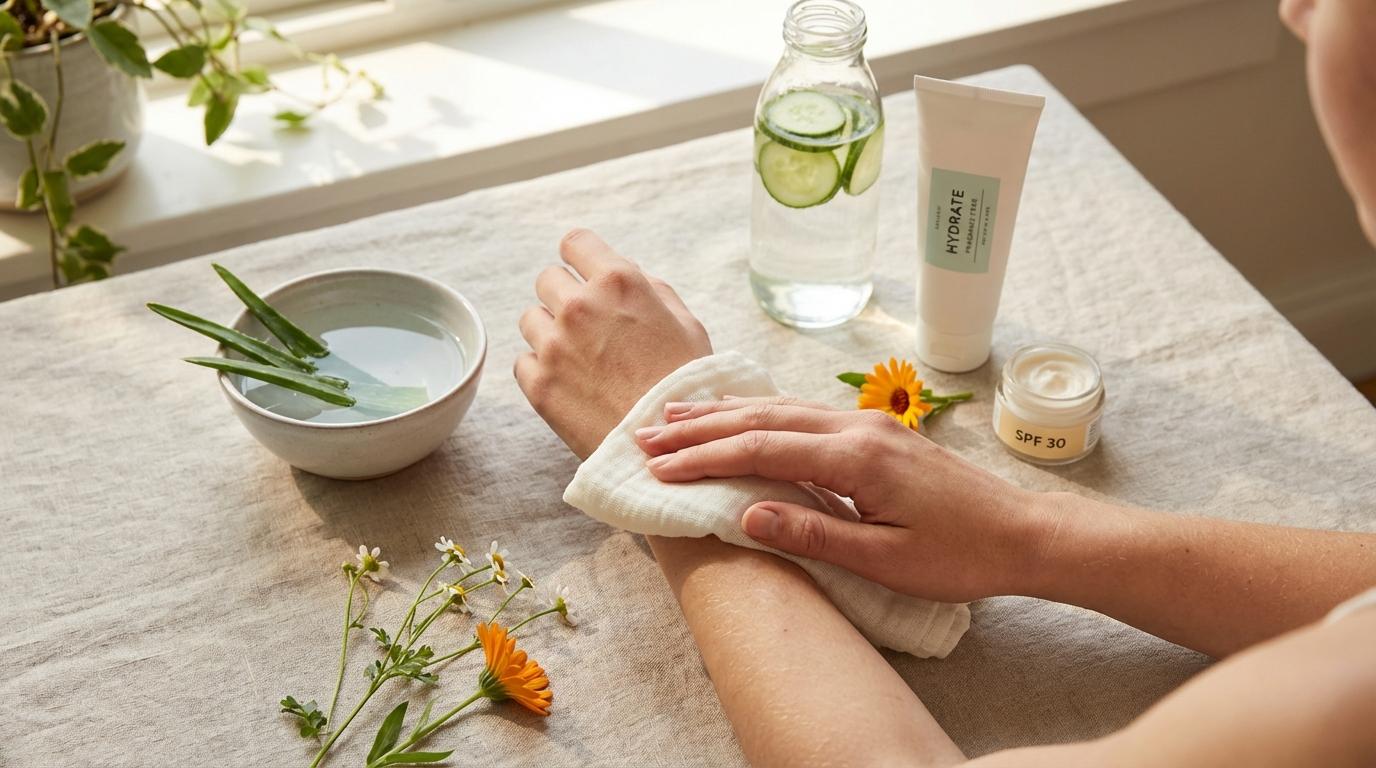
Aloe vera is the classic choice here, and for good reason. It has anti-inflammatory properties and can help soothe that burning sensation. Look for pure aloe vera gel or a moisturizer that lists aloe as one of the first ingredients. If you have an actual aloe plant, even better. Just slice off a leaf and apply the gel directly.
Soy-based moisturizers are another solid option. Like aloe, soy has antioxidant properties that can support your skin’s healing process. The Yale Medicine dermatology team specifically recommends moisturizers containing aloe vera or soy for sunburn recovery.
If the burning sensation is really intense, you can apply a thin layer of 1% hydrocortisone cream. This is an over-the-counter anti-inflammatory that can help reduce redness and discomfort. Just don’t go overboard. Use it for a few days maximum, and only on the most affected areas.
What NOT to Apply (This Is Important)
This is where a lot of people mess up. There are several products that seem like they’d help but can actually make your sunburn worse or slow down healing.
Petroleum-based products like Vaseline or thick ointments: These create a barrier that traps heat in your skin. Your burned skin is already hot and inflamed. Trapping more heat is the last thing you want. According to Schweiger Dermatology Group, petroleum-based moisturizers can worsen sunburn significantly.
Numbing products with benzocaine or lidocaine: These topical anesthetics are found in many sunburn sprays and might provide temporary relief, but they can dry out your skin and cause allergic reactions in some people. The FDA has even linked benzocaine to a rare but serious condition called methemoglobinemia. It’s not worth the risk when safer options exist.
Anything with alcohol or fragrance: Check your product labels. Alcohol will dry out your already dehydrated skin, and fragrances can irritate compromised skin even if they’ve never bothered you before.
Coconut oil (at least not right away): I know, I know. Coconut oil is the internet’s favorite cure-all. But dermatologists recommend waiting until your burn is mostly healed before using it. On a fresh burn, it can trap heat similar to petroleum products. Save it for the peeling stage when your skin needs occlusive moisture.
Essential oils directly on skin: Undiluted essential oils like lavender, peppermint, or tea tree can irritate burned skin. If you want to use them, dilute them heavily with a carrier oil first. But honestly, there are better options for fresh burns.
Butter, honey, mustard, or any other food items: This shouldn’t need to be said, but the internet is full of DIY remedies that have no scientific backing. Food belongs in your kitchen, not on your sunburn.
Hydration From the Inside
Here’s something people often forget: sunburn dehydrates your entire body, not just the surface of your skin. When your skin is damaged, it loses its ability to retain water effectively. Plus, the inflammatory response draws fluid away from other parts of your body.
Drink significantly more water than usual. The Cleveland Clinic recommends at least eight to ten glasses of water daily while recovering from sunburn. If plain water gets boring, herbal tea and fruits with high water content (watermelon, cucumbers, oranges) also help.
You might also want to take an over-the-counter anti-inflammatory like ibuprofen. It can help reduce pain, swelling, and redness from the inside. Take it with food and follow the dosage instructions on the package.
Days Two Through Five: The Peeling Phase
Okay, the initial crisis is over. Your skin is probably less red but now it’s starting to peel. This is your body shedding damaged cells, and it’s a normal part of healing. Your job is to let it happen naturally.
Do not peel your skin. I cannot stress this enough. Pulling off peeling skin before it’s ready can remove healthy cells underneath, introduce bacteria, and lead to scarring or infection. Let those flakes fall off on their own.
Continue moisturizing regularly. At this stage, you can use slightly richer moisturizers since the acute heat has subsided. Look for ingredients like hyaluronic acid, glycerin, and ceramides to help rebuild your moisture barrier.
If you have blisters, leave them alone. Blisters are your body’s natural bandage, protecting the raw skin underneath. Popping them opens you up to infection. If a blister pops on its own, gently clean the area and apply a light bandage.
Skip exfoliation entirely during this phase. No scrubs, no acids, no exfoliating brushes. Your skin is already shedding damaged cells. Adding more exfoliation will just irritate things further.
Long-Term Damage Mitigation
Here’s the uncomfortable truth: some damage from a sunburn is permanent. UV exposure causes cumulative harm to your skin’s DNA, collagen, and elastin. One bad burn increases your risk of skin cancer and contributes to premature aging. I’m not saying this to make you feel terrible. I’m saying it so you understand why the next steps matter.
Once your burn has healed (usually one to two weeks), consider adding a vitamin C serum to your morning routine. Vitamin C is an antioxidant that can help neutralize some of the free radical damage caused by UV exposure. It won’t undo everything, but it supports your skin’s repair processes. Look for a stable form like L-ascorbic acid or ascorbyl glucoside.
Keep up with gentle hydration. Damaged skin takes time to fully restore its barrier function. Using a good moisturizer consistently for several weeks after a burn helps your skin recover more completely.
And obviously, protect your skin going forward. The burned areas are especially vulnerable for several weeks after the visible damage heals. Wear protective clothing, seek shade, and apply broad-spectrum SPF 30 or higher religiously. Your skin has already been through enough.
When to See a Doctor
Most sunburns, while painful, can be treated at home. But there are situations where you need professional medical care:
- Blisters covering more than 20% of your body (like an entire leg or your whole back)
- Severe swelling, especially on your face
- Signs of infection: increasing pain after day two, pus, red streaks spreading from the burn
- Fever, chills, nausea, or confusion (these could indicate sun poisoning)
- Blisters on a young child
Don’t try to tough it out if you’re experiencing any of these symptoms. Sun poisoning and severe burns can lead to serious complications if left untreated.
Your Recovery Timeline
Everyone heals differently based on their skin type, the severity of the burn, and how well they care for it. But generally:
- Hours 1-24: Redness develops and intensifies, skin feels hot and tight
- Hours 24-48: Peak discomfort, possible blistering for severe burns
- Days 3-5: Peeling begins, redness starts to fade
- Days 5-10: Peeling continues, new skin appears
- Weeks 2-4: Surface healing complete, but full barrier recovery takes longer
Be patient with the process. Your skin is doing a lot of repair work, and rushing it won’t help.
The Bottom Line
A sunburn is your body’s cry for help after UV damage. The best thing you can do now is support your skin’s healing process: cool it down, keep it hydrated (inside and out), avoid products that trap heat or irritate, and let peeling happen naturally. Once you’ve healed, take the long view and protect your skin more carefully going forward.
Your skin can recover from this. Just give it what it needs and stay out of the sun until it does.