
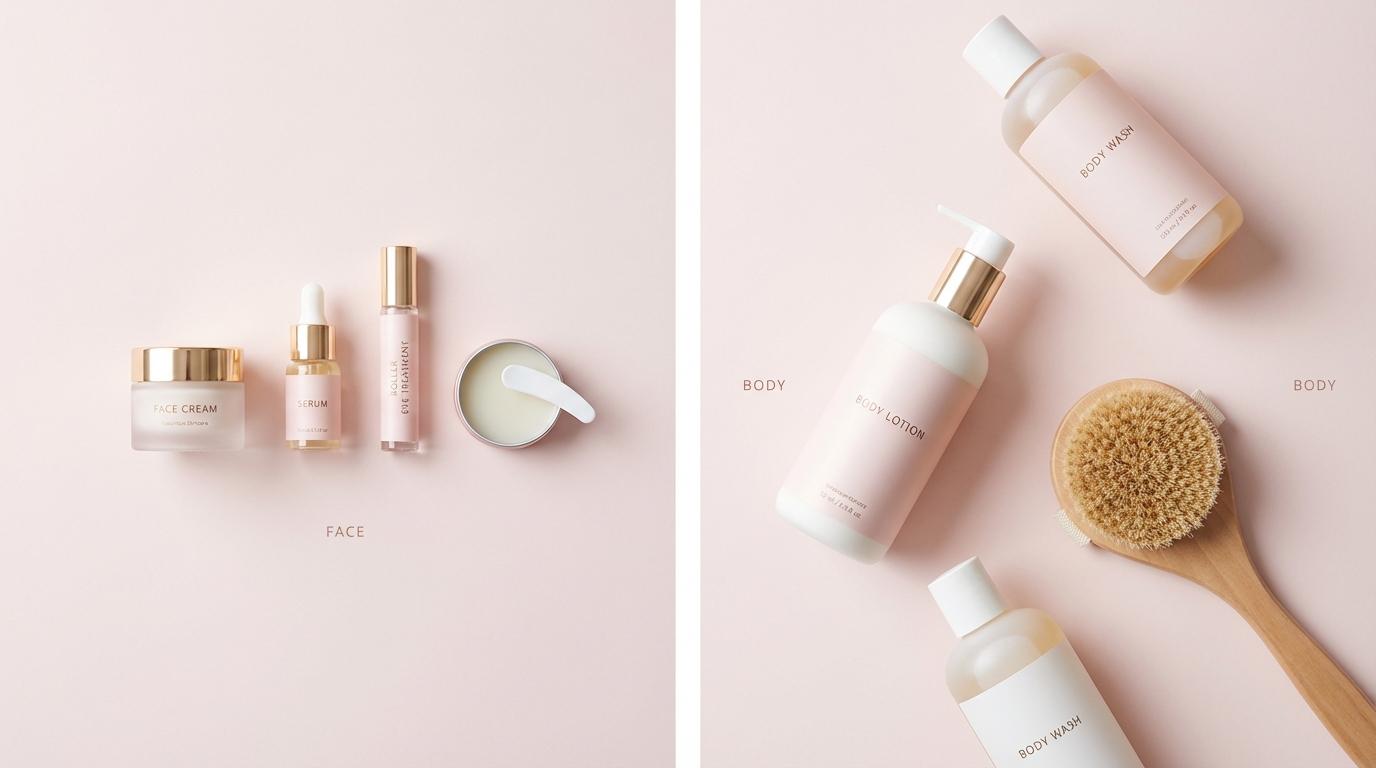
I used to slather my body lotion on my face. I figured skin is skin, right? Wrong. My face broke out in tiny bumps for weeks. Turns out, your face and body are playing completely different games, and treating them the same is setting yourself up for problems.
Here’s the truth that skincare brands don’t always make obvious: the products sitting on your bathroom counter need to be doing very different jobs depending on where they’re going.
Your Face Is Actually Delicate (Yes, Really)
The skin on your face is significantly thinner than anywhere else on your body. We’re talking about 0.5mm compared to 2-3mm on your back and shoulders. That’s a massive difference in how products penetrate and how irritation shows up.
Your facial skin also has more sebaceous glands packed into a smaller area. This means it produces more oil, which is why your forehead gets shiny while your elbows stay dry and cracked.
The blood vessels on your face sit closer to the surface. This is why you blush, why redness shows up so easily, and why harsh ingredients can cause visible irritation within hours rather than days.
Your face is also more exposed to environmental damage. It’s out there every single day dealing with UV radiation, pollution, and temperature changes while the rest of your body stays protected under clothing.
Your Body Can Handle More (But Still Has Limits)
Body skin is thicker, which means it can tolerate stronger active ingredients without freaking out. That 10% AHA body lotion that would burn your face? Your legs can handle it just fine.
The cell turnover on your body is also slower. This is why dry patches on your elbows and knees stick around forever, and why body exfoliation actually makes a noticeable difference.
Body skin tends to be drier overall because it has fewer oil glands per square inch. This is especially true on your shins, arms, and that perpetually scaly area on your lower back.
Your body also develops a thicker stratum corneum, which is that outer protective layer. According to dermatological research, this barrier is more resilient to physical and chemical stress than facial skin.
Why Using Face Products on Your Body Is a Waste
Face products are formulated for penetration through thinner skin. On your body, most of those expensive serums just sit on top doing nothing useful.
The concentrations are also calibrated for facial skin. Your body needs higher percentages of active ingredients to see the same results because of that thicker barrier.
You’re also going through product way too fast. A face cream should last 2-3 months. Using it on your body means you’re replacing it every few weeks and wasting money.
The textures are wrong too. Face creams spread easily because they’re designed for a small surface area. Try covering your entire body with a pea-sized amount of face moisturizer and you’ll see the problem immediately.
Building Separate Routines That Actually Work
For your face, keep it simple. Cleanser, treatment (if you need one), moisturizer, and sunscreen during the day. That’s it. The American Academy of Dermatology recommends sticking to basics rather than layering ten different products.
Your body routine can be even simpler. A gentle body wash that doesn’t strip your skin, followed by a moisturizer while your skin is still slightly damp. That’s the foundation.
For problem areas like rough knees or bumpy upper arms, add a body-specific exfoliating treatment. Look for lotions with lactic acid or urea, which work well on thicker skin without causing irritation.
Don’t skip sunscreen on exposed body parts. Your hands, chest, and the back of your neck need UV protection too, especially since these areas show signs of aging before your face does.
What to Actually Buy
Stop buying body lotions marketed with fancy face-skincare ingredients at face-skincare prices. Your body doesn’t need hyaluronic acid serums or vitamin C treatments the way your face does.
Invest in your face products and be practical about your body products. A basic drugstore body lotion with ceramides or glycerin does the job perfectly well.
The exception is if you have specific body concerns like keratosis pilaris (those bumpy arms) or persistent dry patches. Then it’s worth spending a bit more on targeted treatments with higher concentrations of exfoliating acids.
Pay attention to fragrance. Your face should get fragrance-free products to minimize irritation. Your body can usually handle light fragrance if that’s what you prefer, though sensitive areas like your chest might disagree.
The bottom line is this: your face and body are fundamentally different in how they function, what they need, and how they respond to products. Treat them as separate projects and you’ll see better results from both without wasting money on products that aren’t doing their job.