
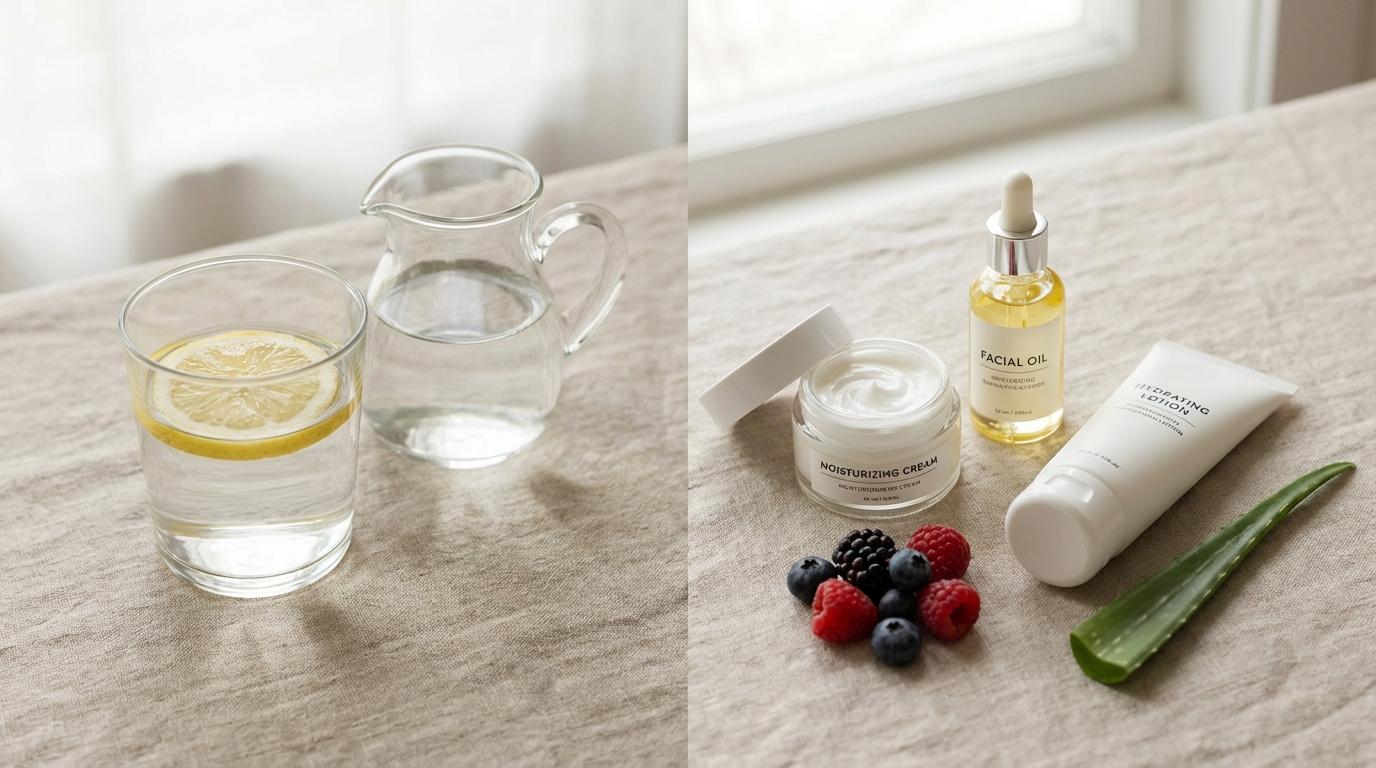
I used to be that person who carried a massive water bottle everywhere, convinced that chugging eight glasses a day would transform my perpetually flaky skin into something soft and supple. Spoiler alert: it didn’t work. And when I started studying biochemistry, I finally understood why. The whole “drink more water for better skin” advice sounds logical, but human physiology doesn’t work that simply. Let me explain what’s actually happening inside your body when you drink water, and why your dry skin needs a completely different approach.
The Journey of Water Through Your Body
When you drink water, it doesn’t teleport straight to your face. That would be convenient, but your body has other priorities. The water travels through your digestive system, gets absorbed in your intestines, enters your bloodstream, and then gets filtered by your kidneys. Along the way, it hydrates your vital organs, supports cellular functions, and maintains your blood volume. By the time anything reaches the outer layers of your skin, there’s not much left to make a noticeable difference.
Your skin is the last organ in line for hydration. It’s the largest organ you have, sure, but your body considers your heart, brain, and kidneys more important when distributing resources. Unless you’re severely dehydrated (we’re talking medical emergency territory), the water you drink has minimal impact on how moisturized your skin feels or looks.
A study published in the British Journal of Dermatology found no direct link between increased water intake and skin hydration in people who were already adequately hydrated. The research showed only slight improvements in skin elasticity after four weeks of dramatically increased water consumption, and even those results weren’t consistent across all participants.
Understanding the Difference: Dry Skin vs. Dehydrated Skin
Here’s where things get interesting. Dry skin and dehydrated skin are not the same thing, even though we use these terms interchangeably in everyday conversation.
Dry skin is a skin type. It means your skin naturally produces less sebum (that’s the oily substance your sebaceous glands make). People with dry skin have this characteristic their whole lives. Your skin might feel tight, look flaky, or develop rough patches. This has nothing to do with how much water you drink. It’s genetics.
Dehydrated skin is a skin condition. Any skin type can become dehydrated, even oily skin. This happens when your skin’s outer layer (the stratum corneum) loses water content. You might notice fine lines appearing more prominently, your skin looking dull, or feeling tight even if you normally have oily skin. Interestingly, drinking water doesn’t directly fix this either, because the issue is happening at the surface level, not from within.
The stratum corneum is like a brick wall. The skin cells are the bricks, and the lipids between them are the mortar. When this barrier is compromised (from harsh products, weather, over-exfoliation, or just genetics), water escapes from your skin faster than it should. No amount of drinking water can repair that damaged barrier from the inside out.
When Dehydration Actually Shows on Your Skin
Now, I’m not saying internal hydration doesn’t matter at all. If you’re genuinely dehydrated (not “I forgot my water bottle today” dehydrated, but medically dehydrated), your skin will show it. Signs of actual dehydration include:
- Severe loss of skin elasticity where pinched skin doesn’t bounce back
- Sunken eyes and dark circles
- Dizziness and confusion
- Very dark urine or decreased urination
- Dry mouth and extreme thirst
But here’s the thing: if you’re experiencing these symptoms, dry skin is the least of your worries. You need medical attention, not just a glass of water and some moisturizer.
For most of us drinking a reasonable amount of fluids throughout the day, our bodies maintain adequate hydration levels. The kidneys are remarkably efficient at regulating water balance. Drinking extra water beyond what your body needs won’t store up in your skin cells. Your kidneys will just filter out the excess, and you’ll spend more time running to the bathroom.
What Actually Helps Dry Skin
If drinking water isn’t the answer, what is? The solution lies in topical products and environmental factors. Let me break down what dermatologists actually recommend.
Humectants
These ingredients pull water into your skin from the environment and from deeper skin layers. Look for:
- Hyaluronic acid (can hold up to 1000 times its weight in water)
- Glycerin (one of the most effective and affordable humectants)
- Urea (great for very dry, rough skin)
- Propylene glycol
A note about hyaluronic acid: it works best in humid environments. In dry climates, it can actually pull water from deeper skin layers to the surface, where it evaporates. That’s why you need the next category of ingredients.
Occlusives
These create a physical barrier on your skin to prevent water loss. Think of them as a seal that locks moisture in. Common occlusives include:
- Petrolatum (petroleum jelly, reduces water loss by up to 98%)
- Mineral oil
- Lanolin
- Silicones like dimethicone
- Plant oils and butters (shea butter, squalane)
Emollients
These soften and smooth the skin by filling in gaps between skin cells. Many ingredients act as both emollients and occlusives:
- Ceramides (crucial for barrier repair)
- Fatty acids
- Cholesterol
- Plant oils
According to the American Academy of Dermatology, the most effective approach combines all three: use a humectant to draw in moisture, an emollient to smooth the skin, and an occlusive to seal everything in. Many well-formulated moisturizers already contain a blend of all three ingredient types.
The Lifestyle Factors That Actually Impact Your Skin
Beyond topical products, several lifestyle factors play a bigger role in skin health than your water intake.
Your Environment
Central heating, air conditioning, and low humidity all strip moisture from your skin. Consider using a humidifier in your bedroom during winter months, or whenever indoor air feels particularly dry. This adds moisture to the air, which helps prevent transepidermal water loss (TEWL).
Hot Showers
I know, I know. Hot showers feel amazing, especially in winter. But that steamy water strips natural oils from your skin. Try to keep showers lukewarm and limit them to 10-15 minutes. Apply moisturizer immediately after, while your skin is still slightly damp, to lock in that moisture.
Harsh Cleansers
If your face feels squeaky clean after washing, your cleanser is probably too harsh. That tight feeling means your skin’s barrier has been disrupted. Look for gentle, pH-balanced cleansers that clean without stripping. Your skin shouldn’t feel tight or dry after cleansing.
Over-Exfoliation
Chemical exfoliants (AHAs, BHAs, retinoids) are fantastic for many skin concerns, but overusing them can wreck your moisture barrier. If you have dry skin, start slow with exfoliating products and never use multiple active ingredients on the same day when you’re beginning.
Your Diet
While drinking water doesn’t directly hydrate skin, your overall diet does matter. Essential fatty acids (from fish, nuts, seeds, and avocados) support your skin’s lipid barrier. A diet extremely low in fat can actually contribute to dry skin. So can deficiencies in certain vitamins and minerals. Eating a balanced diet with adequate healthy fats supports skin health from the inside.
Building a Routine for Dry Skin
If you’re dealing with persistently dry skin, here’s a straightforward approach:
Morning: Gentle cleanser (or just water if your skin is very dry), hydrating toner or essence (optional), moisturizer with SPF, or separate sunscreen over moisturizer.
Evening: Gentle cleanser to remove sunscreen and daily grime, hydrating serum (something with hyaluronic acid or glycerin), rich moisturizer or night cream, occlusive layer if needed (a thin layer of petroleum jelly or a sleeping pack).
The sandwich method works well for dry skin types: apply a hydrating product, then your treatment products (like retinol, if you use it), then seal everything with a moisturizer. This protects your skin from potential irritation while ensuring hydration stays locked in.
What About “Skin Flooding”?
You might have seen the term “skin flooding” trending. This technique involves applying multiple layers of hydrating products to seriously boost moisture levels. It typically goes: essence, then hydrating serum, then moisturizer, then an occlusive. Each layer is applied while the previous one is still slightly damp.
Does it work? For some people with very dry or dehydrated skin, yes. The key is using products that layer well together without pilling. But it’s not necessary for everyone, and more products don’t always mean better results. If a simple moisturizer keeps your skin comfortable, there’s no need to complicate things.
The Bottom Line
Should you drink water? Absolutely. Staying hydrated is essential for your overall health, your organs, your energy levels, and countless bodily functions. But if you’re drinking adequate water (you’ll know because you’re not constantly thirsty and your urine is light yellow), drinking more won’t transform your skin.
Dry skin needs external intervention. Focus on products with humectants, emollients, and occlusives. Protect your skin barrier from harsh products and environmental stressors. Consider a humidifier. Take lukewarm showers. These changes will make a far bigger difference than forcing down another glass of water ever could.
Your skin is smart, but it can’t absorb moisture from the inside out the way we’ve been told. Work with your skin, not against the laws of biology, and you’ll see real results.