
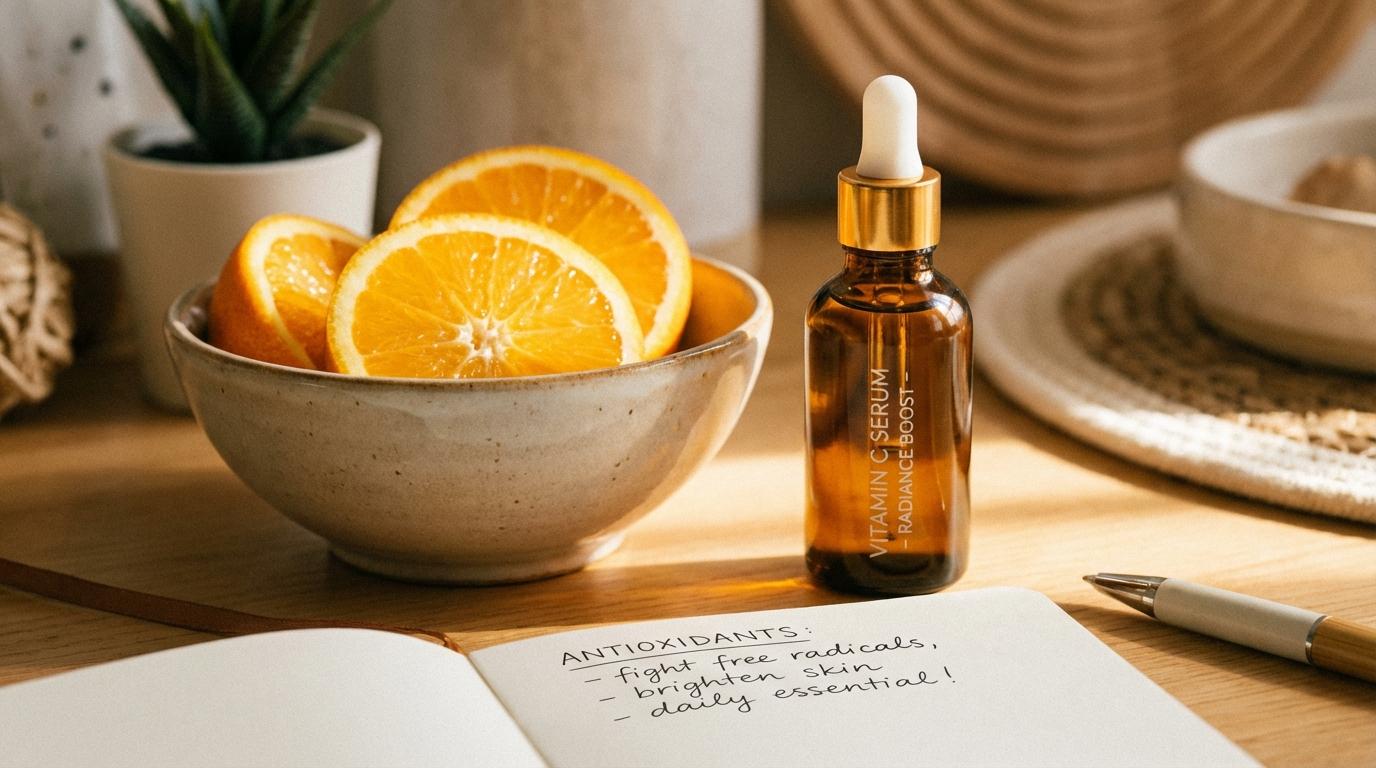
Ferulic acid rarely gets the spotlight it deserves, even though it quietly transforms how your vitamin C serum actually works on your skin. If you’ve ever wondered why some vitamin C products seem to oxidize faster than others, or why that fancy serum turned orange in your medicine cabinet, the answer often comes down to whether ferulic acid was invited to the party. This antioxidant compound, derived from the cell walls of plants like rice, oats, and wheat, has become one of the most important supporting players in modern skincare formulations.
Understanding Ferulic Acid at the Molecular Level
Ferulic acid belongs to a class of compounds called hydroxycinnamic acids. Without getting too deep into organic chemistry, what makes this molecule special is its phenolic structure, which allows it to donate electrons and neutralize free radicals before they can damage your skin cells. A 2005 study published in the Journal of Investigative Dermatology by researchers at Duke University found that adding just 0.5% to 1% ferulic acid to a vitamin C and E formulation boosted UV protection by approximately eight times compared to using those vitamins alone.
That’s not a typo. Eight times more photoprotection from the same concentration of vitamins, simply by including ferulic acid in the formula. The mechanism behind this synergy involves how these antioxidants work together to regenerate each other. When vitamin C (ascorbic acid) neutralizes a free radical, it becomes oxidized itself. Ferulic acid and vitamin E step in to recycle that oxidized vitamin C back to its active form, creating a continuous cycle of protection.
Why C E Ferulic Combinations Actually Work
The term “C E Ferulic” has become almost synonymous with premium antioxidant serums, and there’s solid science behind the hype. The combination of L-ascorbic acid (vitamin C), alpha-tocopherol (vitamin E), and ferulic acid creates what researchers call a synergistic antioxidant network. Each ingredient brings something unique to the mix.
Vitamin C is water-soluble and works in the aqueous (water-based) parts of your skin cells. Vitamin E is fat-soluble and protects the lipid membranes surrounding those cells. Ferulic acid has amphipathic properties, meaning it can work in both environments, essentially bridging the gap between the two. When you apply a serum containing all three, you’re covering multiple bases of cellular protection simultaneously.
The pH of these formulations matters enormously. L-ascorbic acid, the most potent form of vitamin C, requires a pH below 3.5 to penetrate the skin effectively. Ferulic acid actually helps lower and maintain this acidic pH while remaining stable itself. This is why well-formulated C E Ferulic serums often feel slightly tingly when you first apply them.
The Stabilization Factor
One of the most frustrating aspects of vitamin C skincare is watching your expensive serum turn brown or orange over time. This color change signals oxidation, meaning your vitamin C has converted to dehydroascorbic acid and lost much of its efficacy. Ferulic acid slows down this oxidation process considerably.
Studies have shown that the half-life of L-ascorbic acid in solution extends significantly when ferulic acid is present. In practical terms, this means your serum stays potent longer, giving you better value for your money and more consistent results. The stabilizing effect works through several mechanisms: ferulic acid absorbs UV radiation that would otherwise degrade vitamin C, it scavenges oxygen radicals that trigger oxidation, and it creates a more favorable chemical environment overall.
Storage still matters, of course. Keep your vitamin C products in a cool, dark place, and look for packaging that minimizes air and light exposure. Amber glass bottles with droppers that don’t expose the entire reservoir to air are generally better than clear bottles or jars you dip your fingers into.
Finding Affordable C E Ferulic Options
The elephant in the room is price. The original SkinCeuticals C E Ferulic serum runs around $169 for a one-ounce bottle, which puts it firmly in luxury territory. While the formula is undeniably effective and the research behind it is solid, not everyone can justify that kind of spending on a single product.
The good news is that the Duke University patent on the original C E Ferulic formulation has inspired many brands to develop their own versions at various price points. The Ordinary’s approach offers several vitamin C options, though their ferulic acid is sold separately as a 3% suspension that you can mix with other products.
Timeless Skincare offers a 20% Vitamin C + E + Ferulic Acid Serum for around $25, and it’s often cited as one of the closest dupes to the SkinCeuticals version. Paula’s Choice makes a C15 Super Booster with ferulic acid at a mid-range price point. Maelove’s “The Glow Maker” contains 15% L-ascorbic acid, vitamin E, and ferulic acid for under $30.
When shopping for budget alternatives, check the ingredient lists carefully. You want L-ascorbic acid (not a derivative like ascorbyl glucoside, which is gentler but less potent), vitamin E listed as tocopherol or alpha-tocopherol, and ferulic acid. The concentrations matter too: look for vitamin C at 10-20%, vitamin E around 1%, and ferulic acid at 0.5-1%. Lower concentrations of vitamin C can still be effective and are often better tolerated by sensitive skin.
Beyond Vitamin C: Other Ferulic Acid Benefits
While ferulic acid works beautifully with vitamin C, it has antioxidant properties of its own that are worth noting. Research published in the International Journal of Molecular Sciences has documented its ability to reduce hyperpigmentation by inhibiting tyrosinase, the enzyme responsible for melanin production.
Ferulic acid also demonstrates anti-inflammatory properties, which can help calm reactive skin and reduce redness. Some preliminary studies suggest it may even have anti-aging benefits beyond sun protection, potentially supporting collagen synthesis and improving overall skin texture. These effects are generally more modest than what you’d see from retinoids or direct vitamin C application, but they add to the overall benefit profile.
For those with sensitive skin who struggle with pure vitamin C serums, formulas that include ferulic acid along with a gentler vitamin C derivative might be worth exploring. The ferulic acid provides some of the protective benefits while the gentler derivative minimizes irritation potential.
How to Incorporate Ferulic Acid Into Your Routine
If you’re using a C E Ferulic serum, apply it in the morning after cleansing and before your moisturizer and sunscreen. The antioxidant protection works synergistically with SPF, giving your skin a more comprehensive defense against UV damage. A few drops patted gently onto damp skin is usually sufficient.
Wait about 30 seconds to a minute for the serum to absorb before layering other products. Some people experience a slight warmth or tingling when they first start using L-ascorbic acid serums, which is normal given the low pH. If you experience actual irritation, redness, or discomfort, scale back to every other day until your skin adjusts, or consider a formula with a lower vitamin C concentration.
You can absolutely use ferulic acid products alongside retinoids, though I’d recommend separating them, with vitamin C in the morning and retinoids at night. Using them in the same routine can sometimes lead to irritation, especially when you’re first introducing either ingredient.
Reading the Research
If you want to understand the science more deeply, the 2005 Duke University study by Pinnell and colleagues is the foundational paper that started the C E Ferulic phenomenon. It’s available on PubMed and worth reading if you’re curious about the methodology behind the photoprotection claims. More recent studies have expanded on these findings, looking at ferulic acid’s role in preventing thymine dimer formation, a key type of DNA damage caused by UV exposure.
The concentration of each ingredient in these studies matters when comparing them to commercial products. Many of the most impressive results came from carefully controlled formulations with specific ratios and pH levels. This is why two products that both claim to contain “vitamin C and ferulic acid” can perform very differently.
Is It Worth Adding to Your Routine?
For most people concerned about sun damage, hyperpigmentation, or general skin aging, a well-formulated vitamin C serum with ferulic acid is a smart investment. The synergy between these ingredients means you’re getting more protection than you would from vitamin C alone, and the stabilization benefit means your product lasts longer and works better throughout its lifespan.
If you’re already using vitamin C and seeing results, adding ferulic acid through a combined formula or a separate product like The Ordinary’s suspension could boost those results. If you’ve been frustrated by vitamin C serums oxidizing before you finish them, switching to a C E Ferulic formula might solve that problem.
The budget-friendly options available today make this combination accessible to almost everyone. You don’t need to spend $169 to get the benefits of this synergistic trio. Start with one of the more affordable alternatives, give it a few months of consistent use, and pay attention to how your skin responds. Sometimes the best skincare discoveries happen when you look past the marketing to understand what the ingredients are actually doing at a molecular level.