
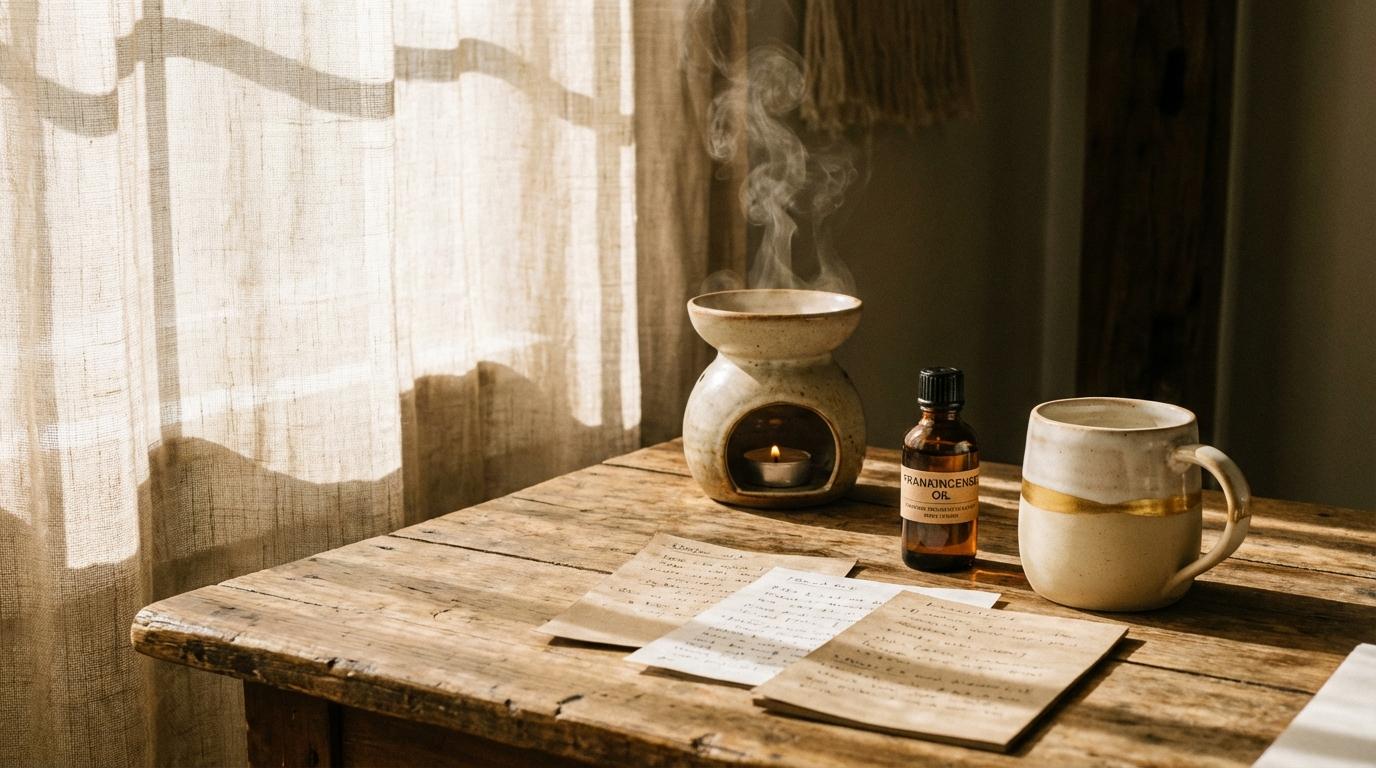
Frankincense smells ancient, resiny, and almost holy. There’s a reason it was one of the gifts brought to the baby Jesus, alongside gold and myrrh. For thousands of years, cultures from Egypt to India have burned this fragrant resin in religious ceremonies, used it in traditional medicine, and even applied it to the skin. But does it actually do anything for your complexion, or is it just expensive nostalgia in a bottle?
Let me walk you through the biochemistry here, because I think understanding why an ingredient might work helps you make much smarter skincare decisions than just trusting marketing claims.
What Even Is Frankincense?
Frankincense comes from the resin of Boswellia trees, primarily Boswellia serrata, Boswellia sacra, and Boswellia carterii. When the bark is cut, the tree bleeds a milky sap that hardens into those distinctive golden lumps you might have seen in incense shops. For skincare, this resin gets steam-distilled or CO2-extracted into essential oil, much like evening primrose oil form, or its active compounds get isolated and concentrated.
The key bioactive compounds in frankincense are boswellic acids. These are pentacyclic triterpenes, and if that sounds intimidating, just think of them as complex ring-shaped molecules that can interact with various receptors and enzymes in your body. There are several types, with acetyl-11-keto-beta-boswellic acid (AKBA) being the most studied for its anti-inflammatory properties.
For another botanical antioxidant worth exploring, see rosemary extract.
The Traditional Uses
Traditional medicine systems used frankincense for wound healing, inflammation, pain relief, and skin conditions. Ayurvedic medicine has long recommended it for inflammatory conditions. Egyptian women reportedly used it in face masks and anti-aging preparations. In traditional Chinese medicine, it’s been used for pain and blood circulation issues.
These traditional uses aren’t proof of effectiveness, but they do tell us that humans have been experimenting with this ingredient on skin for a very long time. Observational evidence matters, even if it’s not the same as controlled studies.
What Does Research Actually Show?
Here’s where I need to be honest with you about the limitations. While frankincense sounds promising, the research specifically on skin applications is still emerging. Let me break down what we do and don’t know.
Anti-inflammatory activity: This is the most well-documented effect. Research on human dermal fibroblasts has shown that frankincense essential oil can reduce pro-inflammatory biomarkers like IP-10 and ICAM-1. Alpha-pinene, one of the main components of the oil, contributes significantly to this effect. Boswellic acids work by inhibiting 5-lipoxygenase, an enzyme involved in inflammatory pathways.
Collagen and fibroblast effects: Studies have shown that frankincense can stimulate fibroblast activity, which are the cells responsible for producing collagen in your skin. It may also inhibit matrix metalloproteinases (MMPs), the enzymes that break down collagen. This suggests potential anti-aging benefits, but most of this research is in vitro (test tube studies) or on animals.
Photoprotection: A study on UV-induced skin damage found that frankincense essential oil showed anti-collagenase and anti-elastase activities, suggesting it might help protect against sun damage when used alongside proper sun protection. The researchers noted anti-photoaging effects comparable to epigallocatechin gallate (the famous antioxidant in green tea).
Wound healing: Some research suggests frankincense may help wounds transition from the inflammatory phase to the proliferative phase more efficiently, potentially speeding up healing. This involves effects on caspase-3 expression, which relates to cell death and regeneration processes.
Antimicrobial properties: Frankincense essential oil has shown activity against bacteria like Staphylococcus aureus and fungi like Candida albicans in lab settings. This could theoretically help with acne-prone skin, though clinical studies specifically for acne are lacking.
The Gap Between Lab and Face
Here’s what I want you to understand as someone who studied biochemistry: there’s a significant difference between “this compound does interesting things in a petri dish” and “this product will transform your skin.”
Most frankincense research uses isolated compounds at specific concentrations, often delivered in ways that maximize penetration. Your average frankincense-containing serum? It might contain a tiny percentage of essential oil suspended in a formula that may or may not deliver the active compounds where they need to go.
We also don’t have many large-scale, double-blind, placebo-controlled human clinical trials specifically on topical frankincense for skin concerns like wrinkles, acne, or hyperpigmentation. The evidence is promising but preliminary.
When Frankincense Might Actually Help
Based on what research does exist, frankincense could be worth trying if you:
- Have inflammatory skin conditions and want to add an anti-inflammatory ingredient to your routine (alongside proven treatments, not replacing them)
- Enjoy aromatherapy benefits while doing your skincare, since the scent has been associated with relaxation and stress reduction
- Are looking for antioxidant support in your anti-aging routine
- Have minor wounds or irritation that you want to soothe (always patch test first)
- Want to experiment with traditional ingredients and have the budget for it
Frankincense is probably not your first-line treatment if you:
- Have specific skin concerns that have well-researched ingredients available (like azelaic acid for acne or retinoids for anti-aging)
- Are on a tight budget, since quality frankincense products tend to be expensive
- Have very sensitive skin, as essential oils can be irritating for some people
How to Use It Safely
If you want to try frankincense in your skincare routine, here are some practical guidelines:
Patch test first. Apply a small amount to your inner arm and wait 24-48 hours. Essential oils can cause irritation or allergic reactions in some people.
Never apply undiluted essential oil to your face. Frankincense essential oil needs to be properly diluted in a carrier oil or formulated into a skincare product. Typical concentrations in products are 0.5-2%.
Look for quality formulations. Products should specify the botanical source (Boswellia species) and ideally mention standardized boswellic acid content if they’re making claims about anti-inflammatory effects.
Consider it a supporting player. Frankincense works best as part of a comprehensive routine, not as your sole anti-aging or anti-inflammatory ingredient. Pair it with sunscreen, cleansing, and proven actives appropriate for your skin concerns.
Be patient and realistic. If research is still catching up to traditional claims, dramatic results shouldn’t be your expectation. Think of it as a gentle, supportive ingredient rather than a miracle worker.
Separating Marketing From Reality
You’ll see brands make big claims about frankincense. “Ancient secret for youthful skin!” “Clinically proven to reduce wrinkles!” When you see these claims, ask yourself: What study? On how many people? Using what formulation at what concentration? Compared to what?
The answer is often that the “clinical proof” is a small in-house study, sometimes not even published or peer-reviewed. That doesn’t mean the product is useless, but it means you should calibrate your expectations.
What I can tell you with reasonable confidence is that frankincense contains compounds with demonstrated biological activity in lab settings, particularly around inflammation and collagen metabolism. Whether the specific product in your hands delivers those compounds to your skin in meaningful amounts is a separate question entirely.
My Take as a Biochem Nerd
I find frankincense genuinely interesting. The boswellic acids are pharmacologically active compounds with real mechanisms of action, not just marketing fluff. The anti-inflammatory pathway inhibition is legitimate biochemistry. The fibroblast stimulation and MMP inhibition make theoretical sense for anti-aging benefits.
But I also think the skincare industry has a tendency to take “promising early research” and turn it into “this ingredient will change your life.” Frankincense is probably somewhere in the middle: not just placebo or pleasant scent, but also not a replacement for retinoids or vitamin C if those are what your skin actually needs.
If you love the ritual of using it, if the scent brings you peace, if you’ve tried it and your skin seems happier, those are all valid reasons to keep it in your routine. Just don’t skip the sunscreen because you think the frankincense is protecting you, and don’t replace your dermatologist’s recommendations with essential oils.
Ancient wisdom and modern science can coexist in your skincare cabinet. We just need to be honest about which is which.