
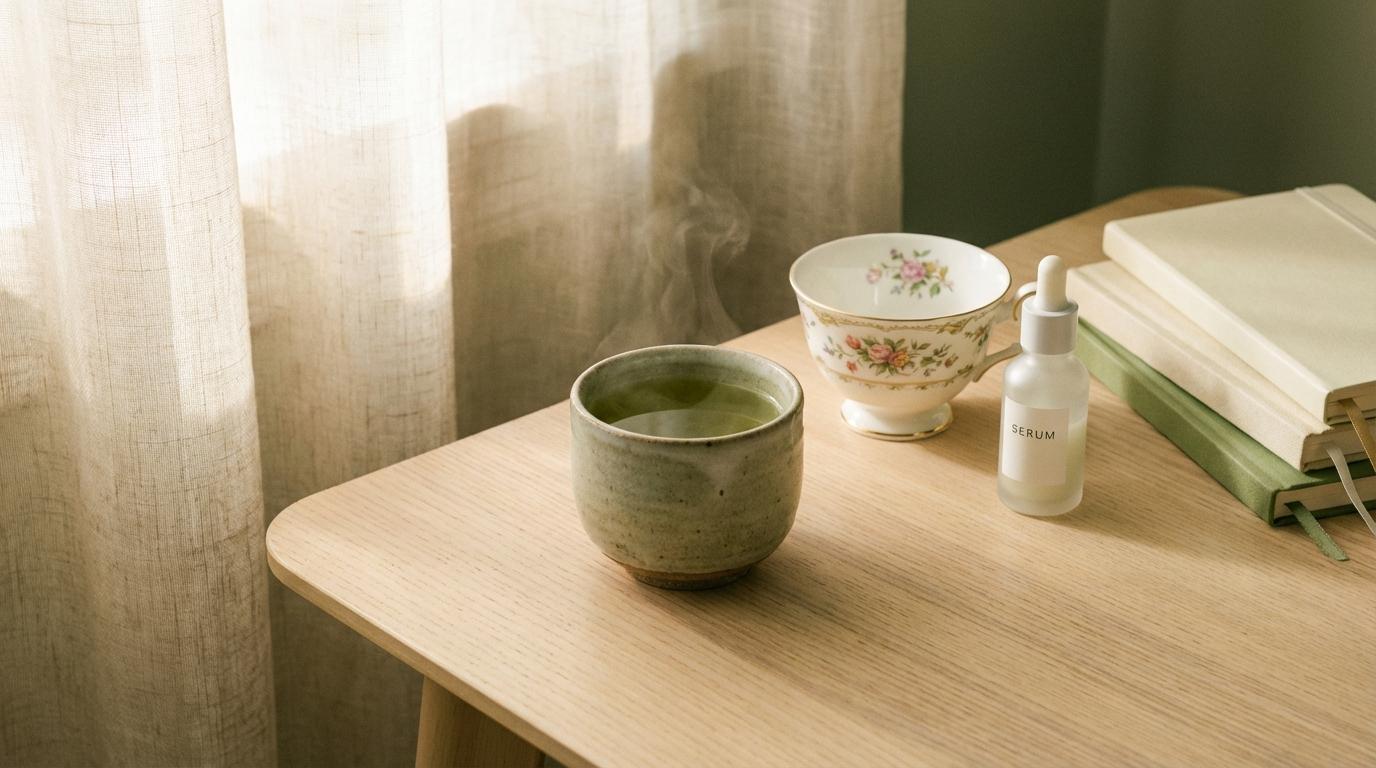
Green tea does more than you think. That cup you brew every morning contains one of the most studied antioxidants in skincare, and it’s been quietly outperforming ingredients that cost ten times as much. Whether you’re dealing with redness, early signs of aging, or just want your skin to look less tired, green tea extract deserves a spot in your routine.
EGCG: The Star Compound
When you see green tea on a label, you’re really after one thing: EGCG. Short for epigallocatechin gallate, this catechin is the reason dermatologists keep recommending green tea extract. It’s not just any antioxidant. EGCG is a polyphenol that can neutralize free radicals before they damage your skin cells.
What makes EGCG stand out is its molecular structure. It can bind to multiple reactive oxygen species at once, which gives it stronger protective abilities than many single-target antioxidants. Studies show EGCG provides about 25 to 100 times the antioxidant activity of vitamins C and E. That’s not marketing fluff. That’s chemistry.
Your skin gets hit with free radicals constantly. UV exposure, pollution, even blue light from your phone. EGCG helps neutralize these before they can break down collagen and elastin. Think of it as a first line of defense.
Calming Redness and Inflammation
EGCG isn’t just about fighting oxidation. It has serious anti-inflammatory properties that make it useful for anyone dealing with reactive skin. If your face turns red after cleansing, you might want to pay attention.
The compound works by inhibiting certain inflammatory pathways in your skin. It can reduce the production of cytokines, those signaling molecules that tell your body to create inflammation. For people with rosacea, eczema, or just generally sensitive skin, this matters.
Research published in the Journal of Dermatological Science found that topical EGCG reduced redness and improved skin barrier function in subjects with compromised skin. The anti-inflammatory effect isn’t dramatic, but it’s consistent. Your skin gets calmer over time.
If you’re struggling with irritation, consider reading our guide on calming redness with a gentle approach. Combining green tea with soothing ingredients amplifies the effect.
Anti-Aging Without the Hype
Every ingredient claims to fight aging. Most of them can’t back it up. Green tea extract actually can.
EGCG has been shown to protect collagen from degradation. It inhibits the enzymes (called matrix metalloproteinases) that break down collagen when activated by UV exposure. Less collagen breakdown means skin stays firmer longer. It’s prevention, not reversal.
Green tea also supports skin elasticity. One clinical study found that women who used a topical green tea formulation showed measurable improvements in skin texture after 60 days. Nothing instant, but real and lasting.
The key is consistency. Using green tea extract once won’t do anything noticeable. Using it daily for months? That’s when you see differences in fine lines and skin texture.
How To Get Enough in Your Routine
Drinking green tea is great for your overall health. But if you want the skin benefits, you need topical application. The EGCG in your cup doesn’t make it to your skin in meaningful concentrations.
Look for products that list green tea extract (Camellia sinensis leaf extract) in the first half of the ingredient list. Position matters. If it’s listed after fragrance, you’re getting trace amounts at best.
Serums work best. They deliver higher concentrations than cleansers or moisturizers. Paula’s Choice and The Ordinary both make affordable options with meaningful amounts of green tea.
Application timing matters too. Green tea extract is photostable, meaning it won’t break down in sunlight like some antioxidants. You can use it morning or night. In the morning, it adds an extra layer of protection under your sunscreen. At night, it supports repair while you sleep.
Combining Green Tea With Other Actives
Green tea plays well with most ingredients. It pairs particularly well with vitamin C for double antioxidant protection. The two work through different mechanisms, so combining them gives broader coverage against environmental damage.
Niacinamide and green tea also make a good team. Both calm inflammation and support barrier function. You can layer them or find products that contain both.
Be careful combining green tea with exfoliating acids if you have sensitive skin. Not because they interact badly, but because adding anti-inflammatories might mask irritation from over-exfoliation. Pay attention to how your skin feels, not just how it looks.
Retinol and green tea work fine together. Some research suggests antioxidants can reduce retinol-related irritation. If you use retinol at night, a green tea serum underneath might help your skin tolerate it better.
What About Caffeine?
Green tea naturally contains caffeine. In skincare, caffeine does something useful: it temporarily reduces puffiness by constricting blood vessels. That’s why you see green tea in under-eye products.
If you’re dealing with dark circles or morning puffiness, a green tea eye cream might help. The caffeine reduces swelling while the EGCG protects the delicate under-eye area from damage. It won’t fix dark circles caused by pigmentation or bone structure, but it can make tired eyes look more awake.
Budget Options That Actually Work
You don’t need to spend a fortune. Green tea is abundant and cheap to source, so even affordable products can contain effective amounts.
The Ordinary has options. Their caffeine solution contains green tea alongside caffeine for eye area. CeraVe and Neutrogena also include green tea in several products.
Korean beauty brands often feature green tea prominently. Innisfree built their entire brand around Jeju green tea. Their products tend to be affordable and well-formulated.
When shopping on a budget, skip the fancy packaging and focus on ingredient lists. A simple green tea serum in a dropper bottle does the same job as one in elaborate packaging that costs three times more.
Signs It’s Working
Green tea extract won’t give you overnight results. That’s not how antioxidants work. What you should notice over weeks:
- Less redness after cleansing or sun exposure
- Skin that bounces back faster from irritation
- More even skin tone over time
- Fewer new fine lines appearing (prevention is subtle)
If you’re looking for dramatic before-and-afters, green tea isn’t that ingredient. It’s the ingredient that keeps your skin stable and protected while flashier actives do their thing.
The Real Value
Green tea extract is the kind of ingredient that makes the rest of your routine work better. It protects your skin from damage that would undo your other products. It calms inflammation that makes acne worse. It supports the barrier that keeps everything else functioning.
At a low price point with decades of research behind it, green tea extract is worth adding. Not as your hero ingredient. As the reliable teammate that shows up every day and does its job quietly.
Start with one well-formulated serum. Use it consistently for two months. Then decide if you want to keep going. Most people do.