
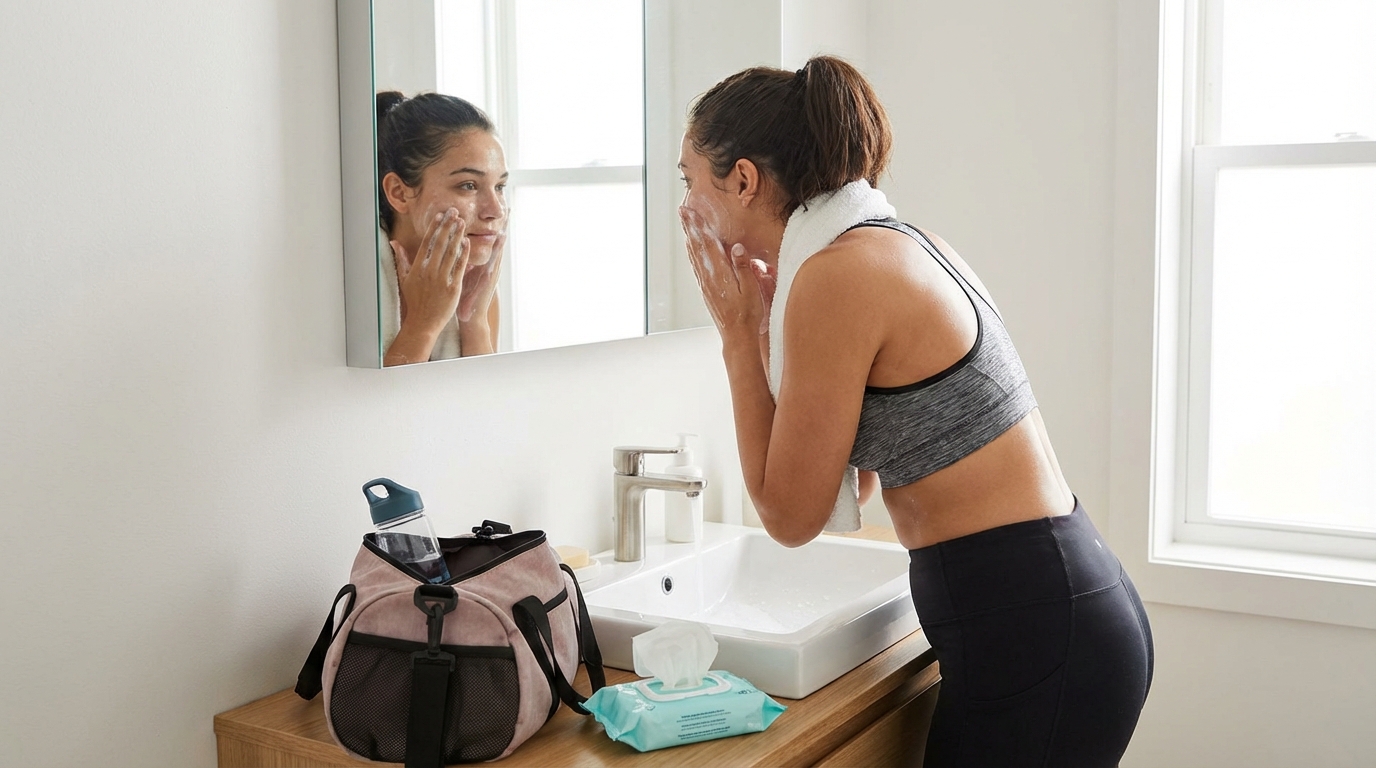
You just crushed your workout. Your muscles are burning in that satisfying way, endorphins are flowing, and you feel amazing. But here is something most fitness content skips over: what happens to your skin during and after exercise matters just as much as your protein shake timing. As someone who spent years studying how skin actually functions, I want to walk you through the science of why your post-workout routine deserves some real attention.
What Actually Happens to Your Skin When You Exercise
When you work out, your body temperature rises and your blood vessels dilate to help cool you down. This increased blood flow brings oxygen and nutrients to your skin cells, which is genuinely beneficial. Research published in Aging Cell found that regular exercise can actually help maintain younger-looking skin by improving mitochondrial function in skin cells.
But here is where it gets complicated. Sweat itself is mostly water, sodium chloride, and small amounts of urea and lactic acid. While sweating does not directly cause acne, the environment it creates is where problems begin. When sweat mixes with the bacteria already on your skin, sits in your pores, and combines with any products you applied before working out, you have created ideal conditions for breakouts.
The friction from workout clothes, headbands, and equipment adds another layer. This mechanical irritation combined with moisture can lead to something called acne mechanica, which is basically breakouts caused by pressure and friction on already vulnerable skin.
Before You Start: Setting Your Skin Up for Success
I know it sounds counterintuitive, but what you do before your workout affects your skin just as much as what you do after. The goal is simple: give sweat and bacteria as little to work with as possible.
- Start with a clean face. If you are heading to the gym after work with a full face of makeup, you are essentially trapping all of that under a layer of sweat. Use a gentle micellar water or cleansing wipe to remove makeup, sunscreen, and any other products before you start.
- Skip heavy products. That thick moisturizer or silicone-based primer? Leave them for after. Heavy products can mix with sweat and clog pores.
- Tie your hair back properly. Hair products contain oils and polymers that can transfer to your skin, especially along your hairline and forehead.
If you are working out outdoors and need sun protection, look for lightweight, oil-free mineral sunscreens. They sit on top of the skin rather than absorbing in, making them less likely to cause issues when you start sweating.
Why Those Gym Wipes Are Not Doing What You Think
Here is something that frustrates me: the marketing around “gym wipes” and “post-workout cleansing cloths” makes it seem like a quick swipe is all you need. The reality is more nuanced.
Most gym wipes contain alcohol, fragrance, and preservatives that can actually irritate skin that has already been stressed by exercise. When your pores are open from heat and sweating, you are essentially pushing these ingredients deeper into your skin. Plus, a single wipe does not actually cleanse, it just moves things around on the surface.
The American Academy of Dermatology recommends using a gentle cleanser and water to properly remove sweat, bacteria, and any debris from your skin. If you absolutely cannot get to a sink after your workout, wipes can be a temporary measure, but they should not replace actual cleansing.
Look for wipes that are fragrance-free, alcohol-free, and formulated for sensitive skin if you need something for emergencies. But understand that they are a band-aid solution, not a replacement for washing your face properly.
The Shower Timing Question
You have probably heard conflicting advice about how quickly you need to shower after working out. Some sources say immediately, others say it does not matter. Here is what the research actually suggests.
Letting sweat dry on your skin is not inherently harmful, but it does create an environment where bacteria can thrive. Dermatologists generally recommend showering within an hour of your workout to remove sweat, bacteria, and any gym grime before it has a chance to cause issues.
The temperature of your shower matters too. I know a hot shower feels amazing after a tough workout, but very hot water can strip your skin of its natural oils and worsen any inflammation. Lukewarm water is better for your skin, even if it is less satisfying.
When you cleanse your face in the shower, use your fingertips rather than a washcloth or brush. Your skin is more vulnerable after exercise, and mechanical exfoliation can cause micro-tears that let bacteria in. A gentle, hydrating cleanser is your best bet. Check out our guide on building a solid routine if you are not sure where to start.
Post-Shower: Rebuilding Your Skin Barrier
After cleansing, your skin needs moisture back. Exercise temporarily disrupts your skin barrier function, that protective layer of lipids and proteins that keeps moisture in and irritants out. Replenishing this barrier is essential.
- Apply products while skin is still slightly damp. This helps ingredients absorb better and locks in hydration.
- Use a lightweight, non-comedogenic moisturizer. Ingredients like hyaluronic acid and glycerin draw water into the skin without clogging pores.
- Consider niacinamide. This B vitamin helps regulate sebum production and has anti-inflammatory properties, making it ideal for post-workout skin.
If you are dealing with any redness or irritation, a product with centella asiatica (often listed as cica) can help calm things down. It has been used in wound healing for centuries and has solid research supporting its anti-inflammatory effects.
Preventing Gym-Related Breakouts
Beyond your face, body acne from working out is incredibly common. The chest, back, and shoulders are particularly prone because they have more oil glands and are often covered by tight, sweaty clothing.
A few strategies that actually work:
- Change out of workout clothes immediately. Sitting in sweaty clothes extends the time bacteria have to multiply against your skin.
- Use a body wash with salicylic acid or benzoyl peroxide on breakout-prone areas. These ingredients help keep pores clear and kill acne-causing bacteria.
- Wash your workout clothes after every use. I know it is tempting to rewear that sports bra, but the bacteria and oils accumulated on fabric do not disappear just because the clothes dried.
- Wipe down gym equipment before use. The bench press does not care about your skin, but you should. Shared equipment is covered in other people’s sweat and bacteria.
If you are consistently breaking out despite good hygiene practices, it might be worth looking at other factors. Certain pre-workout supplements, protein powders with added hormones, and even dairy consumption have been linked to increased acne in some studies.
Building Your Gym Bag Essentials
Having the right products on hand makes it much easier to take care of your skin consistently. Here is what I keep in my gym bag:
- Micellar water and cotton pads for pre-workout makeup removal
- A gentle foaming cleanser for post-workout
- A lightweight moisturizer
- A clean headband that I wash weekly
- A small towel for wiping equipment and my face during workouts
You do not need expensive products for this. The key is consistency and gentleness. Your skin is already going through a lot during exercise. Supporting it rather than adding more stress is the goal.
The science is clear: exercise is fantastic for your overall health, including your skin. With a few simple adjustments to your routine, you can get all the benefits without the breakouts. Your skin is a sophisticated organ that responds to how you treat it. Treat it well, and it will keep up with your fitness goals.