
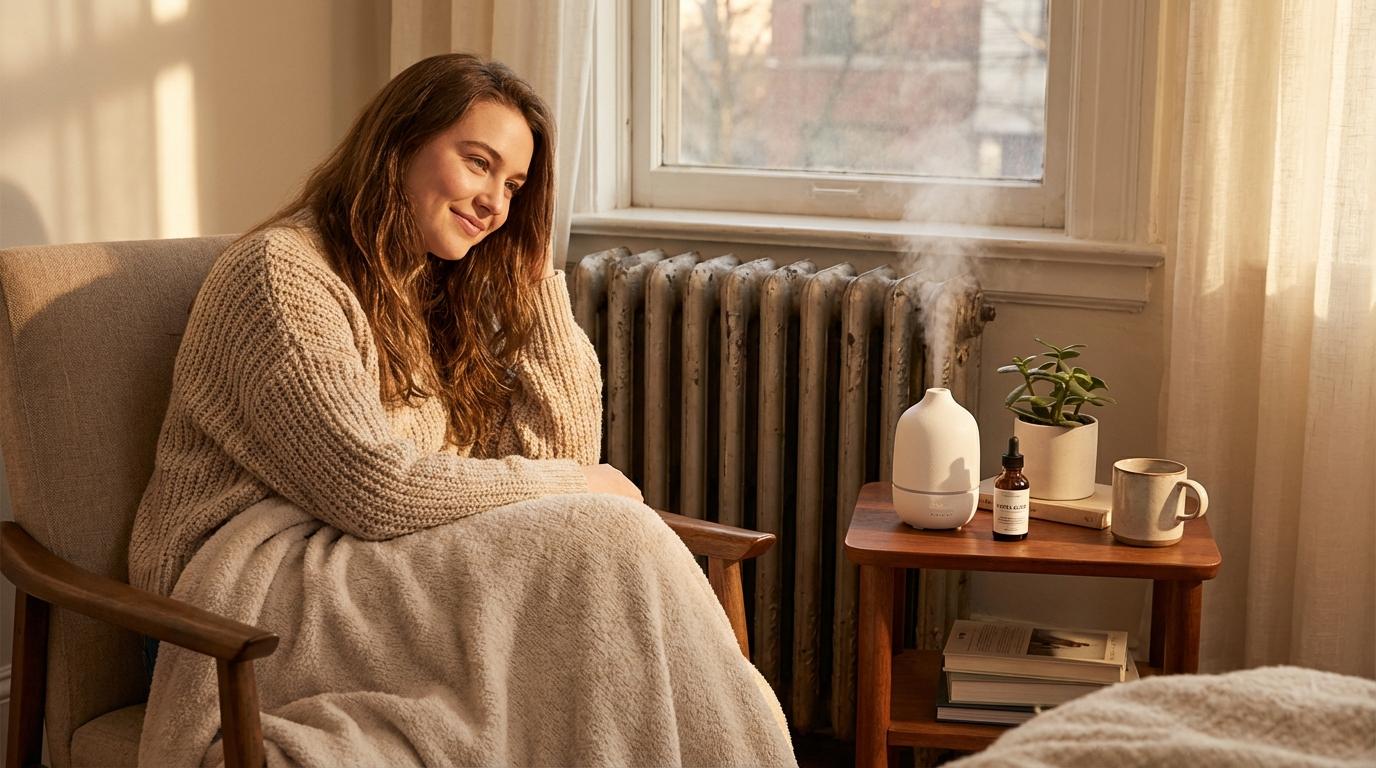
Have you ever wondered why your skin feels like sandpaper from November to March even though you’re barely stepping outside? I spent three winters blaming the cold outdoor air when the real culprit was sitting in my living room, quietly blasting my moisture levels into oblivion. Central heating is basically a dehumidifier that also happens to keep you warm, and your skin is paying the price every single day you spend indoors.
The frustrating part is that we can’t exactly turn off the heat (frozen pipes, anyone?), so we’re stuck in this weird battle between comfort and skin health. But understanding exactly what’s happening to your skin in heated spaces can help you fight back effectively. And trust me, there’s more going on than just “the air is dry.”
What Heated Air Actually Does to Indoor Humidity
When your heating system kicks on, it’s not adding moisture to the air. It’s actively reducing the relative humidity in your home, sometimes down to levels you’d find in a desert. I’m not being dramatic. The Sahara Desert typically has humidity around 25%, and plenty of heated homes in winter drop to 20% or even lower. Your skin basically thinks it’s living in an arid climate while you’re sitting on your couch watching Netflix.
The science is pretty straightforward (even though nobody explains it well). Warm air can hold more moisture than cold air. When your heating system warms the cold air coming in from outside, that air’s relative humidity plummets because now there’s way more space for water vapor that simply isn’t there. The air becomes hungry for moisture, and guess where it finds some? Your skin, your lips, your respiratory tract, your houseplants. Everything.
Studies have shown that indoor humidity during winter heating season can drop to 10-20% in some homes, compared to the 30-50% that’s considered comfortable for skin and respiratory health. If you’ve ever woken up with a dry throat, nosebleeds, or skin that feels like it might crack, now you know why. The biological changes your skin experiences in winter actually start inside your heated home, not outside in the cold.
Transepidermal Water Loss: The Silent Moisture Thief
Your skin is constantly losing water through a process called transepidermal water loss, or TEWL if you want to sound fancy. Under normal conditions with reasonable humidity, this process is slow and manageable. Your skin barrier does its job, and moisturizers help lock everything in. But in low-humidity environments? TEWL goes into overdrive.
Think of your skin barrier as a brick wall with mortar between the bricks. The “bricks” are your skin cells, and the “mortar” is made up of lipids, ceramides, and other substances that keep everything sealed. When the air around you is desperately dry, water vapor from the deeper layers of your skin gets pulled through this barrier faster than normal. The mortar starts to break down. Cracks form. More moisture escapes. It becomes a vicious cycle that accelerates the more time you spend in dry conditions.
Research published in the British Journal of Dermatology found that TEWL increases significantly when humidity drops below 30%. At humidity levels common in heated buildings (15-25%), your skin can lose moisture at nearly double the normal rate. And here’s the kicker: this damage is cumulative. Eight hours of work in an overly heated office, followed by an evening in your heated apartment, adds up to a lot of moisture loss.
Not All Heating Systems Are Created Equal
The type of heating in your home or office actually makes a difference in how badly your skin suffers. Some systems are worse offenders than others, and knowing what you’re dealing with can help you plan your defense strategy.
Forced air heating is probably the worst for your skin. These systems blow heated air through ducts and vents, creating constant air movement that accelerates evaporation from your skin’s surface. Every time you feel that warm air hitting your face, moisture is leaving with it. Plus, forced air systems tend to circulate dust and allergens, which can irritate already-compromised skin.
Radiator heating (steam or hot water) is gentler because there’s no forced air movement, but it still dries out the room. The good news is that you’re not getting blasted directly with dry, moving air. The bad news is that those old radiators can make certain spots in your room extremely hot and dry.
Baseboard electric heating falls somewhere in the middle. No air movement, but still significant humidity reduction. These systems can create weird temperature gradients in rooms that lead to some areas being more drying than others.
Underfloor heating is actually one of the gentler options because heat rises naturally and distributes more evenly. You’re not getting hot, dry air blown at you, and the overall temperature can often be kept lower while still feeling comfortable.
Wood-burning stoves and fireplaces might feel cozy and romantic, but they’re humidity destroyers. The combustion process creates a draft that pulls air (and moisture) up the chimney, while also producing very dry heat. Sitting near a fireplace is basically giving your skin a one-two punch of heat exposure and moisture loss.
The Warning Signs Your Skin Is Suffering
Sometimes we get so used to winter skin problems that we forget they’re actually problems. If you’re experiencing any of these symptoms consistently during heating season, your indoor environment is probably too dry:
That tight, “squeaky clean” feeling after washing your face that doesn’t go away quickly. Your skin shouldn’t feel like it’s shrink-wrapped. If it does, and it’s worse in winter, low humidity is stripping your natural oils faster than you can replace them.
Flaky patches appearing in places you don’t usually get them. Around your nose, on your cheeks, at your hairline. When skin gets desperately dry, it starts shedding faster than normal, creating those embarrassing white flakes that show up on dark clothing.
Existing skin conditions getting worse. Eczema flaring up more often? Psoriasis patches expanding? Rosacea more irritated than usual? Low humidity is a known trigger for inflammatory skin conditions. If your skin constantly feels tight and uncomfortable, the heating in your environment is likely a major factor.
Fine lines appearing more prominent. Dehydrated skin makes existing lines look deeper and can even create temporary “dehydration lines” that disappear once you restore moisture. If you’re suddenly looking more tired and older during winter months, it’s not just holiday stress.
Makeup applying terribly. Foundation looking patchy, settling into lines you didn’t know you had, or flaking off in certain areas? These are all signs that your skin’s surface is too dry and uneven to hold makeup properly.
Protecting Your Skin in Heated Spaces
Now for the part you’ve been waiting for: what to actually do about all this. The good news is that with some strategic adjustments, you can significantly reduce the damage central heating does to your skin.
Address the Environment First
A humidifier is honestly one of the best investments you can make for winter skin. Aim for keeping indoor humidity between 30-50%. You can get a basic hygrometer (humidity measuring device) for under ten dollars to monitor your levels. Cool mist humidifiers are generally safer and work just as well as warm mist versions.
Position your humidifier strategically. If you work from home, keep one near your desk. Having one in your bedroom is especially important since you spend so many hours there. And yes, you might need multiple humidifiers for larger homes. That bowl of water people suggest putting near radiators? It does basically nothing. You need actual humidifiers doing actual work.
Keep your thermostat as low as you can comfortably tolerate. Every degree warmer means lower relative humidity. If you’re cranking the heat to 75°F when you could be comfortable at 68°F with a sweater, you’re making your skin’s job much harder.
Adjust Your Skincare Routine
Winter skincare in heated environments is fundamentally about barrier protection and moisture retention. Understanding the difference between hydration and moisture becomes especially important when you’re trying to combat heating damage.
Humectants become both your best friend and potential enemy. Ingredients like hyaluronic acid, glycerin, and urea are humectants that pull water into your skin. In humid environments, they pull moisture from the air. In dry environments? They can actually pull water from the deeper layers of your skin if there’s no moisture in the air to grab. This is why layering matters so much. Always seal humectants with an occlusive layer in dry conditions. The smart use of glycerin can boost hydration significantly when done correctly.
Switch to richer moisturizers. That lightweight gel moisturizer that worked perfectly in summer probably isn’t cutting it anymore. Look for cream-based formulas with ingredients like ceramides, fatty acids, and cholesterol that actually repair the skin barrier. If you’re debating whether to switch from gel to cream, winter heating season is exactly when you should make that transition.
Consider layering products. A hydrating toner or essence, followed by a serum with hyaluronic acid, followed by a barrier-supporting moisturizer, followed by an occlusive layer (like a face oil or sleeping mask) creates multiple defense lines against moisture loss.
Don’t skip the occlusive step at night. Sleeping masks, facial oils, or even a thin layer of plain petroleum jelly can dramatically reduce overnight moisture loss. You spend 6-8 hours in a heated bedroom breathing dry air. That’s a lot of time for TEWL to do its damage uninterrupted.
Be gentler with cleansing. Harsh cleansers strip protective oils that you desperately need. Consider double cleansing only when you actually need to remove heavy sunscreen or makeup, and use cream or milk cleansers instead of foaming formulas. Your skin doesn’t need to feel squeaky clean; it needs to feel comfortable.
Protect Your Barrier
The ceramides, fatty acids, and cholesterol that make up your skin barrier deserve special attention during heating season. Look for products that specifically contain these ingredients to help rebuild what dry air damages. Learning about different types of ceramides can help you choose more effective products.
Niacinamide is another ingredient that supports barrier function and can help your skin retain moisture better. It’s found in tons of affordable products and plays well with most other ingredients.
If your barrier is already compromised (red, flaky, irritated skin), you might need to strip back your routine temporarily. No actives, no exfoliation, just gentle cleansing and intense moisturizing until things calm down. Sometimes less is more when your skin is in crisis mode.
Think Beyond Your Face
Heating doesn’t just affect your face. Your hands, lips, and body are all suffering too. Apply hand cream religiously, especially after washing. Keep lip balm with actual occlusive ingredients (not just flavoring and waxes) nearby at all times. Use body lotion right after showering while your skin is still slightly damp to lock in moisture.
Hot showers feel amazing when it’s cold outside, but they’re making things worse. Hot water strips natural oils and damages the skin barrier. Keep showers warm, not hot, and definitely not steaming. Your future self will thank you.
The Office Problem
You can control your home environment, but what about the office? Commercial buildings often have heating systems that create particularly harsh conditions, and you can’t exactly install a giant humidifier at your desk (though small personal humidifiers do exist and are worth considering).
For office survival, focus on what you can control: keep a facial mist on your desk for midday refreshment (the fine spray doesn’t mess up makeup), apply hand cream after every trip to the bathroom, keep a richer lip balm at work specifically for the dry office environment, and drink plenty of water throughout the day. Internal hydration doesn’t directly fix skin dryness, but dehydration definitely makes everything worse.
If possible, take breaks outside or in areas with better humidity. Even a few minutes in a different environment gives your skin a small break from constant moisture assault. If you’re planning your transition from summer to winter routine, factor in your work environment as a major consideration.
Quick Fixes vs Long-Term Strategy
When your skin is already freaking out from heating damage, you need quick relief. Sheet masks provide an intensive moisture boost. A generous layer of sleeping mask gives immediate comfort. Even just misting your face with thermal water can provide temporary relief from that tight, dry feeling.
But quick fixes aren’t solutions. The long-term strategy involves: keeping humidity levels reasonable in your main living and working spaces, consistently using products that support your skin barrier, sealing in hydration with occlusive layers, avoiding behaviors that worsen moisture loss (hot showers, harsh cleansers, over-exfoliating), and adjusting your routine seasonally rather than using the same products year-round.
Starting your autumn skincare preparations before heating season hits hard can prevent a lot of winter damage rather than trying to repair it later.
The Bottom-Up Approach
I used to think skincare was mostly about products. Buy the right serum, use the right moisturizer, problem solved. But dealing with heating damage taught me that environment matters just as much. You can use the most expensive, scientifically-advanced skincare products in the world, and if you’re spending 16 hours a day in 15% humidity, your skin will still struggle.
Think of it as a partnership: your environment determines the baseline challenge, and your skincare determines how well you meet that challenge. In a reasonably humid environment, basic skincare goes a long way. In a super-dry heated environment, even excellent skincare has to work overtime.
Central heating isn’t going anywhere. Unless you want to spend winters freezing, you’ll be dealing with dry heated air for months every year. But armed with the knowledge of what’s actually happening to your skin, you can fight back strategically. Get that humidifier. Layer those hydrating products. Seal everything in. And maybe keep the thermostat just a couple degrees lower than you think you need it. Your skin is doing its best in a hostile environment. Meet it halfway, and you might just make it through winter without looking like a dried-out leaf.