
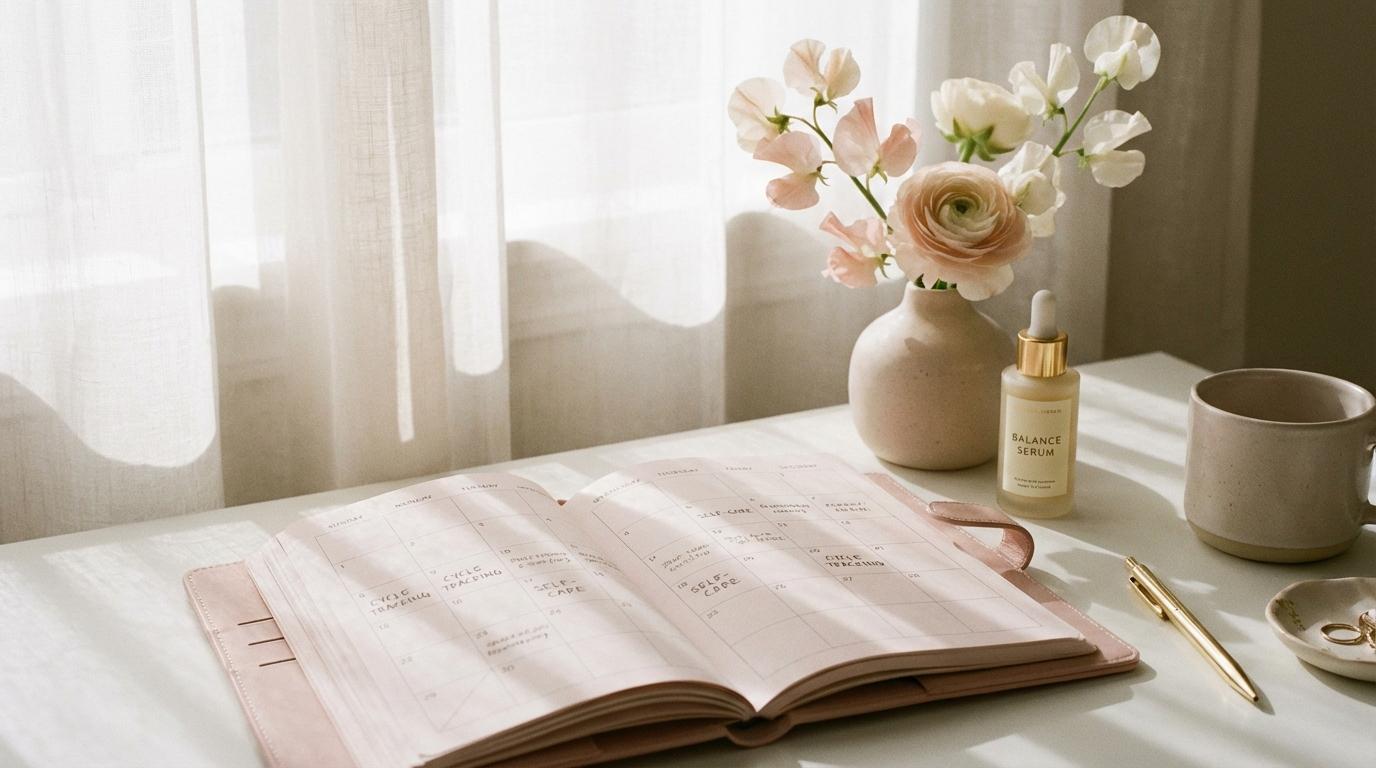
Have you ever noticed your skin looking absolutely radiant one week and then staging a full rebellion the next? Like, you’re just living your life, using the same products, drinking water (okay, mostly coffee, but still), and suddenly your face decides to throw a tantrum? It’s not in your head, bestie. Your hormones are literally running the show, and they have a whole monthly schedule they’re following without consulting you first.
Understanding your hormone cycle is like getting the cheat codes to your own skin. Once you know what’s happening internally, you can actually work WITH your body instead of against it. And trust me, this information would have saved me from so many panicked “why is my face doing this” Google searches at 2am. (Not that I still don’t do that, but now I do it with context.)
The Four Phases of Your Monthly Skin Cycle
Your menstrual cycle isn’t just about your period. It’s this whole complex hormonal dance happening over roughly 28 days (give or take, because bodies love to keep us on our toes). Each phase brings different hormone levels, and each of those hormone shifts affects your skin in specific ways. Let’s break it down.
The cycle has four main phases: menstrual, follicular, ovulatory, and luteal. During each one, your estrogen, progesterone, and testosterone levels are doing different things. And your skin? It’s responding to every single shift like an overly dramatic reality TV contestant.
Estrogen: Your Skin’s Best Friend for Plumpness
Estrogen is basically the hormone that makes your skin look like you actually have a skincare routine (even when you definitely just used micellar water as your whole nighttime routine). It promotes collagen production, keeps your skin hydrated, and gives you that plump, bouncy look that makes people ask what products you’re using.
During the follicular phase (roughly days 1-14), estrogen starts rising. Around days 7-14 especially, you might notice your skin looking clearer, more hydrated, and genuinely glowy. This is when estrogen is doing its thing, promoting hyaluronic acid production and keeping your skin barrier nice and strong.
Right around ovulation (day 14-ish), estrogen peaks. This is typically when your skin looks its absolute best. If you’ve ever looked in the mirror and thought “wow, I actually look good today” for no apparent reason, there’s a solid chance you were ovulating. Nature’s way of making you look attractive for reproductive purposes, which is both fascinating and slightly creepy when you think about it too hard.
The key here? Estrogen = hydration and plumpness. When estrogen is high, your skin holds onto moisture better and looks fuller. When it drops (like right before your period), things can start looking a bit dull and dehydrated.
Progesterone: The Oil Production Instigator
Now let’s talk about progesterone, which is honestly the hormone I have the most complicated relationship with. Progesterone rises during the luteal phase (roughly days 15-28), and it brings some… let’s call them interesting changes.
Progesterone stimulates your sebaceous glands, which means more oil production. For some people, this just gives them a natural dewy look. For others (hi, it’s me), it means waking up looking like a glazed donut. And not in the cute way.
This increased oil production is why breakouts tend to pop up in the week or two before your period. The excess sebum can mix with dead skin cells and bacteria, leading to clogged pores and those deep, angry pimples that seem to have their own heartbeat. According to the American Academy of Dermatology, hormonal acne typically shows up along the jawline, chin, and lower cheeks.
Progesterone also causes water retention (hello, puffy face) and can make your skin more sensitive. So that’s fun. If you notice your go-to products suddenly feel a bit irritating during this phase, it’s not the product, it’s your progesterone making your skin throw a fit.
Testosterone Fluctuations: The Wildcard
We don’t talk about testosterone enough when it comes to people with cycles, but it plays a role too. Testosterone levels actually stay relatively stable throughout the month compared to estrogen and progesterone, but there’s a slight dip right before ovulation and a mild increase during the luteal phase.
Even small testosterone fluctuations can impact your skin. This hormone also stimulates oil glands (because apparently, all hormones have agreed that oil production is peak comedy). When testosterone is relatively higher compared to estrogen (like right before your period when estrogen drops), you might notice more oiliness and breakouts.
Some people are more sensitive to testosterone’s effects on their skin than others. If you find yourself dealing with persistent hormonal acne, especially along the chin and jaw, it might be worth talking to a dermatologist about it. There are treatments that specifically target hormonal acne, and they can be life-changing. (Speaking from experience here. Life. Changing.)
Tracking Your Skin Cycle: Actually Worth It
This is where things get practical and honestly kind of empowering. Once you start tracking your cycle alongside your skin changes, patterns emerge. And patterns mean you can actually plan for things instead of being blindsided by a breakout the day before something important.
You don’t need anything fancy. A simple notes app works. Just jot down what day of your cycle you’re on (day 1 = first day of your period) and note how your skin looks and feels. After 2-3 months, you’ll probably start seeing trends.
Here’s what tracking might look like:
- Days 1-6 (Menstrual): Skin might be dry, dull, or sensitive. Prostaglandins (the chemicals that cause cramps) can also cause inflammation in your skin.
- Days 7-13 (Follicular): Things start improving. Estrogen is rising, skin is getting more hydrated and balanced.
- Days 14-16 (Ovulation): Peak glow time. Your skin barrier is strong, collagen production is up, you look great.
- Days 17-28 (Luteal): The slow slide. Oil production increases, pores might look larger, breakouts become more likely as you approach day 28.
Armed with this knowledge, you can adjust your routine. Maybe add extra hydration during your period, focus on gentle exfoliation during the follicular phase to prep for that glow, and bring in salicylic acid or other oil-controlling ingredients during the luteal phase.
Stress: The Hormone Disruptor Nobody Asked For
Just when you thought you had this whole hormone thing figured out, let’s talk about stress. Because stress doesn’t care about your carefully tracked cycle. Stress shows up uninvited and throws everything off.
When you’re stressed, your body produces cortisol, sometimes called the stress hormone. Cortisol is great in short bursts (it helps you run from danger, theoretically), but chronic stress keeps cortisol levels elevated. And elevated cortisol? It messes with basically every other hormone in your system.
High cortisol can trigger increased sebum production, worsen inflammation, and even affect how quickly your skin heals. It can also disrupt your menstrual cycle itself, which then throws off the whole hormone balance we just discussed. We actually covered this in depth in our piece on how stress shows up on your face, and honestly the connection is wild.
Some studies, like this research on stress and skin, have shown that psychological stress can worsen various skin conditions, from acne to eczema to psoriasis. So managing stress isn’t just about mental health (though that’s reason enough), it’s literally skincare.
This is why someone might follow their cycle perfectly, do everything “right,” and still have breakouts during a stressful month. It’s not that the hormone tracking is useless. It’s that stress added another variable.
Birth Control and Hormonal Skin Changes
If you’re on hormonal birth control, your situation looks a bit different. Hormonal contraceptives work by overriding your natural hormone fluctuations with synthetic hormones, which keeps levels more stable throughout the month.
For some people, this is amazing for their skin. The stability means fewer hormonal breakouts and a more predictable complexion. Many forms of birth control also contain estrogen, which (as we learned) is skin-friendly. Some birth control pills are even FDA-approved specifically for treating acne.
But it’s not universally positive. Some people break out more on certain types of birth control, especially those that are more androgenic (testosterone-like). If you’re curious about the connection, we have a whole article on birth control and acne that goes deeper into this.
The point is, if you’re on hormonal birth control, the cycle tracking approach we discussed won’t apply in the same way since your hormones aren’t cycling naturally. But you can still pay attention to how your skin responds to your specific birth control and work with that information.
What You Can Actually Do With This Information
Knowledge is power, but only if you use it. Here’s how to actually apply all this hormone info to your skincare:
Menstrual phase (days 1-6): Focus on hydration and comfort. Your skin might be more sensitive, so this isn’t the time to try new actives or do aggressive treatments. Gentle cleansing, rich moisturizers, and maybe a soothing mask if you’re feeling fancy.
Follicular phase (days 7-13): Your skin can handle more. This is a good time for exfoliating acids, trying new products, or booking that facial appointment. Your skin is resilient and ready.
Ovulatory phase (days 14-16): Maintenance mode. Your skin is at its best, so just keep doing what you’re doing. Maybe take some selfies because the lighting (internal lighting, aka hormones) is good.
Luteal phase (days 17-28): Prevention mode. Up your cleansing game, consider adding salicylic acid if you’re acne-prone, and don’t skip your non-comedogenic moisturizer. Keep touching your face to a minimum (I know, I know, easier said than done).
Also worth mentioning: your skin concerns might not perfectly match these phases, and that’s normal. We’re all different. The goal isn’t to fit into a perfect template but to understand your unique patterns.
When to Seek Help
Hormonal skin changes are normal, but sometimes they’re a sign of something that needs medical attention. If you’re dealing with severe acne that doesn’t respond to over-the-counter treatments, breakouts accompanied by other symptoms like irregular periods or excess hair growth, or sudden dramatic changes in your skin, it’s worth seeing a dermatologist or gynecologist.
Conditions like PCOS (polycystic ovary syndrome) can cause hormone imbalances that show up on your skin. Getting a proper diagnosis means getting proper treatment, which could include prescription medications that really make a difference.
And honestly, even if nothing is “wrong” medically, a dermatologist can help you figure out a routine that works with your hormone fluctuations. That’s what they’re there for.
Your Skin Is Not Betraying You
Here’s what I want you to take away from all this: your skin is not randomly messing with you. There’s actual logic behind why it does what it does, even when it feels completely chaotic. Your hormones are following a pattern, and once you learn that pattern, your skin makes so much more sense.
Will understanding your hormone cycle eliminate all skin problems forever? No. (I wish.) But it will help you stop blaming yourself for breakouts that were basically biologically scheduled. It will help you prepare and prevent instead of just react. And it will help you work with your body instead of feeling like you’re constantly fighting it.
Your skin is just responding to what’s happening inside. And honestly? That’s kind of amazing when you think about it. It’s all connected. So maybe give your skin a little grace when it’s going through it during those luteal phase days. It’s just doing its hormonal job.