
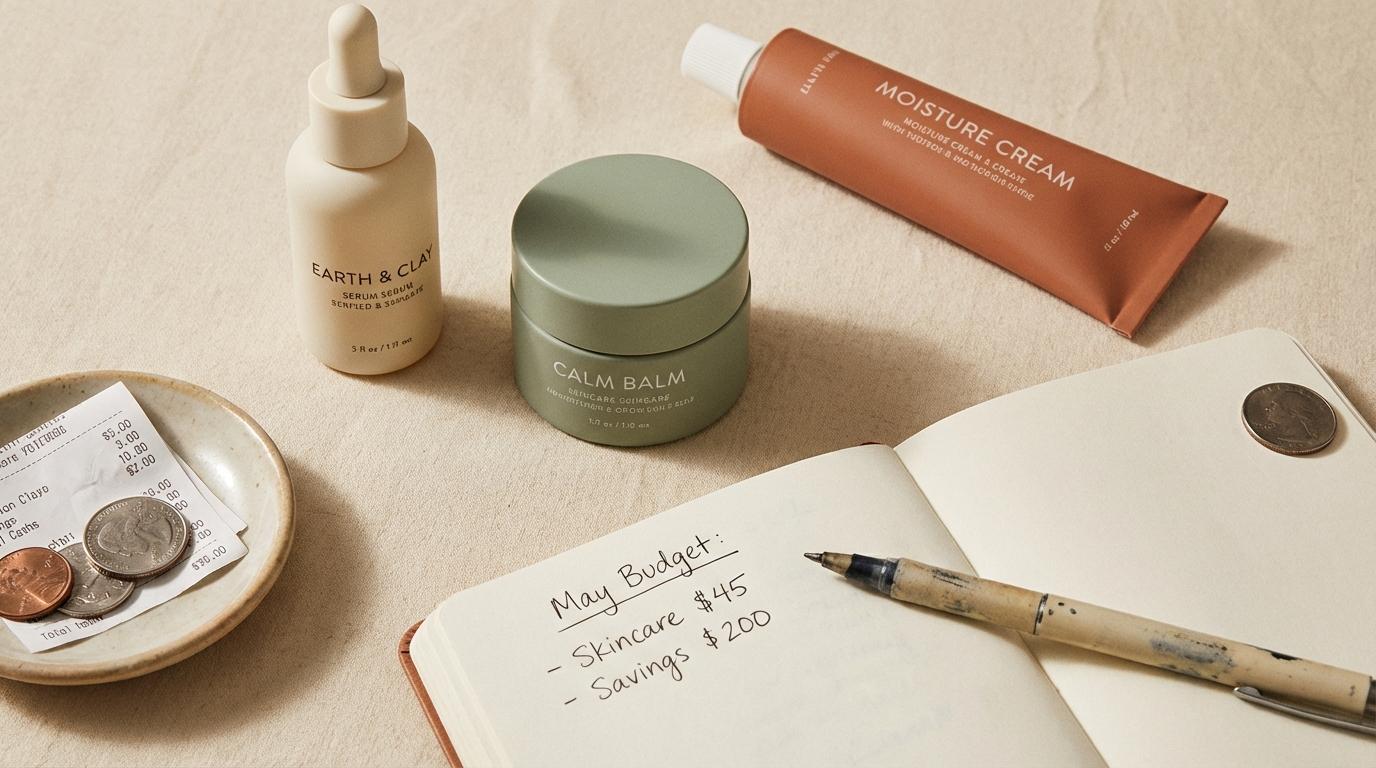
I used to spend $300 a month on skincare, and my skin looked worse than it does now when I spend under $50. That realization hit me hard during my sophomore year when I was rationing ramen and still somehow justifying a $68 serum. Something had to give, and spoiler alert: it wasn’t my skin that suffered when I finally got smart about my spending.
The truth is, I was buying products because of pretty packaging, influencer recommendations, and the genuine belief that expensive meant effective. It took me tracking every single product I owned to realize I was being played. Now I want to share exactly how I turned my skincare budget around without sacrificing results.
The Audit That Changed Everything
Before you can cut spending, you need to know what you’re actually spending. I dumped every skincare product I owned onto my bed one Saturday afternoon and it was honestly embarrassing. There were 47 products. Forty-seven. I had three different vitamin C serums (all half-used), two cleansers I forgot I owned, and a $90 eye cream that made my eyes water every time I used it but I kept trying because, well, ninety dollars.
I made a spreadsheet (I know, peak college student behavior) with columns for product name, price, how often I actually used it, and whether it was doing anything noticeable. The results were brutal. About 60% of my products were either irritating my skin, doing nothing, or sitting there collecting dust while I reached for the same three items every single day.
If you want to try this yourself, pull everything out and be honest. When did you last use that toner? Does that serum actually do anything, or do you just like how it smells? Track your routine for two weeks and write down what you actually reach for. You’ll probably find that your “essentials” are a lot fewer than you thought.
The Four Products That Replaced My Entire Collection
After the audit, I got ruthless. I decided to finish what I had (no waste) and replace things only with products that met two criteria: proven ingredients and reasonable prices. Here’s what my routine looks like now:
A gentle cleanser was my first priority. I switched from a $42 “luxury” cleanser to CeraVe Hydrating Cleanser, which runs about $15 for a bottle that lasts me three months. Same job, better results honestly, because I stopped stripping my skin with that fancy foaming formula.
For my serum, The Ordinary’s Niacinamide 10% + Zinc 1% replaced a $78 “pore-minimizing” serum. It costs around $6, and according to Harper’s Bazaar’s 2025 drugstore roundup, it remains one of the most effective budget serums on the market. My pores don’t look any different than when I was spending twelve times as much.
Moisturizer was an easy swap. I went from a $55 cream in a beautiful glass jar to a basic drugstore moisturizer with ceramides and hyaluronic acid. The ingredients list looked almost identical when I compared them side by side. That’s when I realized I’d been paying for jars and marketing, not better formulas.
Sunscreen was the one place I allowed myself to spend a bit more, around $18 for a cosmetically elegant formula that I’ll actually use daily. Dermatologists agree this is the most important anti-aging product you can buy, so I consider it a worthwhile investment.
When Less Really Is More
Here’s what nobody in the skincare industry wants you to know: using fewer products often works better than layering seven different serums. When I cut my routine down, my skin actually improved. Less irritation, fewer breakouts, and that “glow” everyone chases? Turns out it comes from a healthy skin barrier, not from piling on actives.
I used to layer vitamin C, then niacinamide, then retinol, then peptides, thinking more was better. My skin was constantly red and irritated, and I blamed it on “purging” or “adjustment periods.” When I stripped everything back to basics, the redness went away within two weeks. If you struggle with layering retinol without irritation, simplifying your routine is often the answer.
The dermatologists at Skin Wellness Physicians point out that over-treating skin is one of the most common mistakes people make. Your skin doesn’t need ten steps. It needs consistency with a few good products.
My current routine takes about three minutes morning and night. Cleanse, one serum, moisturizer, sunscreen (AM only). That’s it. I spend maybe five minutes total on skincare daily, compared to the twenty-minute rituals I used to do. I’ve reclaimed hours of my life and my skin thanks me for it.
Tracking Cost Per Use (This Will Change How You Shop)
The mental shift that really stuck was thinking about cost per use instead of sticker price. A $6 serum that lasts two months costs $3 per month, or about 10 cents per day. That $78 serum I used to buy? Even if it lasted three months, I was paying 87 cents every single day to put it on my face.
I started calculating this for everything. My $15 cleanser lasts three months, so that’s about 17 cents per day. My moisturizer runs about 25 cents daily. My entire routine costs me less than a dollar per day, including the nicer sunscreen.
Compare that to what I used to spend. Some days I was putting $4 or $5 worth of product on my face, and for what? The exact same (or worse) results. When you break it down this way, those “affordable luxury” purchases start looking a lot less reasonable.
Next time you’re tempted by a pricey product, do the math. How long will it last? What’s the daily cost? And most importantly, is there a drugstore alternative with the same active ingredients at the same concentration? According to Today’s beauty experts, there almost always is.
The Products I Stopped Buying Entirely
Some categories just got eliminated from my budget completely. Eye creams were the first to go. Most dermatologists will tell you that your regular moisturizer works fine around your eyes. The skin there isn’t magically different enough to require a specialized (and overpriced) product.
Toners were next. I used to spend $30 on toner because I thought I needed it to “balance my pH” or “prep my skin.” Turns out, if you’re using a gentle cleanser, your skin balances itself just fine. That’s $30 a month back in my pocket.
I also stopped buying multiple products in the same category. I don’t need three moisturizers for different “moods” or situations. One good moisturizer works for everything. If my skin is extra dry, I use a bit more. Revolutionary concept, I know.
Sheet masks, peel-off masks, clay masks, bubble masks… all gone. They were fun for self-care nights but did absolutely nothing for my skin that a consistent basic routine couldn’t do better. I replaced mask nights with just taking my time with my regular routine and maybe watching an extra episode of something while I let my moisturizer sink in.
Where I Actually Saved The Most Money
The biggest savings came from stopping the chase. I used to buy every new product that got hyped on social media. That $50 here and $35 there adds up fast when you’re doing it multiple times a month. Now I buy replacements only when I run out, and I stick to what works.
I also started shopping smarter. Drugstore sales, signing up for rewards programs, and buying larger sizes when the cost per ounce is lower. CeraVe’s bigger bottles are a much better value than the travel sizes. Same with The Ordinary, buying the 60ml instead of 30ml saves money long-term.
One thing that helped me resist impulse purchases: a 48-hour rule. If I see something I want, I wait two days before buying. Most of the time, the urge passes. If I still want it after 48 hours, I do the cost-per-use calculation and check if there’s a cheaper dupe.
My Monthly Skincare Budget Now
Let me break down actual numbers. My monthly skincare spending used to average $250-300. Now it averages $35-45, and that includes restocking products as they run out (which doesn’t happen every month for everything).
Here’s what a typical month looks like: cleanser replacement every three months ($5/month amortized), serum every two months ($3/month), moisturizer every six weeks ($7/month), and sunscreen monthly ($18/month). That’s about $33 in basics, with maybe $10-15 for occasional restocks of things like a lip balm or spot treatment.
That’s a 70% reduction from what I used to spend. Over a year, I’m saving roughly $2,400. That’s a vacation. That’s an emergency fund. That’s student loan payments. All because I stopped believing that my skin needed expensive products to look good.
What Actually Matters For Your Skin
After all this experimentation, here’s what I’ve learned actually affects how your skin looks: consistency, gentleness, and sun protection. That’s pretty much it. You don’t need expensive products to achieve any of those things.
Consistency means using your products daily, not switching things up every week chasing better results. Your skin needs time to respond to ingredients. Give products at least 6-8 weeks before deciding they don’t work.
Gentleness means not over-exfoliating, not using too many actives at once, and not stripping your skin with harsh cleansers. A compromised skin barrier looks worse than any expensive serum can fix.
Sun protection is the only scientifically proven way to prevent premature aging. A $15 sunscreen applied daily will do more for your skin than a $200 anti-aging cream used occasionally.
The skincare industry profits from making you feel like you need more. You don’t. You need basics, done consistently. Save your money for things that actually improve your life, and let your skin thrive on simplicity.