
I remember staring at my bathroom counter about three years ago, looking at a single bar of whatever soap was on sale and thinking, “I should probably do something about my skin.” If that sounds familiar, you are in the right place. Building a skincare routine from scratch can feel overwhelming when everyone online seems to have 17 products and a degree in chemistry. But here is the thing: you do not need any of that.
Starting from zero is actually an advantage. You are not trying to untangle years of product hoarding or figure out which of your 12 serums is causing that weird reaction. You get to build something simple that works for YOU.
The Only Three Products You Actually Need
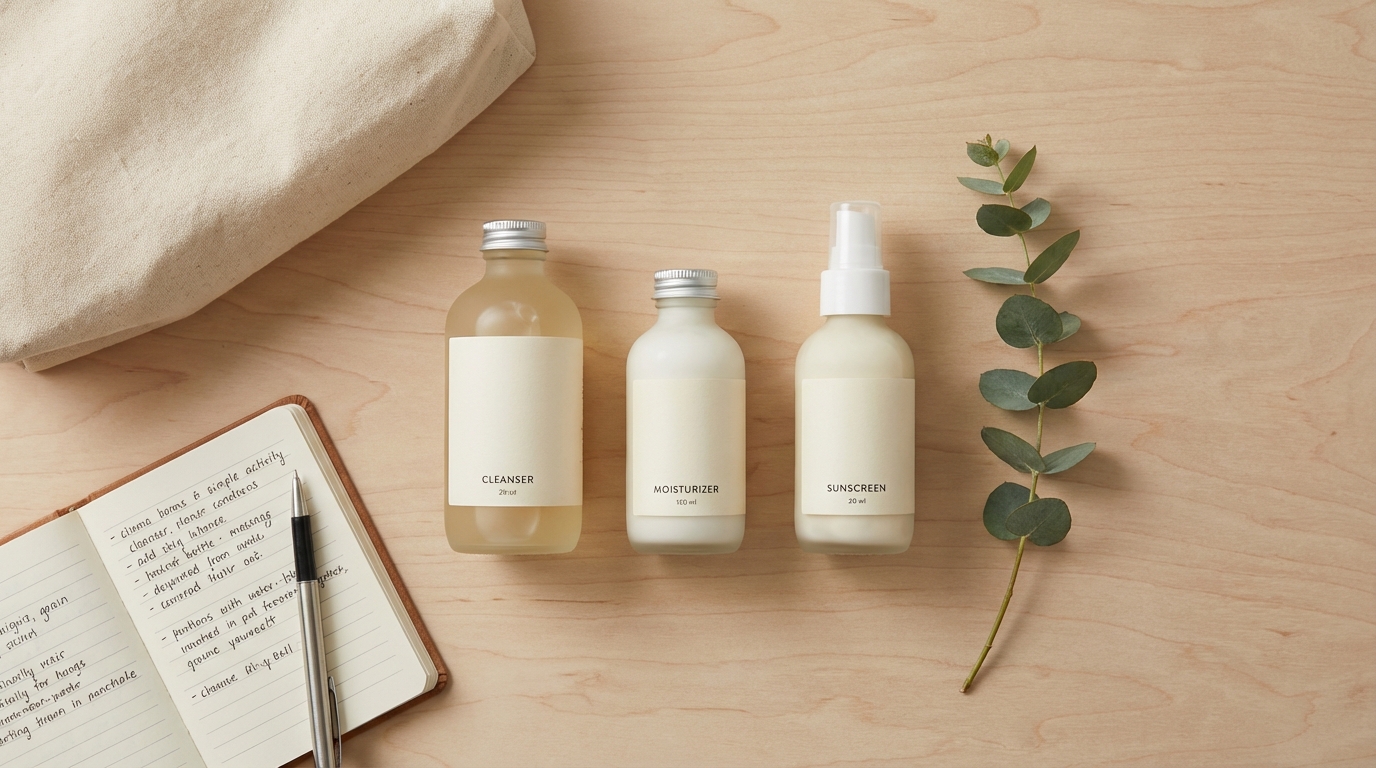
Let me cut through the noise. A functional skincare routine needs exactly three things: a cleanser, a moisturizer, and sunscreen. That is it. Everything else is optional.
Your cleanser removes dirt, oil, and whatever the day threw at your face. Look for something gentle that does not leave your skin feeling tight or squeaky. The CeraVe Hydrating Cleanser is a solid starting point, usually around $12-15 for a bottle that lasts months. But honestly, any gentle cleanser from the drugstore will work.
Your moisturizer keeps your skin hydrated and helps maintain your skin barrier. Yes, even if you have oily skin. Skipping moisturizer actually makes oily skin worse because your face overcompensates by producing more oil. Wild, right? Something basic like Cetaphil or Vanicream works great and will not break the bank.
Sunscreen is non-negotiable. I know it is not the fun part of skincare, but UV damage is responsible for most of the visible aging we will see on our faces. Plus, sun protection helps prevent dark spots and uneven skin tone. Find one that feels comfortable enough that you will actually use it daily. The La Roche-Posay Anthelios line is popular, but plenty of affordable options exist at any drugstore.
The Two-Week Rule That Saved My Sanity
Here is where most people mess up: they buy a bunch of products and start using everything at once. Two weeks later, their skin freaks out and they have no idea which product caused it. Do not be that person. I was that person. It is not fun.
Give each new product at least two weeks before adding anything else. This sounds painfully slow when you are excited to start, but trust me on this one. Two weeks gives your skin enough time to adjust and gives you enough time to notice if something is not working.
Start with your cleanser. Use it morning and night for two weeks. Notice how your skin feels. Is it comfortable? Tight? Breaking out in places it normally does not? Write it down if you need to. After two weeks of cleanser going well, add your moisturizer. Same process. Then sunscreen in the morning.
By the end of six weeks, you will have a complete basic routine and you will know exactly how each product affects your skin. This knowledge becomes incredibly valuable later when you want to add targeted treatments.
Adding Products Without Losing Your Mind
Once you have nailed down your basics, you might want to address specific concerns. Maybe you are dealing with occasional breakouts, or you have noticed some dark spots, or your skin just looks a bit dull. This is where “actives” come in, things like retinol, vitamin C, or chemical exfoliants.
But here is the deal: you do not need any of these to have good skin. They are tools for specific jobs. If you do not have a problem that needs solving, you do not need to add more products just because skincare influencers told you to.
If you do want to add something, the same two-week rule applies. One product at a time. And start slow. Most active ingredients can irritate your skin if you go too hard too fast. The general recommendation for retinol, for example, is to start with once or twice a week and gradually increase.
A simple order for your routine: cleanser first, then any water-based treatments (like niacinamide), then thicker treatments (like retinol), then moisturizer. Sunscreen goes last in the morning. But honestly, if this feels complicated, just do cleanser-moisturizer-sunscreen and call it a day. That alone puts you ahead of most people.
Tracking What Works (and What Does Not)
I keep a note on my phone where I jot down new products and any changes I notice. Nothing fancy. Just the date I started something, the product name, and brief notes like “skin feels softer” or “caused small breakouts on chin.”
This sounds extra, but it has saved me from repurchasing products that did not work and helped me remember which ones did. Our memories are unreliable, especially over the months it takes to really see results from skincare. A quick note takes five seconds and future you will appreciate it.
You can also take photos in consistent lighting every few weeks. The changes in your skin are gradual enough that you might not notice them day to day, but comparing photos from a month apart can be eye-opening. Just make sure you are using the same lighting, same angle, same distance. Morning light near a window works well.
The Mindset Shift That Makes This Sustainable
Here is something nobody told me when I started: skincare is maintenance, not transformation. The goal is not to achieve some perfect “after” photo and then stop. It is about taking care of your skin the same way you take care of your teeth, a daily habit that prevents problems and keeps things functioning well.
This reframing helped me stop chasing trends and buying products I did not need. It also made the routine feel less like a chore and more like, well, brushing my teeth. Something I just do because it needs doing.
Your routine does not need to be elaborate to work. Three products, done consistently, will do more for your skin than a cabinet full of expensive serums you use sporadically. Consistency beats complexity every single time.
And on the days when you are exhausted and can barely function? Just wash your face and go to bed. Skip the moisturizer, skip everything else. One night will not undo your progress. This is a long game, and giving yourself permission to be imperfect is part of making it sustainable.
Where to Go From Here
You have got the basics now. Cleanser, moisturizer, sunscreen. Two weeks per product. Track what you notice. That is genuinely all you need to start building a routine that works.
If you want to learn more about specific ingredients or concerns, the Lab Muffin Beauty Science blog breaks down the actual science in an understandable way. And r/SkincareAddiction has solid beginner resources, though take individual advice there with a grain of salt since everyone has different skin.
Starting from zero means you get to build this your way, one product at a time, based on what YOUR skin actually needs. That is not a disadvantage. That is the smartest way to do it.