
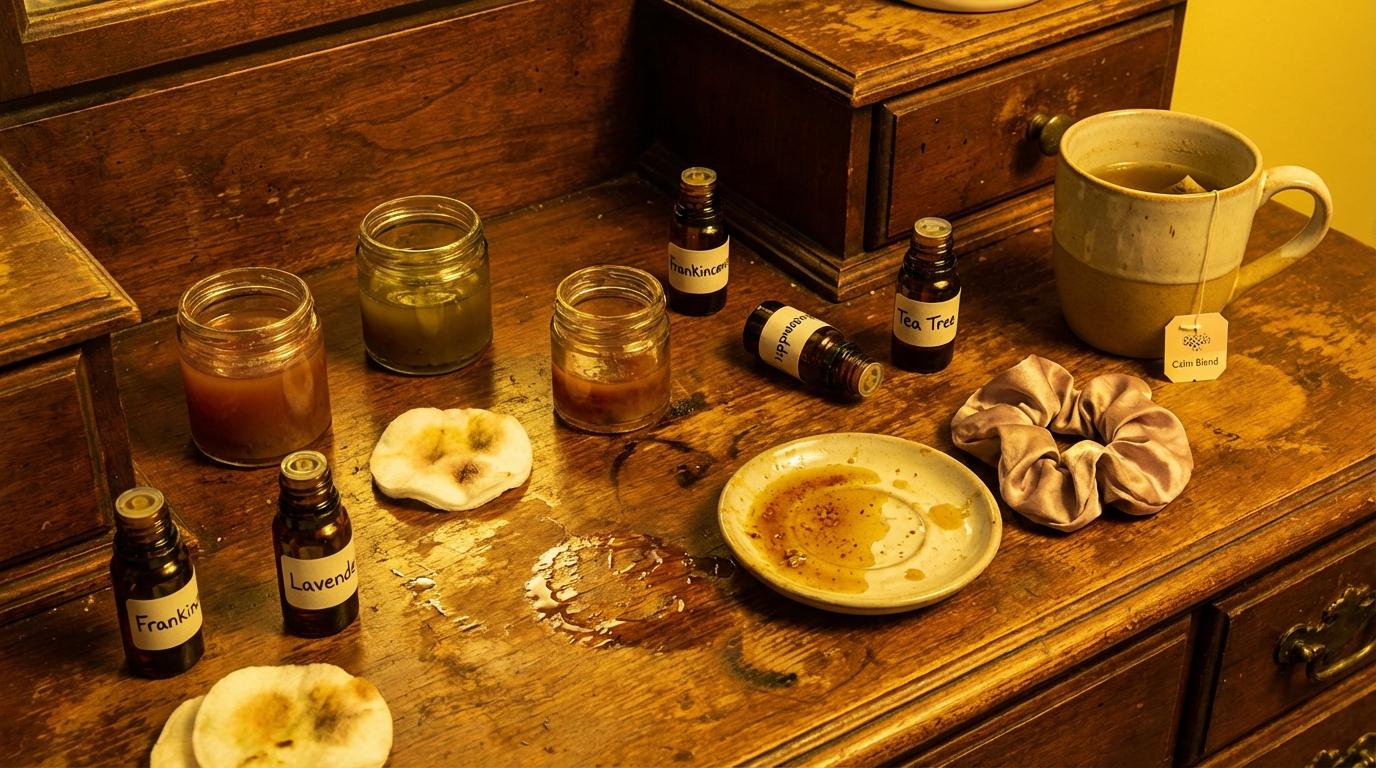
Essential oils seem like the perfect natural skincare solution. They’re not, and I had to learn that the hard way after a lavender oil incident left my face looking like I’d gotten into a fight with a cheese grater.
I was nineteen, broke, and convinced that “natural” meant “gentle.” A friend told me to dab pure lavender oil on a stubborn breakout. Within two days, I had a red, itchy patch that took weeks to heal. That’s when I finally started researching what these concentrated plant extracts actually do to skin, and the findings were not comforting.
What Sensitization Actually Means
Sensitization is basically your skin developing an allergy over time, and it’s one of the biggest risks with essential oils. According to DermNet NZ, the increased use of essential oils has led to rising reports of allergic contact dermatitis. The scary part? You might use an oil for weeks or months with no problems before your skin suddenly decides it’s had enough.
This reaction is classified as a delayed hypersensitivity response, typically showing up 24 to 72 hours after exposure. So when your face explodes two days after using a new product, you might not even connect it to that essential oil you added to your moisturizer on Monday.
Who’s most at risk? Anyone can develop sensitization, but people with existing skin conditions like eczema are particularly vulnerable. And here’s what nobody warns you about: once you’re sensitized to an essential oil, you might react to it forever. One bad reaction can mean you have to avoid that ingredient for life.
The Phototoxicity Problem
If sensitization wasn’t enough to worry about, some essential oils also cause phototoxic reactions. This means the oil interacts with UV light to literally burn your skin. We’re talking actual burns, blisters, and pigmentation changes that can last for months.
Citrus oils are the main culprits here, especially bergamot. According to the Tisserand Institute, bergamot has such high levels of phototoxic compounds (called furanocoumarins) that the safe dilution for sun-exposed skin is only 0.4%. Most people making DIY products at home have no idea this limit exists.
Other phototoxic oils include lemon, lime, grapefruit, and bitter orange when they’re cold-pressed. The burns can show up anywhere from one to 24 hours after sun exposure, and the discoloration left behind might stick around for months. I’ve seen photos of people with hand-shaped burn marks from applying lemon oil before going outside. Not worth it.
The Tea Tree Exception (Sort Of)
Tea tree oil is probably the most commonly recommended essential oil for acne, and it does have some research behind it. A randomized controlled study found that a 5% tea tree oil gel was effective for mild to moderate acne. Another older study from 1990 compared 5% tea tree oil to 5% benzoyl peroxide and found similar effectiveness, with fewer side effects from the tea tree.
But here’s the catch: concentration matters enormously. The studies showing benefits used carefully formulated 5% concentrations, not pure oil or random amounts mixed at home. Pure tea tree oil is around 100% concentration, which can cause dryness, irritation, stinging, burning, and redness according to Healthline.
There’s also the oxidation problem. Tea tree oil degrades when exposed to air, forming compounds that are much more likely to sensitize your skin. That bottle you’ve had open for six months? It’s not the same product you bought. If you want more details on tea tree specifically, we have a whole breakdown of why natural doesn’t equal safe.
Even the American Academy of Dermatology’s 2024 guidelines note there isn’t sufficient evidence to officially recommend tea tree oil for acne treatment. It might help some people as a complementary option, but it shouldn’t be your primary acne treatment.
Why DIY Essential Oil Skincare Backfires
I get the appeal of DIY skincare. I really do. When you’re on a college budget and a 10ml bottle of essential oil costs less than a single branded serum, mixing your own products seems smart. The problem is that formulating safe skincare is way more complicated than Pinterest makes it look.
Proper dilution requires knowing the safe maximum percentages for each oil, which vary wildly. Grapefruit can be used at up to 4% on sun-exposed skin, but bergamot maxes out at 0.4%. Getting these ratios wrong at home is incredibly easy, especially without proper measuring tools.
Then there’s the carrier oil issue. Essential oils should never be applied undiluted to skin. Full stop. But even diluted, you need to consider whether your carrier oil is compatible with your skin type and won’t clog your pores. Mixing tea tree into coconut oil might sound natural and lovely, but coconut oil is highly comedogenic and will probably break you out anyway.
Dermatologists also point out that improperly processed oils can contain impurities that increase irritation risk. The essential oil market isn’t tightly regulated, so quality varies dramatically between brands. What you’re buying might not even be pure essential oil.
The Oils Dermatologists Say to Avoid
Some essential oils are just too risky for most people to use safely on skin. According to dermatologists, the ones to be especially careful with include lemon verbena, lemongrass, cinnamon bark, oregano, thyme, and clove. These are potent and irritating even at low concentrations.
Ylang-ylang is another one that raises red flags. The Scientific Community on Consumer Safety found it to be a contact allergen with what they called an “alarming” prevalence of sensitization. That pretty scent comes with real risks.
Even lavender, which people assume is universally gentle, can cause problems. It’s one of the most common essential oil sensitizers because it’s so widely used. The more exposure you have to any essential oil, the higher your chance of eventually developing a reaction to it.
What to Do Instead
If you want the benefits that essential oils promise, like acne-fighting or calming properties, look for properly formulated products that contain these ingredients at tested, safe concentrations. A dermatologist-developed serum with tea tree will be more effective and safer than anything you can mix in your bathroom.
For acne specifically, proven ingredients like benzoyl peroxide, salicylic acid, and adapalene have way more research behind them than any essential oil. If you’re dealing with persistent breakouts, check out our guide on niacinamide for acne for another well-studied option.
If you’re set on trying an essential oil product, patch test first. Apply a small amount to your inner forearm and wait 48 hours. If nothing happens, try it on a small area of your face and wait another few days. And if you’re using anything with citrus oils, avoid sun exposure or wait until evening to apply.
Your skin barrier is worth protecting. If it gets damaged by a bad reaction to essential oils, you’re looking at weeks or months of recovery before you can use any active ingredients again. That’s time, money, and frustration you could avoid by just being cautious about what concentrated plant extracts can do to skin.
Natural ingredients aren’t automatically gentle, and “chemical-free” marketing is usually misleading anyway, since water and plant oils are technically chemicals too. The best skincare approach is one based on what research actually supports, not what sounds the most Instagram-worthy.