
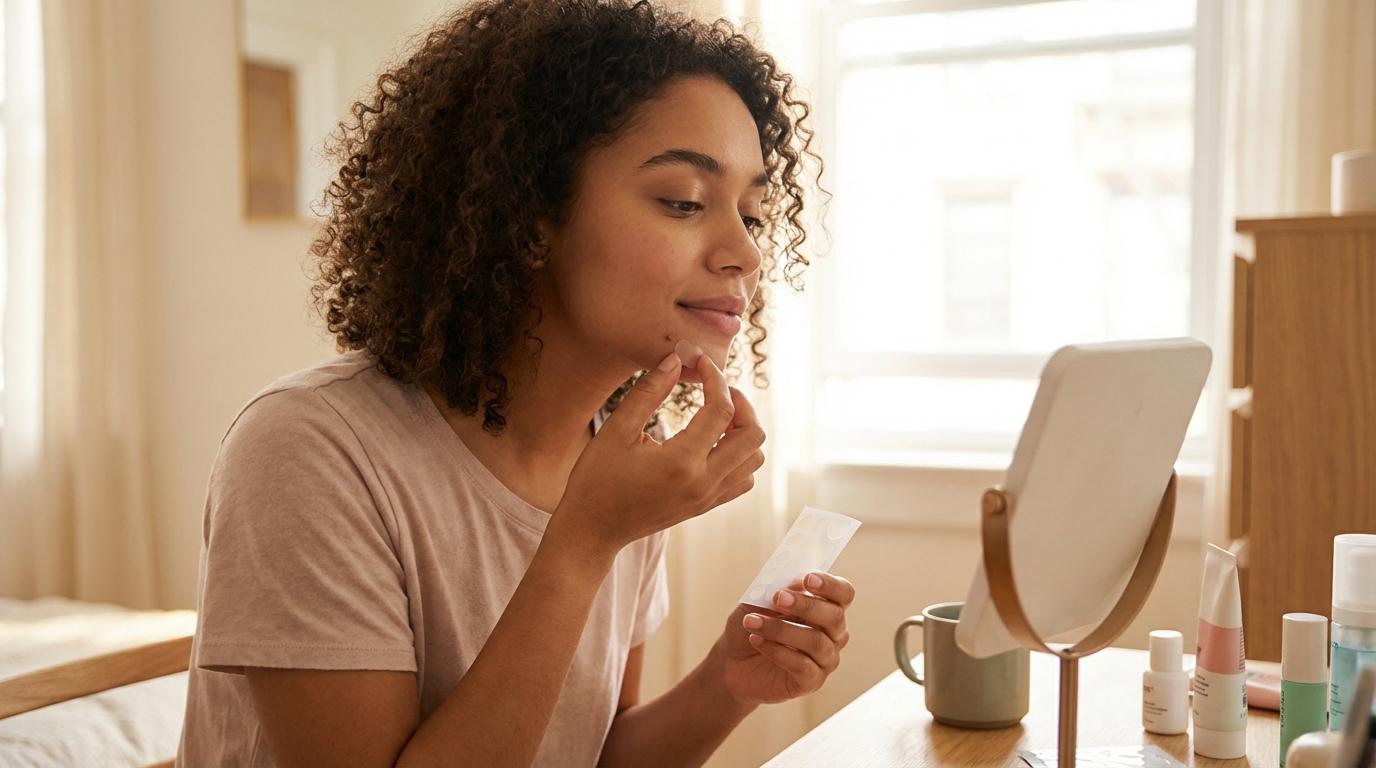
You’ve probably seen them everywhere by now: those little translucent stickers people slap on their faces before bed, during their morning coffee, or even out running errands like tiny badges of skincare honor. Hydrocolloid patches have absolutely exploded in popularity over the past few years, but there’s one question that keeps coming up in every group chat and comment section: do these things actually do anything, or is this just another TikTok trend we’re all falling for?
As someone who gets genuinely excited about wound care science (yes, I’m that person), I’ve been waiting to break this down for you. Because here’s the thing: hydrocolloid technology isn’t new, and understanding how it works will help you figure out when to reach for these patches and when you’re better off with something else entirely.
What Is Hydrocolloid and Why Should You Care?
Hydrocolloid dressings have been used in medical settings since the 1980s for wound healing. The material is made from gel-forming agents like gelatin, pectin, and carboxymethylcellulose suspended in an adhesive matrix. When this material comes into contact with wound exudate (fancy term for the fluid that oozes from a wound), it absorbs the liquid and forms a gel.
This creates something really important: a moist wound healing environment. Research has consistently shown that wounds heal faster when kept slightly moist rather than dried out. The science on moist wound healing is well-established at this point, and it’s one of the reasons why letting your cuts “air out” is actually outdated advice.
When skincare brands realized they could shrink these medical dressings down to pimple-sized circles, the acne patch was born. But the key thing to understand is that these patches work the same way on pimples as they do on wounds: by absorbing fluid and creating optimal healing conditions.
How Hydrocolloid Patches Actually Absorb Pimple Gunk
Here’s where it gets interesting. The hydrocolloid material acts like a sponge with a specific mission. When you place a patch over a pimple that has come to a head (meaning there’s already an opening in the skin), the patch creates a seal. The gel-forming agents in the patch then draw moisture and pus out of the pimple through osmotic action.
You know that satisfying (gross? satisfying?) white or yellowish stuff you see collected in the patch when you peel it off? That’s sebum, dead white blood cells, and bacteria that the patch has successfully wicked out of your pore. The patch essentially gives all that gunk somewhere to go instead of letting it spread to surrounding skin or get pushed deeper when you inevitably touch your face.
The absorption happens gradually over several hours, which is why most patches work best when left on overnight or for at least 6-8 hours. Some patches will turn white or opaque as they absorb, which is a helpful visual indicator that they’re doing their job.
The Pimples That Hydrocolloid Patches Actually Help
This is crucial information, so pay attention. Hydrocolloid patches work best on:
Whiteheads that have come to a head: These are your prime candidates. If you can see a visible white or yellow tip on the pimple, the patch can help draw out that material.
Pimples you’ve already popped: Look, we both know you’re going to pop some pimples even though every dermatologist says not to. If you do end up popping a pimple, slapping a hydrocolloid patch on top helps absorb any remaining fluid, protects the open wound from bacteria, and prevents you from touching it while it heals.
Pimples with a visible opening: Whether natural or from extraction, if there’s a pathway for fluid to exit, the patch can work its magic.
The American Academy of Dermatology recommends leaving pimples alone, but if you’re going to intervene, protecting the area afterward with a clean barrier makes sense.
When Hydrocolloid Patches Won’t Help (Sorry)
Here’s where I have to be honest with you, because I see a lot of people wasting patches on pimples that simply aren’t going to respond. These patches are not magic. They have limitations based on basic physics and biology.
Deep cystic acne: Those painful, under-the-skin bumps that never come to a head? A hydrocolloid patch isn’t going to touch those. There’s no opening for the material to be absorbed through, and the inflammation is happening too deep in the skin. For cystic acne, you’re better off with targeted treatments containing benzoyl peroxide or seeing a dermatologist for options like cortisone injections.
Closed comedones (blackheads and non-inflamed whiteheads): These are clogged pores without active infection or inflammation. There’s no fluid to absorb, so a hydrocolloid patch is just going to sit there doing nothing.
Hormonal acne without surface breakouts: If your breakouts are driven by hormonal fluctuations and stay beneath the surface, patches are treating the symptom without addressing the cause. The research on hormonal acne suggests that systemic approaches are often necessary.
Fresh, just-forming pimples: That tiny red bump that’s just starting? A patch might actually slow things down because you’re sealing in the bacteria before your body has had a chance to bring everything to the surface.
Not All Patches Are Created Equal
The patch market has gotten wild. You’ve got the basic hydrocolloid patches, but now there are also “medicated” versions that contain active ingredients like salicylic acid, tea tree oil, or niacinamide. These work differently.
Pure hydrocolloid patches rely solely on the absorption mechanism I described above. Medicated patches are using the patch as a delivery system to keep active ingredients in contact with the pimple for an extended time. Both approaches can be effective, but they’re doing different things.
If you’re using a patch with salicylic acid, you’re getting chemical exfoliation to help unclog the pore. If you’re using pure hydrocolloid, you’re focusing purely on fluid extraction. For already-open pimples, plain hydrocolloid often works great. For stubborn spots that need more help coming to a head, a medicated version might speed things along.
Price-wise, there’s a huge range. Drugstore brands like basic hydrocolloid patches from your local pharmacy work just as well as expensive K-beauty versions in most cases. The hydrocolloid material is the same; you’re often paying extra for cute packaging or added ingredients.
Application Tips That Actually Matter
Getting the most out of your patches requires doing a few things right:
Start with clean, dry skin. And I mean really dry. Oil, moisturizer, and serums create a barrier between the patch and your skin, which prevents proper adhesion and absorption. If you’ve just done your skincare routine, either skip the patch or apply it before your products.
Don’t put anything over the patch. I see people layering moisturizer or sunscreen on top of their patches. This defeats the purpose. The patch needs to be the outermost layer to absorb properly.
Give it time. These aren’t instant fixes. Most patches need 6+ hours to work effectively. Overnight wear is ideal. If you’re changing patches every two hours hoping for faster results, you’re interrupting the process.
Know when to swap. Once a patch turns fully white or starts lifting at the edges, it’s done its job. At that point, you can apply a fresh one if the pimple still has more to give, or move on with your life.
Press firmly when applying. You want good contact between the patch and your skin, especially around the edges. A loose patch won’t absorb as effectively.
The Real Benefits Beyond Absorption
Here’s something people don’t talk about enough: one of the biggest benefits of these patches is purely behavioral. They physically stop you from touching, picking, and popping your pimples throughout the day.
Skin-picking can lead to scarring, spread bacteria to other pores, and prolong healing time. If putting a patch on a pimple is what stops you from messing with it for eight hours, that alone is valuable. Sometimes the best thing you can do for a pimple is leave it alone, and patches make that easier.
They also create a protective barrier against environmental bacteria, friction from pillowcases or phones, and the general germs your hands pick up throughout the day. Even if the patch isn’t actively absorbing anything, that protective function is doing something.
Setting Realistic Expectations
Hydrocolloid patches are not going to cure your acne. They’re not going to prevent future breakouts. They’re not a substitute for a consistent skincare routine or professional treatment if you’re dealing with persistent acne issues.
What they ARE is a useful tool for managing individual pimples that have already formed, particularly ones that have come to a head. They can speed up healing time by a day or two in optimal conditions. They can reduce the temptation to pick. They can protect a compromised skin barrier while a pimple heals.
The science supports their mechanism of action for the right type of pimple. Studies on hydrocolloid wound dressings consistently show benefits for moist wound healing, and that translates to acne when applied appropriately.
So, Do They Work?
Yes, with caveats. Hydrocolloid patches genuinely work for what they’re designed to do: absorb fluid from open pimples and create a healing environment. They’re not placebo, they’re not marketing hype, and the science behind them is solid.
But they’re not universal acne fighters. Using them on the wrong type of pimple means wasting product and potentially getting frustrated when you don’t see results. Match the tool to the job: open, draining pimples get patches, deep cystic spots need other interventions.
Keep a few in your skincare drawer for those moments when a pimple is ready to be dealt with. Skip the temptation to use them on every bump that appears. And remember that managing acne long-term is about more than spot treatment; it’s about understanding your skin, your triggers, and building a routine that prevents breakouts before they happen.
The patches are genuinely useful. They’re just not magic. And honestly? In skincare, clear information about what works and what doesn’t is worth more than any miracle product promise.