
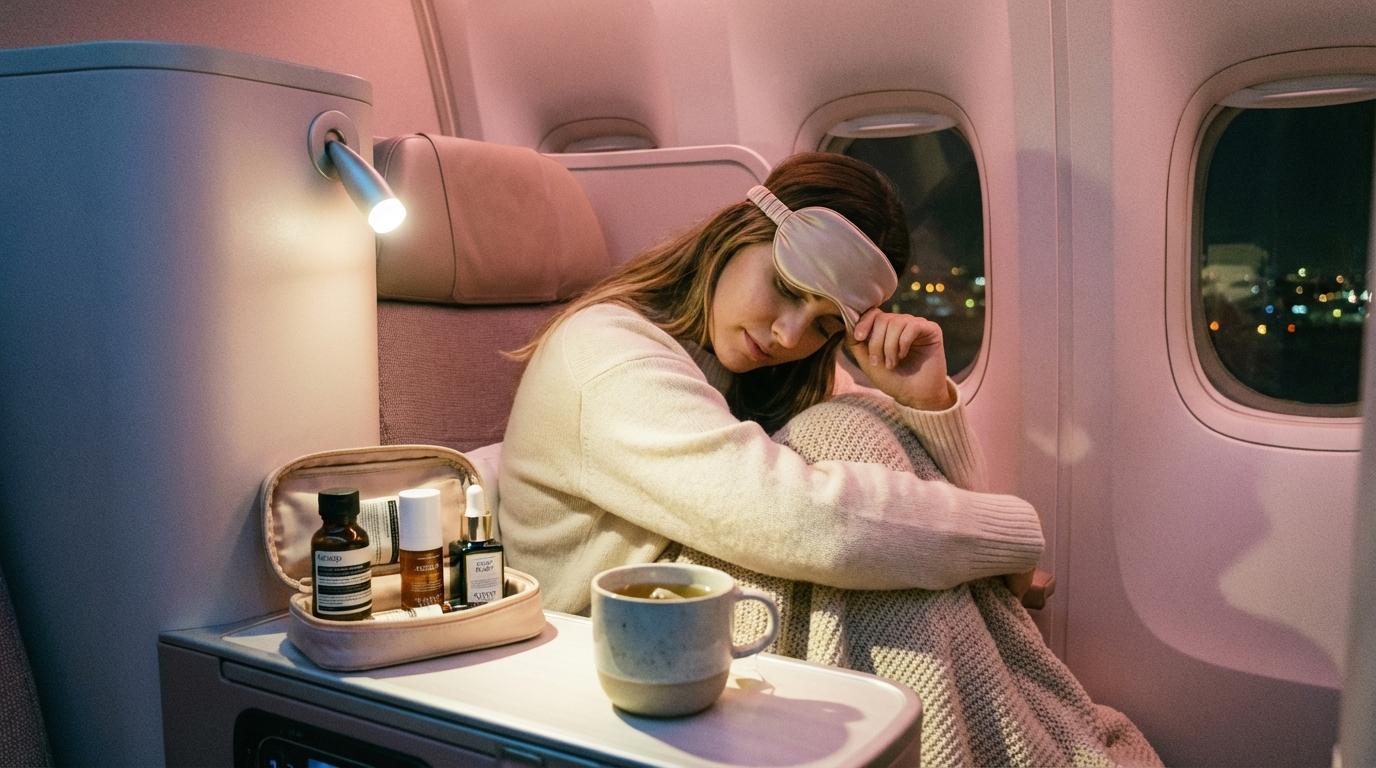
Traveling through the night feels like borrowing time from sleep, and your skin notices every minute of it. Red eye flights have a way of stripping away moisture, leaving you to land looking like you need a vacation from your vacation. But with a little intention and the right approach, you can step off that plane with skin that feels calm and cared for, not depleted and dull.
The cabin environment presents a unique challenge. Recycled air with humidity levels around 10 to 20 percent creates conditions drier than most deserts. According to the American Academy of Dermatology, this kind of environment pulls moisture from your skin rapidly, which is why hydration becomes your biggest priority before, during, and after your flight.
The Day Before: Building Your Base
Your skin prep actually starts 24 hours before you board. Think of it like preparing a plant before leaving it unattended. You want to give it everything it needs to survive the drought ahead.
Focus on deep hydration the day before your flight. This means drinking more water than usual and layering hydrating products that evening. A hydrating mask, something with hyaluronic acid or ceramides, helps create a reservoir of moisture your skin can draw from.
Skip any harsh treatments the day before. No retinoids, no strong acids, no physical exfoliation. Your skin needs to be in its most resilient state, not recovering from active ingredients. If you have a consistent routine that includes actives, pause them 24 to 48 hours before travel. Your skin will handle the stress of flying much better when it starts from a calm baseline.
Sleep matters here too. A well-rested face has better barrier function and more even tone. If pre-travel anxiety keeps you up, even resting with your eyes closed helps. Consider this part of your skin rest day, where less effort on products means more recovery time for your skin itself.
What to Skip at the Airport
Airports are full of temptations and habits that work against your skin. Understanding what to avoid can be just as valuable as knowing what to do.
Caffeine and alcohol both dehydrate you, and the effects amplify in dry cabin air. That pre-flight glass of wine or triple espresso might feel necessary for nerves or energy, but your skin will pay for it. Stick to water, herbal tea, or coconut water if available.
Avoid applying makeup before boarding. I know it feels counterintuitive, especially if you want to look presentable when you land. But makeup sits on top of your skin, creating a barrier that prevents products from absorbing properly during the flight. It also mixes with the oil and sweat that naturally accumulates, potentially clogging pores.
Skip the airport skincare samples at duty free. The lighting is terrible, you have no idea how your skin will react, and trying something new before locking yourself in a metal tube for hours is a recipe for irritation. Stick with products you know and trust.
Heavy, rich foods close to boarding can also affect your skin. Salty snacks cause water retention and puffiness, while greasy foods can trigger breakouts for some people. Eat a balanced meal a few hours before your flight, focusing on vegetables, lean protein, and foods with natural hydration like cucumber or watermelon.
Your In-Flight Product Strategy
Less is genuinely more when it comes to in-flight skincare. You do not need a 10-step routine at 35,000 feet. What you need is smart layering with products that work together to protect and hydrate.
Start clean. Before takeoff, use a gentle micellar water or cleansing wipe to remove any residue from your face. This gives your skin a fresh canvas. The Paula’s Choice ingredient dictionary recommends looking for gentle surfactants that cleanse without stripping.
Layer a hydrating essence or toner. Something with hyaluronic acid helps draw moisture into the skin. Pat it in gently rather than rubbing. Your movements should be calming, not aggressive.
Follow with a barrier-supporting moisturizer. Look for ingredients like squalane, ceramides, or niacinamide. These work to lock in the hydration you just added while strengthening your skin barrier against the dry air.
The real key is a facial oil or occlusive balm as your final layer. This seals everything in place. Without this step, the dry cabin air will pull the moisture right back out of your skin. Think of it as putting a lid on a pot of water to keep it from evaporating.
Reapply a hydrating mist every few hours. Some people love thermal water sprays, others prefer essence mists. Either works. Just avoid anything with alcohol, which will dry you out further. After misting, pat the product in and follow with a touch more oil or balm on dry areas.
Lip balm deserves attention too. Lips crack and peel quickly in dry air. Apply a rich, occlusive balm before takeoff and reapply throughout the flight. Same goes for the skin around your nose if you tend toward dryness there.
Eye Care in the Air
The under-eye area often suffers most during red eye flights. This delicate skin has fewer oil glands and shows dehydration quickly.
Apply a hydrating eye cream before boarding. Something with peptides or caffeine can help, though the main goal is moisture. Eye patches are popular for in-flight care, and they do provide intense hydration to the area. If you use them, apply mid-flight when you are trying to rest, and remove them after 15 to 20 minutes.
Avoid rubbing your eyes, even when tired. This causes irritation and can worsen puffiness. If your eyes feel dry, use lubricating eye drops rather than rubbing.
Landing Recovery Routine
How you treat your skin in the first hour after landing sets the tone for the rest of your trip. Your skin is stressed and confused, having just spent hours in an abnormal environment. Gentle care helps it bounce back faster.
If possible, cleanse your face as soon as you arrive at your destination. Use a gentle, hydrating cleanser to remove the layers of product and any accumulated grime from the flight. Your skin will feel instantly refreshed.
Apply your regular hydrating products, but keep it simple. Essence, serum, moisturizer. Skip actives for another day or two while your skin rebalances. Think of this as an extension of the skin reset approach, where you give your skin time to recover before adding complexity back in.
Cool water feels incredible on post-flight skin. Consider splashing your face with cold water before applying products, or using a jade roller you have kept cool. This helps with puffiness and increases circulation.
Stay extra hydrated for the next 24 hours. Your body is catching up on hydration, and so is your skin. Water, herbal tea, and water-rich foods all help. Avoid heavy drinking or excessive caffeine while you adjust.
If you traveled across time zones, your skin will appreciate consistency in routine even as your schedule shifts. Try to cleanse and moisturize at your usual times relative to when you sleep and wake, rather than forcing it to match the new time zone immediately.
Product Suggestions That Travel Well
When packing for a red eye, think about texture and portability. According to Byrdie’s travel skincare guide, solid or balm formats travel better than liquids and do not count toward your liquid allowance.
A cleansing balm in a small tin handles both makeup removal and cleansing without needing water. Solid moisturizers and oil balms do double duty on lips, cuticles, and dry patches. Stick formats for under-eye treatment exist and work wonderfully for travel.
Decant your essences and mists into small spray bottles. Having them easily accessible in your personal item means you will actually use them.
Pack everything in a clear bag you can grab quickly. You want your routine to be accessible without digging through your carry-on in dim lighting.
The Mindset Shift
Red eye flights are uncomfortable by nature. Your skin will not look perfect when you land, and that is okay. The goal is not perfection but resilience. You are giving your skin support so it can handle the stress and recover quickly.
Release the expectation of landing with a fresh face. Accept that some tiredness will show, some puffiness might happen. What matters is that you treated your skin gently and gave it what it needed. The recovery happens in the hours and days after, not in the moment of touchdown.
There is something meditative about in-flight skincare when you approach it the right way. It becomes a small ritual of self-care in an environment designed for efficiency over comfort. Taking those moments to care for yourself quietly, patting in products and breathing slowly, creates calm in chaos.
Your skin knows how to heal. Your job is simply to support it through challenging conditions. With the right prep, a few key products, and patience with yourself, red eye flights become manageable rather than dreaded. Land gently, take your time recovering, and trust that your skin will bounce back with a little care and intention.