
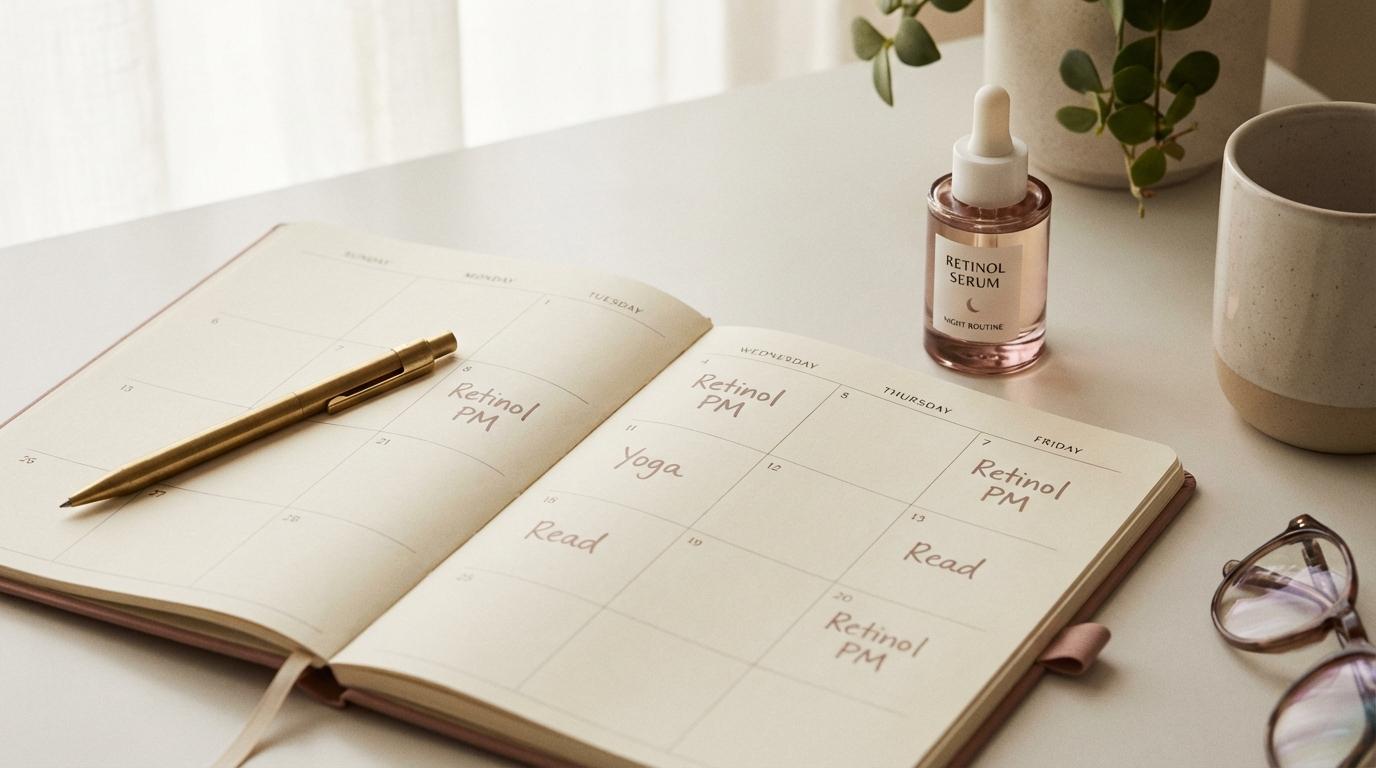
Is your retinol actually doing anything for your skin? I spent six months using a 0.25% retinol before realizing it had basically become water to my face. My skin had fully adjusted, zero irritation, zero new results, and I was just going through the motions every night thinking I was being diligent. Spoiler: I needed to level up, and you might too.
Figuring out when to increase your retinol strength is one of those things nobody really explains well. Too soon and you wreck your moisture barrier. Too long at the same dose and you plateau. I’ve been through this exact guessing game on a student budget, so let me share what actually works.
Understanding Retinol Percentages
Before we get into signs you need more, let’s talk numbers. Retinol products typically range from 0.01% to 1%, and the jump between each level matters more than you’d think.
Most beginners start somewhere between 0.25% and 0.3%, which is smart. According to the American Academy of Dermatology, starting low and slow is the gold standard for avoiding the dreaded “retinol uglies” phase where your skin flakes and burns before it gets better.
The typical progression looks like this:
- 0.25% to 0.3%: Starter strength, good for retinol virgins
- 0.5%: Intermediate, where most people find their sweet spot
- 0.75% to 1%: High strength, not everyone needs to go here
- Prescription tretinoin (0.025% to 0.1%): The heavy hitters, requires a derm visit
The percentages for prescription retinoids seem lower, but they’re about 10 to 20 times more potent than over-the-counter retinol because they don’t need to convert in your skin. Keep that in mind when comparing products.
Signs Your Current Retinol Stopped Working
Your skin talks to you. When your retinol was first working, you probably noticed something, whether that was mild peeling, faster cell turnover, or just that “tighter” feeling after applying. When those signs disappear completely and you’re not seeing continued improvement, that’s data.
The main indicators that you’ve plateaued:
Zero irritation for 8+ weeks straight. I’m not saying you should be flaking constantly. But if you can slather your retinol on like it’s basic moisturizer with absolutely no sensitization, your skin has likely adapted. Some dermatologists, like Dr. Dendy Engelman, note that complete tolerance after 2 to 3 months often means you’re ready to increase.
Results have stalled. Remember when you first started and noticed smoother texture or fewer breakouts after a few weeks? If you’ve been at the same strength for 4+ months with no new improvements, that’s not a bad thing necessarily. It just means you’ve extracted what this percentage can give you.
Your concerns haven’t been addressed. Started retinol for fine lines but they’re still there after 6 months of consistent use? That might be a strength issue, not a time issue. Deeper concerns like wrinkles and hyperpigmentation often need higher concentrations or prescription-level products.
Signs You Should Stay Put
Not everyone needs to climb the retinol ladder. Seriously. I have friends who’ve been happily using 0.5% for years with great results. If your skin is doing well, don’t fix what isn’t broken just because some influencer says you need “medical grade” everything.
Stay at your current strength if:
You still get occasional sensitivity. A little tightness or dryness around your nose or mouth after application? That’s your skin telling you it’s still working. If you’re experiencing this even after months of use, your retinol is still doing its job and there’s no need to push harder.
Your skin goals are being met. Using retinol for general maintenance and texture? If your skin looks good to you, higher isn’t automatically better. A 0.3% used consistently beats a 1% that irritates you so much you only use it twice a month.
Your routine has other actives. Running niacinamide, vitamin C, or AHAs alongside retinol? Your skin is already working hard. Adding a stronger retinol on top could tip you into over-exfoliation territory, and trust me, a damaged moisture barrier is way worse than slower anti-aging results.
If you’re dealing with irritation from retinol, I wrote about how to build a routine for peeling skin that might help you troubleshoot before leveling up.
How to Level Up Safely
Decided you’re ready for more? Don’t just jump from 0.3% to 1% because you found a deal at TJ Maxx (been there). The move should be gradual.
Go up one increment at a time. From 0.25%, move to 0.5%. From 0.5%, try 0.75% or make the jump to prescription if your derm agrees. Skipping levels is how you end up with a compromised skin barrier that takes weeks to repair.
Restart the slow introduction process. When I moved from 0.3% to 0.5%, I went back to using it just twice a week, then three times, then every other night. Your skin needs to acclimate to the higher dose even if you’re a retinol veteran. Research on retinoid tolerance confirms that gradual introduction reduces adverse reactions significantly.
Buffer if needed. Apply moisturizer first, wait 10 minutes, then apply retinol. This “sandwich method” reduces irritation while still delivering benefits. Some people do this permanently at higher strengths, and that’s completely valid.
For tips on how to combine retinol with other products without irritation, check out our guide on layering retinol properly.
Budget-Friendly Options at Each Level
Because I know we’re not all working with a La Mer budget, here are affordable options that actually perform at each strength tier:
Starter (0.25% to 0.3%):
- The Ordinary Retinol 0.2% in Squalane, around $6
- CeraVe Resurfacing Retinol Serum, around $15
- Versed Press Restart Retinol Serum, around $20
Intermediate (0.5%):
- The Ordinary Retinol 0.5% in Squalane, around $7
- La Roche-Posay Retinol B3 Serum, around $35
- Naturium Retinol Complex Serum, around $18
High Strength (0.75% to 1%):
- The Ordinary Retinol 1% in Squalane, around $8
- Paula’s Choice 1% Retinol Treatment, around $55
- Neutrogena Rapid Wrinkle Repair, around $25 (uses retinol SA)
The Ordinary is genuinely unbeatable for price-to-performance at every level. I’ve used their entire retinol line and the formulas are stable and effective. Just don’t expect elegant textures because you’re paying for ingredients, not luxury packaging.
When to Consider Prescription Tretinoin
After maxing out over-the-counter options, prescription tretinoin becomes the logical next step if you want even stronger results. But it’s not automatically necessary for everyone.
Tretinoin makes sense if:
- You’ve been at 1% retinol for 6+ months with no irritation and want more
- You’re targeting deeper wrinkles, stubborn acne, or significant sun damage
- You want the most evidence-backed anti-aging ingredient available
Getting a prescription is easier than it used to be. Telehealth services like Curology or Apostrophe can hook you up with tretinoin for $15 to $25 per month, which is actually cheaper than some high-end OTC retinols. Clinical studies consistently show tretinoin outperforming retinol for wrinkle reduction, but it also comes with more potential for irritation, so the trade-off is real.
That said, prescription isn’t always the answer. If OTC retinol is giving you good results and you’re not trying to reverse major sun damage or deep wrinkles, there’s zero shame in staying in the drugstore aisle forever.
Real Talk: Consistency Beats Strength
I used to think the goal was to get to the highest possible percentage as fast as possible. That mindset cost me a solid month of barrier repair after I tried to speedrun to 1% retinol. Learning patience with skincare is genuinely difficult when you want results yesterday.
The truth is, a 0.5% retinol used consistently 4 to 5 nights per week will outperform a 1% that sits in your drawer because it’s too irritating. Michelle Wong from Lab Muffin Beauty Science has talked about this repeatedly: adherence matters more than intensity.
Track your usage honestly. If you’re skipping applications because your current retinol is too strong, dropping down a level isn’t failure. It’s smart skincare. Your skin doesn’t care about your ego; it cares about what you’re consistently putting on it.
What I’d Do If I Started Over
Knowing what I know now, here’s the exact progression I’d follow:
Months 1 to 3: Start with 0.25% to 0.3%, two to three times per week, building to every other night. Focus on getting my skin used to the ingredient without freaking out about results yet.
Months 4 to 6: If tolerating well with no ongoing sensitivity, move to 0.5% using the same slow introduction. This is where most people will want to stay long-term.
Month 7+: Evaluate honestly. Are my concerns being addressed? Am I tolerating it fully? Only then would I consider 0.75% or higher, and only if my goals required it.
There’s no prize for getting to prescription tretinoin fastest. The goal is good skin, not winning some imaginary skincare competition. Your 0.5% retinol working steadily in the background is doing more for you than a 1% collecting dust.
Listen to your skin, adjust when it makes sense, and stop comparing your routine to people who have completely different skin concerns and budgets than you. That’s the real strength advice nobody talks about.