
I counted how many times I touched my face during one lecture last semester, and I stopped at 47 because the number was making me anxious. That was just 50 minutes. I’d like to say I immediately fixed this habit, but honestly, I became hyperaware of it for about three days before forgetting entirely and going right back to resting my chin on my palm while studying. If you’re reading this, you probably know exactly what I mean.
Face touching is one of those habits that feels impossible to break because you don’t even realize you’re doing it. Your hand just migrates to your face like it has a mind of its own. And every skincare article will tell you to stop, but none of them actually explain how to do that without feeling like you need to sit on your hands 24/7.
Why We Can’t Stop (It’s Not Just You)
Before we get into solutions, it helps to understand why this habit is so stubborn. According to research published in the NIH, people touch their faces an average of 16-23 times per hour. That’s a lot of unconscious contact happening constantly.
Face touching is often a self-soothing behavior. When you’re stressed, bored, tired, or concentrating, your brain finds comfort in that tactile sensation. It’s similar to fidgeting or playing with your hair. The problem is that every touch transfers bacteria, oil, and whatever else is on your hands directly to your pores. And if you’re dealing with acne or breakouts, you’re basically creating a feedback loop where touching leads to more breakouts, which leads to more stress touching.
If you want to understand how stress impacts your skin beyond just touching, this breakdown of the stress-skin connection covers the biological mechanisms involved.
Awareness Techniques That Actually Work
The first step is noticing when you touch your face, which sounds simple but requires some intentional effort. You can’t fix a habit you’re not aware of.
The sticky note method: Put small notes in places you look frequently. Your laptop screen, bathroom mirror, phone case, desk. They don’t need to say anything specific. Just seeing them triggers a quick mental check of “where are my hands right now?” After about a week, you’ll start doing this check automatically without the visual reminder.
The buddy system: If you have a roommate, study partner, or work friend you see regularly, ask them to give you a subtle signal when they catch you touching your face. This works because they’ll notice things you miss. Fair warning though: you might be surprised how often it happens.
The video call reality check: On your next Zoom call, pay attention to your face touching. Something about seeing yourself on camera makes you much more aware of these unconscious movements. Use this heightened awareness to start recognizing your patterns.
Track your triggers: For three days, keep a note on your phone. Every time you catch yourself, jot down what you were doing and feeling. Most people find their touching follows predictable patterns. Maybe you touch your chin when you’re thinking, or you rest your hand on your cheek when you’re bored. Once you know your triggers, you can target them specifically.
Replacement Behaviors That Don’t Make You Weird
Here’s the thing about habits: you can’t just eliminate them. Your brain needs something to do with that impulse. The key is finding replacement behaviors that are subtle enough to use in public without anyone noticing.
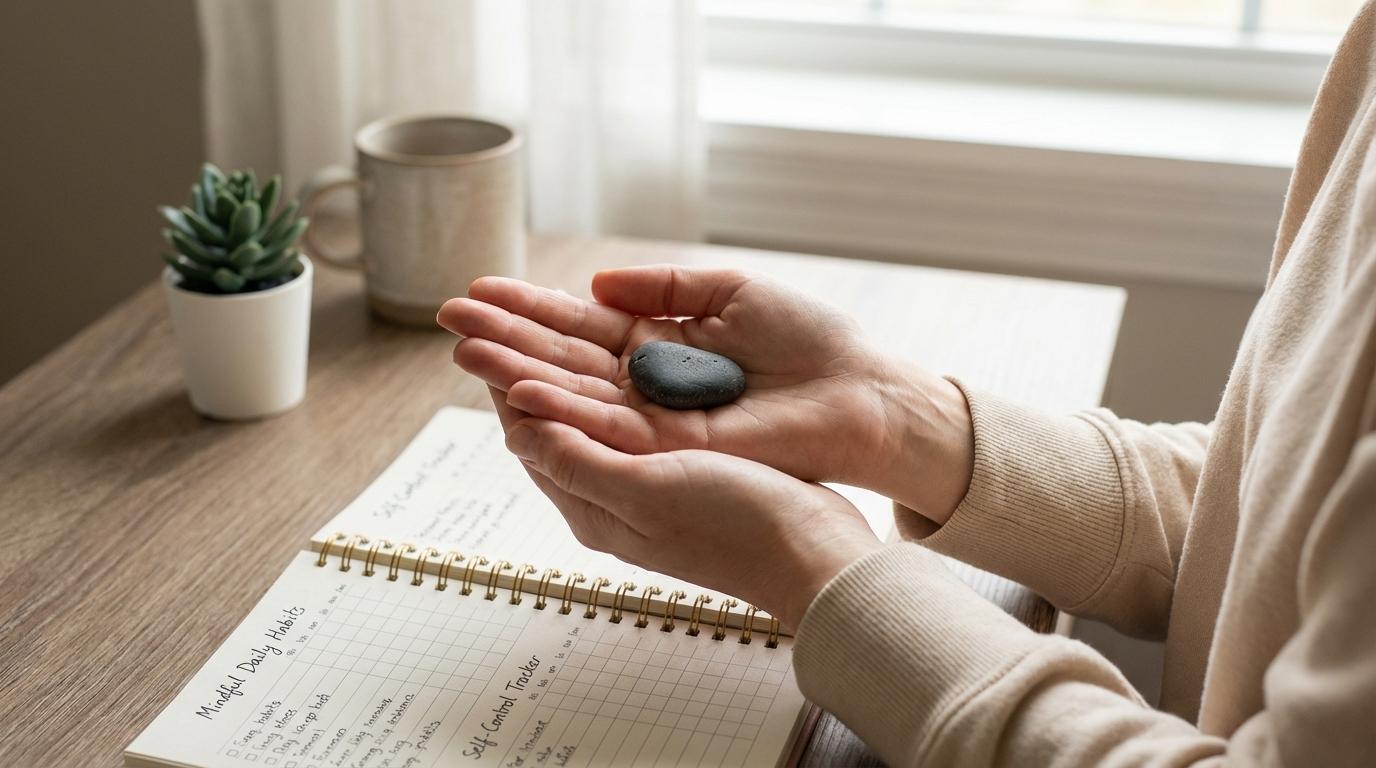
Tactile objects: Keep something textured in your pocket or on your desk. A small smooth stone, a piece of fabric, a stress ball, even a hair tie around your wrist that you can snap gently. When you feel the urge to touch your face, redirect that hand to the object instead. This works because you’re still getting the sensory input your brain was craving.
Hand clasping: When you’re sitting in class or at work, try loosely clasping your hands together on the desk or in your lap. This creates a physical barrier without looking strange. Your hands are busy holding each other, making it slightly harder to automatically reach for your face.
The water bottle trick: Keep a water bottle nearby and take a sip whenever you catch the urge to touch your face. This serves double duty: you stay hydrated (good for skin) and your hands have something to do. Plus, it’s completely normal behavior that nobody questions.
Pen spinning or note taking: If you’re in a situation where you’d normally rest your chin on your hand while listening, try holding a pen instead. Doodle in the margins, take extra notes, or just hold it loosely. The physical sensation of the pen in your hand can satisfy that fidget need.
Making Your Environment Work For You
Sometimes the easiest fixes are environmental ones. If you can’t trust your hands, create situations where touching your face is less appealing or less likely.
Keep your hands clean-ish: I’m not saying you need to sanitize constantly, but having hand sanitizer nearby and using it periodically creates a mental connection between your hands and cleanliness. When your hands feel clean, you’re paradoxically less likely to touch your face because you’re more aware of hand hygiene in general.
Bitter nail polish: If you’re also a nail biter or you tend to pick at your face, bitter-tasting nail polish designed to stop nail biting can help. The unpleasant taste creates an instant negative association with hands near your mouth.
Hair management: A lot of face touching happens because hair falls in your face and you push it back, then your hand just stays there. Keep hair secured with clips, headbands, or low ponytails while studying or working. Fewer hair adjustments means fewer opportunities for your hand to linger.
Face mist situation: This sounds counterintuitive, but keeping a hydrating face mist nearby can help. If your skin feels dry or tight and you’re unconsciously touching to scratch or soothe, a quick mist addresses the underlying issue. Plus, touching wet skin feels weird, which naturally discourages it.
When Face Touching Becomes Something More
There’s a difference between an unconscious habit and a compulsive behavior. Most people who touch their face are dealing with a normal, breakable habit. But for some people, the touching escalates into picking at skin, squeezing non-existent blemishes, or spending hours examining pores in the mirror.
This can be a sign of skin picking disorder (excoriation) or body-focused repetitive behaviors that might need professional support. Signs that your face touching has moved beyond habit territory include:
- Visible wounds or scabs from picking that don’t have time to heal
- Spending significant time (more than an hour daily) examining or touching your face
- Feeling unable to stop even when you actively want to
- Significant distress or anxiety around the behavior
- Avoiding social situations because of marks from picking
If this sounds familiar, it’s worth talking to a therapist who specializes in body-focused repetitive behaviors. The TLC Foundation for BFRBs has resources and can help you find appropriate support. There’s no shame in needing help for something your brain is making genuinely difficult to control.
For regular picking that leads to breakouts or the occasional pimple that you can’t resist, our guide on safer extraction methods covers how to minimize damage when you slip up.
Habit Tracking Methods That Keep You Honest
If you’re serious about breaking this habit, tracking your progress helps you see improvement and stay motivated. There are a few ways to approach this.
Simple tally marks: Keep a small notebook or note on your phone. Every time you catch yourself touching your face, make a mark. At the end of the day, count them up. The goal isn’t to hit zero immediately. It’s to see that number decrease over time. Even going from 30 to 25 daily catches is progress.
Habit tracking apps: Apps like Streaks or Habitica let you track daily habits and build streaks. You can set a goal like “kept awareness of face touching today” and check it off each day. The gamification element keeps it interesting.
Time-based windows: Instead of tracking every touch, track successful windows. Can you go one hour without touching your face? Two hours? Start small and build up. This feels more achievable than trying to eliminate the behavior entirely from day one.
Context-specific goals: Maybe you start with just not touching your face during lectures. Or just while eating. Pick one context, master it, then expand. This prevents the overwhelming feeling of having to monitor yourself constantly.
What To Do When You Slip Up
You’re going to slip up. I still slip up. The goal isn’t perfection; it’s progress. When you catch yourself mid-touch, don’t beat yourself up about it. Just mentally note what was happening when it occurred and move on.
If you’re worried about breakouts from touching, keeping your baseline skincare consistent helps your skin recover faster from any bacteria transfer. Gentle cleansing twice a day removes whatever you might have transferred, and a simple routine means your skin barrier stays strong enough to handle occasional contamination.
Some people find that applying a physical sunscreen or thick moisturizer during the day makes them less likely to touch. The slight film on the skin creates awareness, and you don’t want to mess up your products. It’s a subtle psychological trick, but it works for some.
A Realistic Timeline
Breaking any habit takes time. The often-quoted “21 days to form a habit” is actually a myth based on outdated research. More recent studies suggest habits take anywhere from 18 to 254 days to become automatic, with an average of about 66 days.
For face touching specifically, you’ll probably notice increased awareness within the first week. Actual reduction in touching might take a few weeks. Full habit replacement, where you no longer have to consciously think about it, could take two to three months of consistent effort.
The good news is that every day of awareness helps, even if your touch count isn’t decreasing as fast as you’d like. You’re retraining neural pathways that have been doing their thing for years. That takes time.
Start Small and Keep Going
Pick one awareness technique and one replacement behavior to start. Try them for a week before adding more strategies. If you try to implement everything at once, you’ll get overwhelmed and abandon the whole project.
Remember, the point isn’t to become hypervigilant about your face 24/7. That’s exhausting and honestly not sustainable. The point is to reduce unconscious touching enough that your skin has room to do its thing without constant interference from your hands.
It took me about six weeks to get to a point where I noticed significant improvement, and I still catch myself during stressful moments. But my skin definitely looks calmer when I’m in a good stretch of low touching, which is motivation enough to keep at it. You’ve got this.