
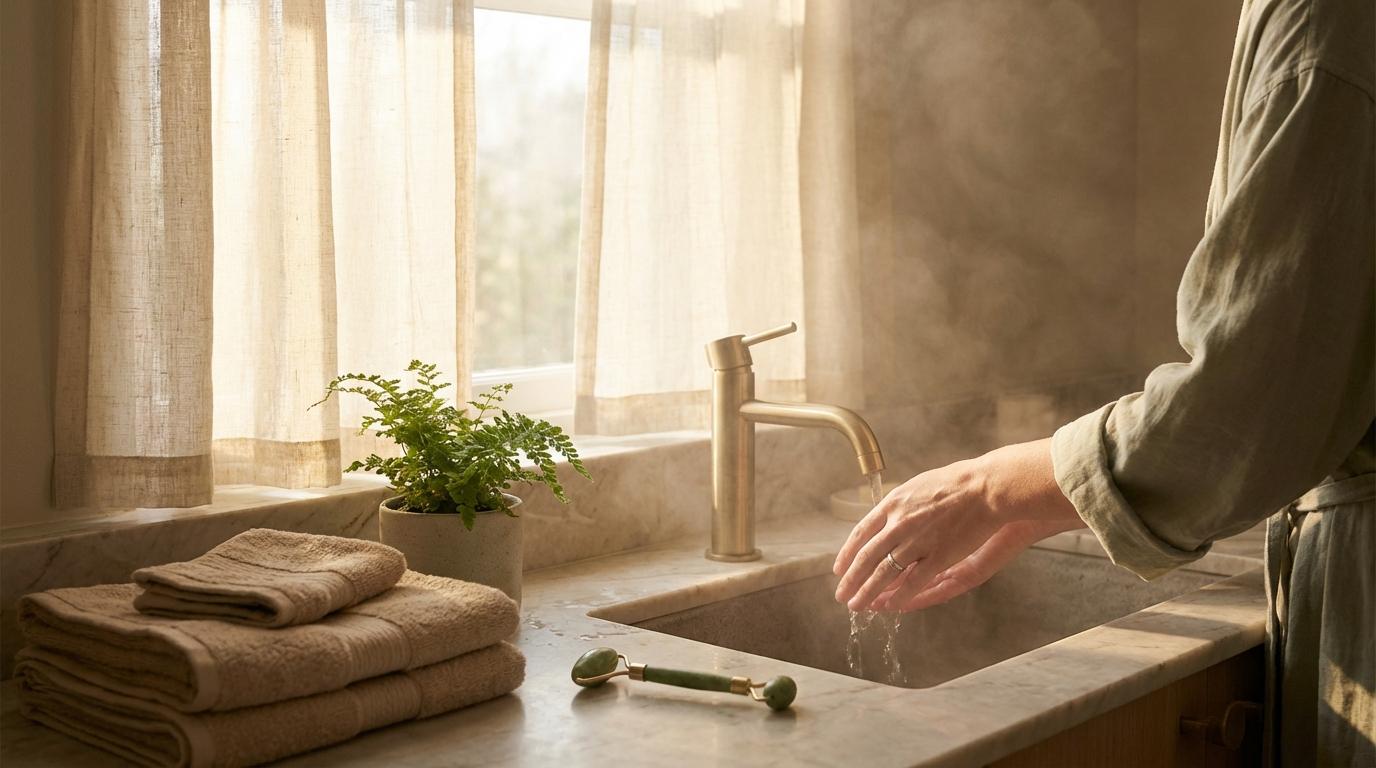
Have you ever wondered why your skin feels like a dried-out sponge after a hot shower, even though you’re literally surrounded by water? It’s one of those skincare contradictions that doesn’t seem to make sense until you understand what’s actually happening at the surface of your skin. Water temperature isn’t just about comfort (though that matters too), it’s fundamentally changing how your skin behaves, what it absorbs, and what it loses in the process.
I used to be a scorching hot shower person. Like, steam-up-the-entire-bathroom, can’t-see-my-reflection-in-the-mirror kind of hot. It felt luxurious and relaxing, especially after a long day. Then I started noticing that my skin was perpetually tight, flaky around my nose, and no amount of moisturizer seemed to help. Turns out, I was basically stripping my face every single day without realizing it.
What Hot Water Actually Does to Your Skin
Your skin has this protective layer called the lipid barrier, and it’s basically a mix of natural oils, fatty acids, and ceramides that keep moisture in and irritants out. Think of it like the seal on a Ziploc bag (stay with me on this analogy). When that seal is intact, everything inside stays fresh. When it’s broken or damaged, things start to dry out.
Hot water is incredibly effective at dissolving oils. That’s why we use hot water to wash greasy dishes, right? The same principle applies to your skin. When you expose your face to hot water, you’re dissolving those protective lipids way faster than they can regenerate. According to the American Academy of Dermatology, hot showers and baths are one of the primary causes of dry, irritated skin.
The effects aren’t just immediate either. Repeated hot water exposure can compromise your skin barrier over time, making you more susceptible to sensitivity, redness, and even conditions like eczema flare-ups. If you’ve noticed your skin getting progressively more reactive, your water temperature might be the culprit hiding in plain sight.
Cold Water: Not the Enemy You Think It Is
On the flip side, cold water gets a bad reputation for being uncomfortable (fair) and ineffective at cleansing (not actually true). While it’s true that cold water doesn’t dissolve oils as readily as hot water, that’s not necessarily a problem when you’re using a proper cleanser.
Cold water has some genuinely beneficial effects on your skin. It causes vasoconstriction, which is a fancy way of saying your blood vessels temporarily tighten up. This can help reduce puffiness, especially around your eyes in the morning. It’s also why splashing cold water on your face feels so refreshing and can make you look more awake. The tightening effect is temporary (your blood vessels relax pretty quickly), but it’s a nice little pick-me-up.
There’s also some evidence that cold water can help with circulation over time. When you alternate between different temperatures, your blood vessels expand and contract, which some dermatologists suggest may support overall skin health. A study published in the Public Library of Science found that people who regularly ended their showers with cold water reported increased energy and fewer sick days, though the direct skin benefits are still being researched.
Finding Your Ideal Cleansing Temperature
The sweet spot that most dermatologists recommend? Lukewarm water. I know, I know, it sounds boring. But lukewarm water (around body temperature, so 98-105 degrees Fahrenheit) is warm enough to effectively work with your cleanser without stripping your natural oils.
If you’re struggling to gauge what “lukewarm” actually feels like, here’s my test: run the water over the inside of your wrist. It should feel comfortable, neither hot nor cold. If you can’t tell if it’s warm or cool, you’re probably in the right zone. Your wrist is more sensitive to temperature than your face, so it’s a good indicator.
For your morning cleanse, slightly cooler water can help wake you up and reduce any overnight puffiness. For your evening cleanse, slightly warmer (but still not hot) water can feel more relaxing and help dissolve sunscreen and makeup residue when paired with a good cleanser or cleansing oil. If you’re into resetting your routine, temperature is one of those subtle changes that can make a real difference.
Temperature and How Your Products Absorb
Here’s where it gets interesting: water temperature affects more than just cleansing. It can actually influence how well your skincare products absorb into your skin.
Warm water opens up your pores (technically, pores don’t “open” and “close” like doors, but the warm water does cause the sebum inside them to soften and become more fluid). This can be helpful when you’re trying to deep clean or apply certain treatments. However, it also means your skin is in a more vulnerable, permeable state.
If you’re using active ingredients like retinol, vitamin C, or chemical exfoliants, applying them right after a hot shower might actually increase irritation. Your skin is more permeable, so you’re potentially getting more penetration than intended. This is why some people experience more sensitivity when they apply their nighttime actives after a hot evening shower compared to when they apply them at room temperature on dry skin.
Cool or lukewarm water keeps your skin’s barrier more intact, which means more controlled absorption of your products. It’s a trade-off: slightly less penetration, but also less risk of irritation. For sensitive skin types or when using potent actives, this is often the better approach. You might find our piece on understanding retinol helpful if you’re navigating this balance.
Seasonal Adjustments Matter
Your water temperature strategy shouldn’t necessarily stay the same year-round. In winter, when the air is dry and your skin is already working overtime to retain moisture, hot water is especially damaging. The combination of low humidity, indoor heating, and hot showers is basically a perfect storm for dehydrated, flaky skin.
Summer is a bit more forgiving, but that doesn’t mean you should crank the heat. Your skin might tolerate slightly warmer water when it’s more hydrated, but the lipid-stripping effect still happens regardless of season. Plus, if you’re dealing with heat-related issues like excess oiliness or sweat-clogged pores, cooler water can actually help calm things down.
I’ve personally found that dropping my water temperature even a few degrees in winter makes a noticeable difference. Is it less comfortable initially? Sure. But my skin stopped doing that tight, uncomfortable thing by mid-morning, and I spend way less on heavy-duty moisturizers now. The National Eczema Association specifically recommends lukewarm baths for anyone dealing with dry or sensitive skin conditions.
The Face vs. Body Situation
One thing worth mentioning: your face and body don’t necessarily need the same treatment. The skin on your body is generally thicker and more resilient than your facial skin. Your face has more sebaceous glands concentrated in a smaller area, and it’s exposed to more environmental stressors throughout the day.
If you absolutely can’t give up your hot showers (no judgment, I get it), consider keeping the hot water off your face as much as possible. Do your body washing with whatever temperature feels good, then turn it down or step out of the direct spray when cleansing your face. You can even cleanse your face at the sink separately, which gives you more control over the temperature.
Some people like to do a final cold rinse on their face at the end of their shower regardless of what temperature they used for their body. This can help close things back up (again, not literally closing pores, but encouraging your skin to return to its normal state) and reduce any redness from the warm water.
Quick Tips to Remember
- Lukewarm is the sweet spot for cleansing. Comfortable on your inner wrist is a good gauge.
- Hot water strips your lipid barrier faster than you can rebuild it, leading to dryness and sensitivity over time.
- Cold water can temporarily reduce puffiness and may support circulation, but isn’t necessary for effective cleansing.
- Your skin is more permeable after warm water exposure, so be careful with strong actives right after a hot shower.
- Winter calls for cooler water temperatures than summer, when your skin is already fighting dehydration.
- Your face can handle different treatment than your body, so adjust accordingly.
Making the Switch
If you’re currently a hot water devotee, I’m not going to tell you to go cold turkey (pun intended). Gradually decreasing your water temperature over a few weeks is totally valid. Start by just turning it down slightly, get used to that, then adjust again. Your skin will start adapting, and honestly, you might find that you don’t even miss the super hot water after a while.
Pay attention to how your skin feels an hour or two after cleansing. That’s when the real effects show up. If it feels tight, looks dull, or you’re reaching for moisturizer more often than usual, your water might still be too hot. If it feels balanced and comfortable, you’ve probably found your temperature sweet spot.
The relationship between water temperature and skin health is one of those things that seems minor but actually has a pretty significant cumulative effect. It’s not going to completely transform your skin overnight (nothing does), but it’s one of those foundational habits that supports everything else you’re doing. And honestly? It’s free. No new products required, just a slight adjustment to something you’re already doing every day. That’s the kind of skincare advice I can get behind.
For more practical tips on keeping your routine simple and effective, check out our guide on knowing when less is more. Sometimes the smallest tweaks make the biggest difference.