
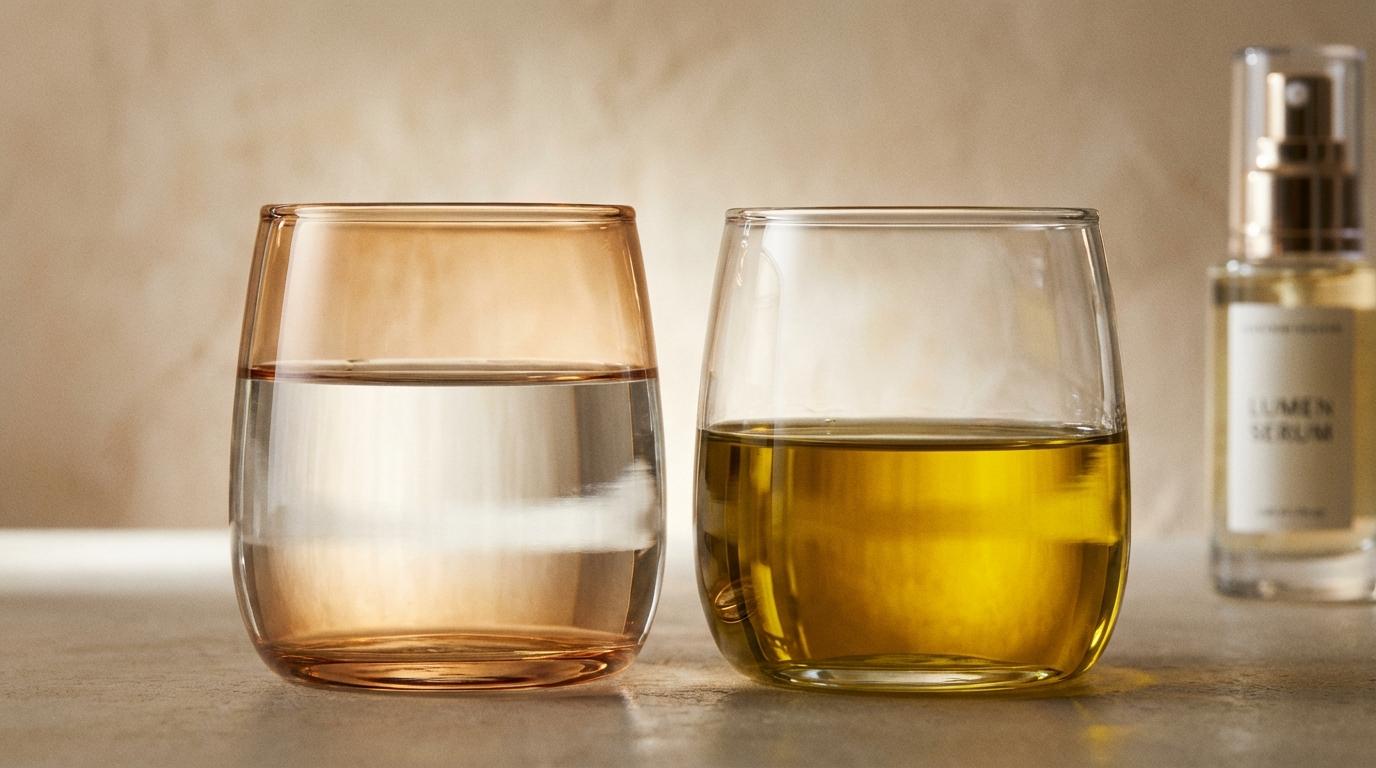
I spent three months slathering my face with the thickest creams I could find before realizing my skin wasn’t actually dry at all. Turns out, my oily T-zone that somehow felt tight and uncomfortable was screaming for water, not oil. That’s the thing about dehydrated skin that nobody tells you when you’re desperately searching for answers at 2 AM: it can happen to literally anyone, regardless of your skin type.
Understanding the difference between dehydrated skin and dry skin completely changed how I approach my routine. And honestly? It saved me from wasting money on products that were never going to fix my actual problem. If your skin feels like something’s off but you can’t quite figure out what, this might be exactly what you need to hear.
The Basic Difference: Water vs. Oil
Dry skin is a skin type. You’re born with it, and it means your skin doesn’t produce enough sebum (that natural oil that keeps your face from feeling like parchment). Dry skin is genetic, it’s pretty consistent throughout your life, and it’s not something that randomly appears one day.
Dehydration, on the other hand, is a skin condition. It means your skin is lacking water, not oil. And here’s the part that confused me for way too long: you can have oily skin that’s dehydrated. You can have combination skin that’s dehydrated. You can have any skin type and still deal with dehydration because it’s about your skin’s water content, not its oil production.
Think of it this way: oil and water do different jobs. Sebum creates a protective barrier on your skin’s surface, helping to lock in moisture and protect against environmental stuff. Water, on the other hand, keeps your skin cells plump and functioning properly from the inside. You need both, but lacking one doesn’t automatically mean you’re lacking the other.
Why This Confusion Matters So Much
When you treat dehydrated skin like dry skin, you make things worse. I know because I lived it. My skin was dehydrated (lacking water), so I piled on heavy creams and facial oils thinking I needed more moisture. But those products are designed to add oil and seal things in. They weren’t giving my skin the water it was actually craving.
According to research published in the International Journal of Cosmetic Science, transepidermal water loss (TEWL) is a key indicator of skin health. When your skin barrier isn’t functioning optimally, water escapes more easily, leading to dehydration regardless of how much oil is present on your skin’s surface.
If you’ve been using richer and richer products but your skin still feels uncomfortable, tight after washing, or looks dull even though it’s oily, you might be dealing with the same issue I had. The fix isn’t more oil. It’s more water. And yes, there’s a way to figure out which one you’re actually dealing with.
How Oily Skin Can Be Dehydrated
This is the part that blows people’s minds. Your skin can be an oil slick by noon and still be seriously dehydrated. Here’s why:
When your skin is dehydrated, it sometimes overcompensates by producing MORE oil. Your skin is smart, but it can only work with what it has. If it senses that moisture is escaping, it might crank up sebum production trying to seal everything in. The result? You look oily, but your skin still feels tight, uncomfortable, and kind of rough.
I’ve written about this before in my piece on oily skin that still needs hydration, but it bears repeating: oiliness and hydration are completely separate things. You can have plenty of one and not enough of the other.
Signs your oily skin might actually be dehydrated:
- Your skin feels tight right after cleansing but gets oily within a couple hours
- Your makeup looks cakey or separates throughout the day
- Fine lines appear more visible than they should for your age
- Your skin looks dull even when it’s shiny from oil
- Products seem to sit on top of your skin instead of absorbing
If any of this sounds familiar, welcome to the dehydrated-but-oily club. It’s more common than you’d think, especially if you’ve been using harsh products trying to combat the oiliness.
Testing for Dehydration at Home
There’s a simple test you can do right now to get a clue about what’s going on with your skin. It’s not perfect, but it’s a decent starting point.
The pinch test: Gently pinch the skin on your cheek between your thumb and forefinger. Hold it for a few seconds, then release. If your skin bounces back immediately, hydration is probably decent. If it takes a moment to return to normal, or if you see fine lines remaining where you pinched, dehydration might be an issue.
Another thing to look for: does your skin look papery or crepey in certain lighting? Does it seem to have tiny fine lines that weren’t there before, especially around your eyes and forehead? These are often signs of dehydration, not aging.
The American Academy of Dermatology notes that dehydrated skin often shows fine lines that can temporarily diminish with proper hydration. That’s a good way to distinguish it from true aging lines, which won’t disappear when you hydrate.
Different Treatment Approaches
Once you know what you’re dealing with, the treatment paths split pretty dramatically.
For Actually Dry Skin:
True dry skin needs help with oil. That means:
- Rich, emollient moisturizers that contain fatty acids, ceramides, and cholesterol to supplement what your skin isn’t producing enough of
- Facial oils can actually be helpful here, either mixed with moisturizer or applied on top
- Gentle, non-foaming cleansers that won’t strip what little natural oil you have
- Avoiding over-exfoliation, which can make dry skin feel even more uncomfortable
- Looking for ingredients like shea butter, squalane, and jojoba oil
People with dry skin often do well with thicker creams and balms, especially at night. The goal is to supplement the oil your skin isn’t making on its own and help prevent water loss through occlusion.
For Dehydrated Skin:
Dehydrated skin needs water, and it needs help holding onto that water. The approach is different:
- Humectant-rich products that draw water into your skin: hyaluronic acid, glycerin, beta-glucan, honey
- Hydrating toners or essences that add a water-based layer before your moisturizer
- A moisturizer that seals everything in, but it doesn’t need to be super heavy if your skin already produces oil
- Addressing your skin barrier so water stops escaping
The key thing about treating dehydration is layering. You want to add water to your skin (humectants), then seal it in (occlusive layer). If you skip the sealing step, all that hydration evaporates right off. But the sealing layer doesn’t need to be thick and greasy if you’re already oily.
Understanding your skin barrier is really important here. If your barrier is compromised, water escapes more easily no matter how much you apply. Sometimes fixing dehydration means stepping back from actives and focusing on barrier repair for a few weeks.
What About Having Both?
Just to make things more complicated: you can have dry skin that’s also dehydrated. Your skin might be genetically lacking in oil production AND have a damaged barrier that’s letting water escape. Fun times.
In that case, you need both approaches. Humectants to draw in water, occlusives to seal it in, and emollients to supplement the oil your skin doesn’t make. It sounds like a lot of products, but you can often find moisturizers that hit all three needs.
Look for ingredients lists that include both humectants (hyaluronic acid, glycerin) AND emollients (fatty acids, ceramides, squalane). Products marketed for “very dry” or “extra dry” skin often have this combination, though they might be too heavy if you’re oily-dehydrated rather than dry-dehydrated.
Common Causes of Dehydration
Understanding what causes dehydration can help you prevent it from happening again. Some major culprits:
Over-cleansing or harsh cleansers. That “squeaky clean” feeling after washing? That’s your skin stripped of its protective barrier. Some cleansers are way too harsh, especially foaming ones with sulfates. If your skin feels tight immediately after cleansing, your cleanser might be the problem.
Too many actives. Retinol, AHAs, BHAs, vitamin C… these all do great things, but using too many or using them too often can wreck your barrier and lead to dehydration. More isn’t always better.
Weather and environment. Cold weather, heating systems, air conditioning, airplane cabins, dry climates. All of these pull water out of your skin. If you notice your skin gets worse in winter or when you travel, environment is probably a factor.
Not drinking enough water. I know, I know. Drinking water won’t magically fix all your skin problems, but severe internal dehydration absolutely shows up on your face. If you’re barely drinking any water throughout the day, your skin notices.
Hot showers. Those long, steamy showers feel amazing but they strip your skin. Keep them lukewarm if you can.
Ingredient Cheat Sheet
Since mixing these up is so easy, here’s a quick reference:
Humectants (attract water, good for dehydration):
- Hyaluronic acid
- Glycerin
- Propanediol
- Beta-glucan
- Honey
- Aloe vera
- Sodium PCA
Emollients (smooth and soften, good for dry skin):
- Squalane
- Jojoba oil
- Shea butter
- Ceramides
- Fatty alcohols (cetyl, cetearyl)
Occlusives (seal moisture in, helpful for both):
- Petrolatum
- Dimethicone
- Beeswax
- Lanolin
According to Paula’s Choice skincare experts, using the right category of ingredients for your specific concern is far more important than using expensive products. A cheap glycerin-based toner can do more for dehydrated skin than a $100 oil-based serum.
Building Your Routine Based on Your Issue
Let me break down what a routine might look like for each scenario:
For Dehydrated Oily/Combo Skin:
AM:
- Gentle, hydrating cleanser (or just water)
- Hydrating toner or essence with hyaluronic acid
- Lightweight, water-based moisturizer
- Sunscreen (look for hydrating formulas)
PM:
- Oil cleanser or micellar water (if wearing makeup/sunscreen)
- Gentle water-based cleanser
- Hydrating toner or essence (can layer 2-3 times)
- Moisturizer (can be slightly richer at night)
For True Dry Skin:
AM:
- Cream or milk cleanser
- Hydrating toner (optional but nice)
- Rich moisturizer with emollients
- Sunscreen
PM:
- Oil cleanser or balm
- Cream cleanser
- Hydrating toner
- Facial oil or serum with oils
- Rich night cream
- Occlusive layer on very dry areas (like Vaseline)
The difference here is mainly in product weight and the emphasis on humectants vs. emollients. Both routines benefit from hydrating toners, but what you seal it all in with changes based on your actual need.
How Long Until You See Results?
If dehydration is your issue and you start treating it correctly, you should notice improvements pretty quickly. We’re talking days to a couple of weeks for your skin to look plumper, feel more comfortable, and start losing that papery texture.
Dry skin is more of an ongoing management situation since it’s your natural skin type. You’re not going to “fix” it, but you can keep it comfortable and healthy-looking with the right products.
If you’ve been treating your dehydrated skin like dry skin (or vice versa) for a while, it might take a bit longer for things to settle down. Your skin barrier might need some repair time. Be patient with it. The difference between hydration and moisture takes time to show in results when you’ve been on the wrong track.
When to See a Dermatologist
If you’ve adjusted your routine for a month or so and still aren’t seeing improvement, or if your skin is extremely uncomfortable, it might be worth talking to a professional. There are skin conditions like ichthyosis and eczema that can look like severe dry skin but need specific treatment.
Also worth a visit if your skin suddenly becomes much drier or more dehydrated than usual without any obvious cause. Sometimes skin changes can signal other health stuff going on.
My Budget-Friendly Picks for Each Issue
Because I’m a broke college student and I know the struggle:
For dehydration: Honestly, the Hada Labo Gokujyun Lotion (the Japanese one with hyaluronic acid) is under $15 and works insanely well. Layer it a couple times on damp skin. CeraVe Moisturizing Lotion is also great and affordable. Even plain glycerin from the pharmacy mixed with a little water works in a pinch.
For dry skin: Vanicream Moisturizing Cream in the tub is rich, fragrance-free, and affordable. CeraVe Moisturizing Cream (the one in the tub) is another solid option. For facial oil on a budget, The Ordinary’s squalane or rosehip oil are both under $10.
What Changed for Me
Once I figured out I was dealing with dehydration rather than dryness, everything clicked. I stopped buying thick creams and started focusing on watery, humectant-rich layers. My skin stopped feeling tight and uncomfortable within a week. The excess oil actually decreased because my skin wasn’t compensating anymore.
It felt like finally speaking my skin’s language after years of miscommunication. And the best part? The products that actually worked for me were cheaper than the heavy creams I’d been buying.
If your skin has been confusing you, take a step back and really think about what’s going on. Are you lacking oil, lacking water, or lacking both? The answer changes everything about how you should be treating your skin. Sometimes the fix isn’t finding a better product. It’s understanding what your skin actually needs in the first place.