
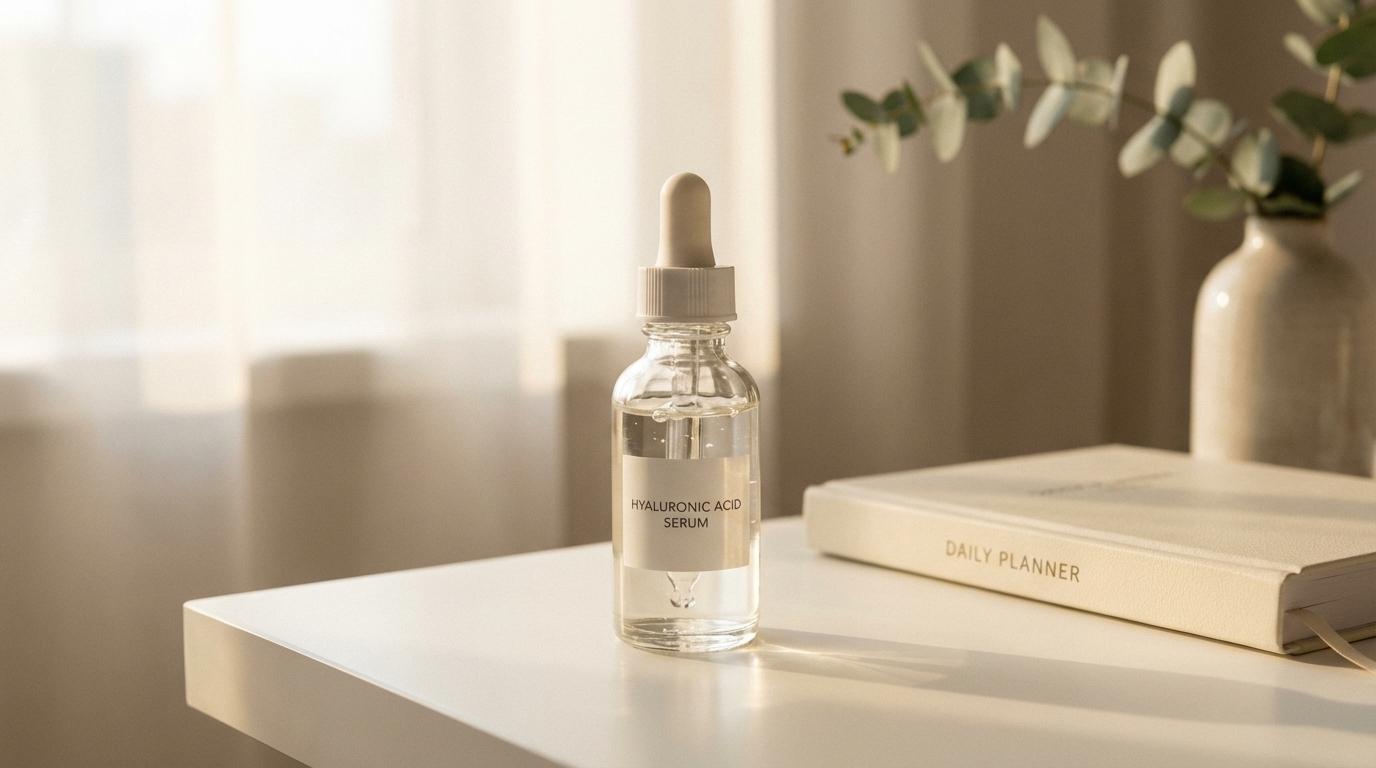
People with acne think they need to avoid hydrating products because moisture makes oily skin worse. That’s actually backwards. Dehydrated skin overproduces oil to compensate, which makes acne situations even more frustrating. Hyaluronic acid is one of those ingredients that acne-prone skin not only tolerates but genuinely benefits from, and I’m honestly surprised more people don’t know this.
Hydration Without the Heavy Feeling
The thing about hyaluronic acid (we’re just gonna call it HA because typing that out repeatedly is annoying) is that it hydrates without adding oiliness. It’s a humectant, which means it pulls water into your skin instead of sitting on top like oil or butter-based moisturizers do.
HA holds up to 1000 times its weight in water. That sounds like marketing nonsense but it’s actually true. It binds to water molecules and keeps them in your skin. Your skin stays plump and hydrated without any greasy residue or pore-clogging heaviness.
For acne-prone skin, this is huge. You get moisture without the stuff that typically causes problems. No comedogenic oils. No thick textures that trap bacteria. Just water retention in the skin layers where you actually need it.
It Really Won’t Clog Your Pores
HA is a molecule naturally found in your skin already. Your body recognizes it and knows what to do with it. It doesn’t sit in pores or create congestion because it’s doing its job below the surface, in the spaces between cells where hydration happens.
The ingredient itself has a comedogenic rating of zero. That’s as safe as it gets. Now, a product containing HA could still break you out if it has other problematic ingredients, so always check the full formula. But the HA itself? Not the culprit.
I’ve seen people blame HA for breakouts when the real issue was the silicones or dimethicone in the same serum. Read labels. HA deserves better than being blamed for what some random thickening agent did.
Layering With Acne Treatments
This is where it gets really good. Acne treatments like benzoyl peroxide, salicylic acid, and retinoids are effective but drying. Like, really drying. The whole “my skin is flaking off” experience that makes people quit their acne routines? That’s dehydration.
HA helps buffer that dryness. Apply it before your acne treatment to create a hydrated base, or after to soothe and replenish. Either way works. Some people do both (HA sandwich technique, very fancy) if their treatment is particularly harsh.
Using HA doesn’t reduce the effectiveness of your acne actives. It just makes them more tolerable so you can actually stick with your routine long enough to see results. Consistency beats intensity every time, and you can’t be consistent if your face is too irritated to function.
Quick tip: wait a minute between layers so products can absorb. Slapping everything on at once creates a wet mess on your face rather than actual absorption. Patience, even at 2am when you just want to go to sleep.
Best Forms for Acne-Prone Skin
Not all HA products are created equal. For acne-prone skin, lighter serums work better than HA-infused creams. Serums penetrate quickly and don’t leave residue. Creams have more stuff in them that might not agree with your skin.
Look for formulas with multiple molecular weights of HA. The labels sometimes say “multi-weight” or “low and high molecular weight.” High weight sits on the surface and prevents water loss. Low weight penetrates deeper for more lasting hydration. You want both.
The Ordinary Hyaluronic Acid 2% + B5 is a classic affordable option (and it’s like $8, honestly amazing). CosRx Hyaluronic Acid Intensive Cream is lightweight despite being called a cream. La Roche-Posay Hyalu B5 Serum works well if you want something from a dermatologist-recommended brand.
Avoid HA products that also contain fragrance, essential oils, or alcohol high up in the ingredients list. Those counteract the hydration benefits and irritate acne-prone skin. Fragrance is cute for candles, not for your face.
Application Tips That Actually Matter
HA works best on damp skin. Like, this is not optional advice. Apply it right after washing your face while there’s still water on your skin, or spritz your face with water first. HA needs moisture to pull into your skin. If your skin is dry, it’ll try to pull moisture from deeper layers instead, which defeats the purpose.
In dry climates or heated indoor environments, always layer a moisturizer over your HA serum. Otherwise the HA keeps trying to attract water that isn’t there, leading to more dehydration. Seal that hydration in. Even something lightweight like a gel moisturizer works.
A little goes a long way. Two to three drops for your whole face is plenty. More product doesn’t mean more hydration, it just means sticky residue and wasted serum. Your skin can only absorb so much at once.
When HA Might Not Work For You
Some people notice their skin feels tight or gets breakouts after starting HA. Usually this means either the product has other irritating ingredients, or they’re using it in a very dry environment without sealing it in. Try a different formula or adjust your application before giving up entirely.
If you have fungal acne specifically, some HA products might be problematic depending on their other ingredients. Check whether a product is fungal acne safe before adding it to your routine. There are online ingredient checkers for this (yes, I know, more homework, but your face will thank you).
Making It Part of Your Acne Routine
Morning: Cleanse, apply HA serum to damp skin, wait a minute, apply acne treatment if using one in AM, moisturizer, sunscreen. The HA creates a nice base that helps everything else apply smoothly.
Evening: Cleanse, HA serum on damp skin, wait, retinoid or acne treatment, moisturizer if needed. The HA helps retinoid tolerance significantly. Way less flaking and irritation when your skin is properly hydrated.
Hydration and acne treatment aren’t opposites. They work together. Your skin needs water to heal, to turn over cells, to function normally. Give it that water in a form that won’t cause more problems. HA is that form. Trust me on this one.