
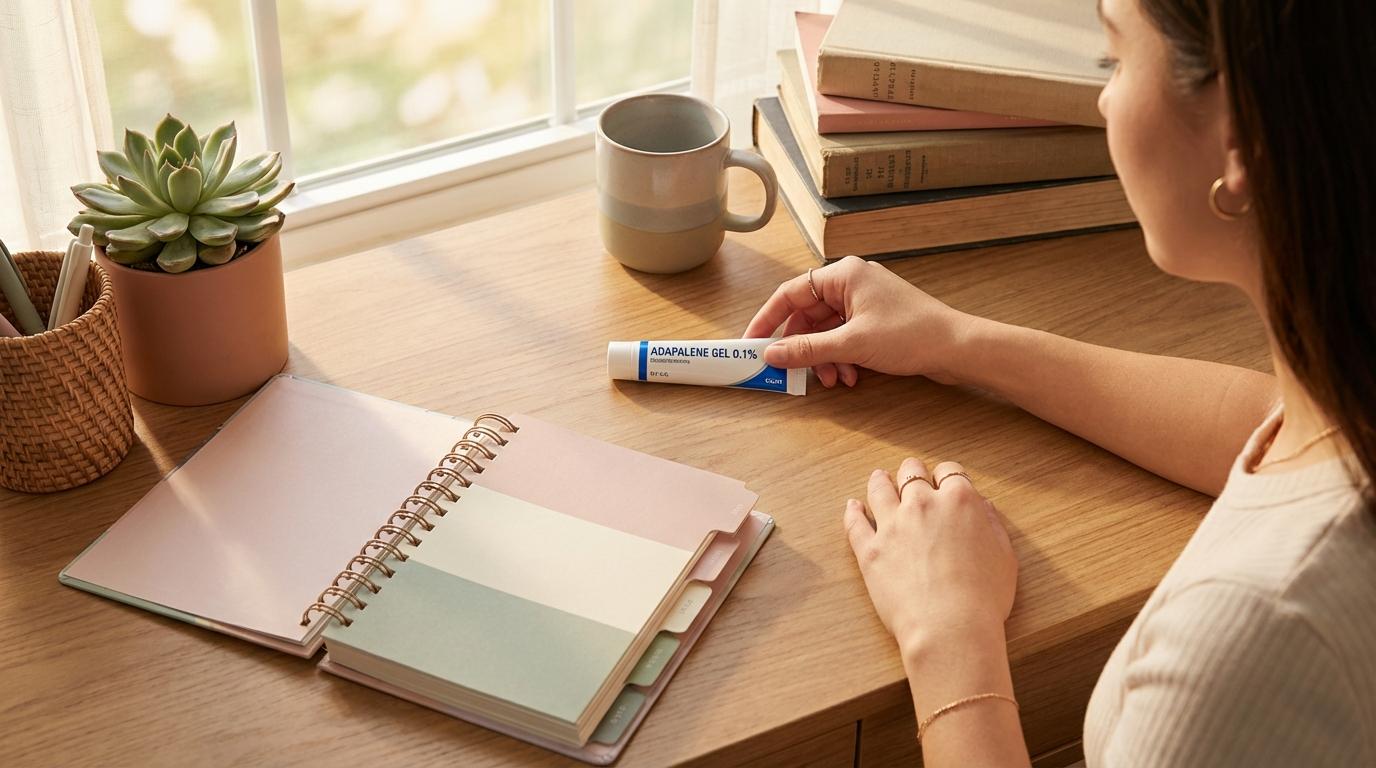
Adapalene changed the acne treatment landscape when it became available without a prescription in 2016. Before that, retinoids for acne meant scheduling a dermatologist appointment, getting a prescription, and paying for another office visit if things went wrong. Now you can grab it at the drugstore for under $15.
But this accessibility comes with responsibility. Adapalene is a proper retinoid with real effects on your skin, and using it incorrectly leads to the kind of irritation that makes people swear off retinoids entirely. Used right, it’s one of the most effective options for treating and preventing acne. Here’s what you actually need to know.
How Adapalene Differs From Tretinoin
Both adapalene and tretinoin are retinoids, meaning they’re derived from vitamin A and work by binding to retinoic acid receptors in your skin cells. But they’re not the same molecule, and they don’t behave identically.
Tretinoin binds to multiple retinoic acid receptor subtypes and has been the gold standard prescription retinoid for decades. It’s highly effective but notorious for causing irritation, peeling, and photosensitivity, especially in the early weeks of use.
Adapalene is a synthetic retinoid that’s more selective in which receptors it targets. This selectivity makes it significantly less irritating while still delivering meaningful acne-fighting results. Studies have shown adapalene 0.1% produces similar improvements in acne compared to tretinoin, with notably fewer side effects.
Adapalene is also more stable when exposed to light and oxygen, and it works better in combination with benzoyl peroxide. Tretinoin degrades when mixed with BP, but adapalene holds up fine, which is why you can buy combination products containing both.
The trade-off? Tretinoin has more robust evidence for anti-aging benefits. If wrinkles are your primary concern, tretinoin might be worth the irritation. For acne specifically, adapalene gives you most of the benefits with less drama.
Starting Protocol: Go Slow or Regret It
I cannot emphasize this enough: the biggest mistake people make with adapalene is using too much, too often, too soon. Your skin needs time to adjust to retinoid activity, and rushing this process creates problems that take weeks to fix.
Start with application two to three nights per week, not every night. Apply a pea-sized amount to your entire face after cleansing and before moisturizing. Yes, a pea-sized amount for your whole face. More is not better. More is angry, peeling skin.
After a few weeks at this frequency, if your skin is tolerating it well, add another night. Keep gradually increasing until you reach nightly application, if that’s your goal. Some people never get to nightly use and that’s completely fine. Using adapalene four times a week consistently beats using it daily for two weeks then quitting because your face is on fire.
Buffering can help during the adjustment phase. This means applying moisturizer first, waiting a few minutes, then applying adapalene on top. The moisturizer creates a buffer that slightly reduces penetration and irritation. As your skin builds tolerance, you can switch to applying adapalene directly to clean, dry skin.
What to Expect in the First Months
Adapalene isn’t a quick fix. The timeline for visible improvement is measured in months, not days. Understanding what’s normal helps you stick with it long enough to see results.
Weeks one through four typically bring the adjustment period. Some dryness, mild flaking, and possibly increased sensitivity are normal. Your skin is responding to the retinoid and ramping up cell turnover. This is when proper moisturization matters most.
The purging phase can happen anywhere from weeks two through eight. Adapalene speeds up cell turnover, which means existing clogs work their way to the surface faster. You might see an increase in breakouts during this time. It’s frustrating but generally temporary. The key difference between purging and a bad reaction is that purges happen in areas where you typically break out, while reactions cause new breakouts in unusual places.
By month three, you should start seeing improvement. Fewer new breakouts, faster healing of existing ones, and gradually smoother skin texture. Full results often take four to six months. Many people notice continued improvement even after the first year of use.
Studies tracking adapalene users over 12 months show that both inflammatory lesions (the red, angry ones) and non-inflammatory lesions (blackheads and whiteheads) continue decreasing the longer you use it. Patience pays off.
Available Without Prescription (With Caveats)
The OTC version of adapalene is sold at 0.1% concentration under the brand name Differin, plus various store brands. This concentration is the same as the original prescription strength and is clinically proven effective for acne.
Higher concentrations exist. Adapalene 0.3% is prescription-only and may work better for severe or stubborn acne. If you’re not seeing adequate results with OTC adapalene after several months of consistent use, talking to a dermatologist about the higher strength makes sense.
The gel formula is most common for OTC products. Cream formulations exist in prescription versions and may be better tolerated by people with dry or sensitive skin. If the gel bothers you, asking a dermatologist about cream options is reasonable.
Don’t let the OTC availability make you cavalier about using it. This is still an active treatment that requires proper use. Reading the instructions and following them matters as much as it would for a prescription product.
Preventing Future Breakouts
Adapalene’s real strength isn’t just treating current acne but preventing future breakouts. Retinoids work by normalizing the way your skin cells shed and turn over, preventing the dead cell buildup that clogs pores in the first place.
This preventive effect means adapalene is worth continuing even after your skin clears. Many dermatologists recommend ongoing use, whether nightly or a few times weekly, to maintain results. Think of it as maintenance rather than a temporary treatment.
The anti-comedonal effect also explains why adapalene helps with the type of congestion that shows up as tiny bumps and rough texture, not just obvious pimples. If you deal with comedonal acne, adapalene specifically targets the problem at its source.
Sun protection becomes non-negotiable when using any retinoid. Adapalene is less photosensitizing than tretinoin, but your skin is still more vulnerable to UV damage during retinoid use. A solid SPF 30 or higher sunscreen is essential. If you’re skipping sunscreen, you’re undermining your results and risking hyperpigmentation.
Building the Right Routine Around It
Adapalene works best as part of a simple, non-irritating routine. This isn’t the time to layer multiple actives or experiment with new products.
Cleanser: gentle, non-stripping, fragrance-free. You want to remove dirt and makeup without compromising your skin barrier, which is already being challenged by the retinoid.
Moisturizer: essential, not optional. Even if you have oily skin. A good moisturizer helps maintain barrier function and reduces irritation. Ceramides, hyaluronic acid, and niacinamide are all fine ingredients to have in your moisturizer while using adapalene.
Sunscreen in the morning: SPF 30 minimum, applied daily. This protects against UV damage and prevents post-inflammatory hyperpigmentation from any breakouts that occur.
What to skip or use carefully: other exfoliants like AHAs and BHAs can compound irritation, especially early on. If you want to use salicylic acid or glycolic acid, do it on alternate days, not the same night as adapalene. Vitamin C in the morning is generally fine.
Benzoyl peroxide and adapalene can be used together. In fact, this combination is particularly effective. You can apply BP in the morning and adapalene at night, or use a combination product that contains both.
When Adapalene Isn’t Enough
Adapalene handles a lot of acne situations well, but it’s not a cure-all. Severe inflammatory acne, nodular or cystic acne, and hormonal acne that flares with your menstrual cycle may need additional treatment.
If you’ve used adapalene correctly for four to six months without meaningful improvement, a dermatologist visit makes sense. They can assess whether a stronger retinoid, oral medications, or hormonal treatments would help.
Acne scarring is another reason to seek professional help. Adapalene can help prevent future scarring by reducing breakouts, but it won’t reverse existing scars. Treatments like microneedling, chemical peels, or laser therapy address scarring more directly.
That said, for mild to moderate acne, especially if you’re consistent with the starting protocol and patient with the timeline, adapalene delivers real results. The fact that you can access it without a prescription removes a significant barrier to effective acne treatment, and that matters.
Start slow. Moisturize well. Protect from the sun. Give it time. Adapalene is worth the effort for most people dealing with acne, and the results compound the longer you stick with it.