
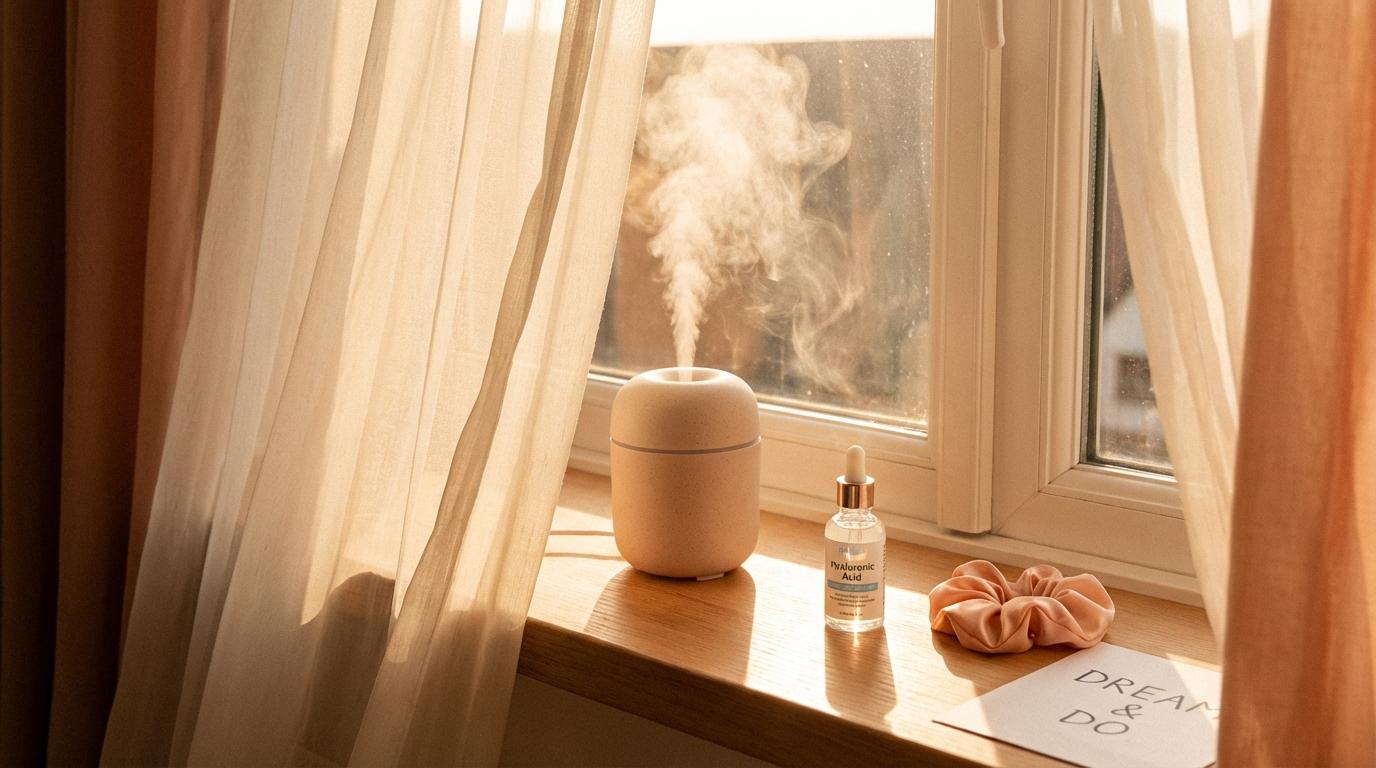
Hyaluronic acid has earned its place as a skincare staple, but this beloved humectant sometimes leaves skin feeling tighter and drier than before. If you’ve ever applied your favorite HA serum and wondered why your face feels parched an hour later, you’re not imagining things. This gentle workhorse of hydration can actually work against you under certain circumstances, and understanding when and how to use it makes all the difference between plump, dewy skin and unexpected dryness.
Understanding How Hyaluronic Acid Actually Works
Hyaluronic acid is a humectant, which means it draws moisture from its surroundings and holds it in place. A single molecule can hold up to 1,000 times its weight in water, which sounds incredible on paper. The thing is, this moisture has to come from somewhere. In ideal conditions, HA pulls water from the air around you and deposits it into your skin. But when the air is dry, the equation changes dramatically.
Your skin exists in constant conversation with its environment. When humidity levels are high, typically above 70%, hyaluronic acid happily draws moisture from the atmosphere and helps your skin retain it. This is why HA serums often work beautifully in tropical climates or steamy bathrooms right after a shower. The air is saturated with water vapor, giving the humectant plenty to work with.
When humidity drops below 50%, hyaluronic acid faces a problem. There isn’t enough moisture in the air to satisfy its water-binding nature, so it starts looking elsewhere. Unfortunately, the nearest water source is often your deeper skin layers. Instead of adding hydration, low-molecular-weight HA can actually pull water from within your skin and allow it to evaporate into the dry air. This is called transepidermal water loss, and it’s why your skin might feel drier after using HA in arid conditions.
The Humidity Factor Most People Overlook
Climate plays a much bigger role in your skincare routine than most product labels acknowledge. If you live somewhere with consistently dry air, whether that’s a desert climate, a cold winter region, or an office with aggressive air conditioning, pure hyaluronic acid might not be serving you well. Indoor heating during winter months can drop humidity to 20% or lower, creating exactly the conditions where HA becomes counterproductive.
Seasonal changes matter too. Your skincare routine in August might need significant adjustments by January, especially if you experience dramatic shifts between summer humidity and winter dryness. What works beautifully when the air is thick with moisture can backfire when that moisture disappears.
This doesn’t mean you need to abandon hyaluronic acid entirely. It means you need to understand its limitations and work with them rather than against them. The key lies in how you layer your products and what you pair with your HA serum.
The Art of Sealing It In
The most important step most people skip is locking in their hyaluronic acid with an occlusive product. An occlusive creates a physical barrier on your skin’s surface, preventing the moisture that HA attracts from evaporating. Think of it like putting a lid on a pot of boiling water. Without that lid, the steam escapes. With it, the moisture stays contained.
After applying your HA serum to damp skin, immediately follow with a moisturizer containing occlusive ingredients. Look for products with petroleum jelly, dimethicone, shea butter, or plant oils like squalane or jojoba. These ingredients don’t add moisture themselves but they trap whatever moisture is already present, giving hyaluronic acid’s water-binding effects something to work with. The balance between hydration and occlusion is something that takes a bit of experimentation to get right.
Application order matters significantly here. Your routine should flow from thinnest to thickest consistency: cleanse, apply HA serum to still-damp skin, then seal immediately with moisturizer. Waiting too long between steps gives moisture a chance to evaporate before you’ve locked it in. Some people even mist their face with water or a hydrating toner before applying HA to ensure there’s plenty of surface moisture available.
In extremely dry environments, you might consider layering an additional occlusive on top of your regular moisturizer. Thin layers of petroleum jelly or a dedicated sleeping mask can provide extra insurance against overnight moisture loss. This technique, sometimes called slugging, has gained popularity precisely because it addresses the moisture-sealing problem so effectively.
Application Techniques That Actually Help
The state of your skin when you apply hyaluronic acid influences how well it works. Applying to completely dry skin in a dry room sets up exactly the scenario where HA might pull moisture from your deeper skin layers. Instead, apply to damp skin, ideally within a minute of washing your face while there’s still a fine layer of water present.
Some people find it helpful to use a hydrating toner or essence as a water source beneath their HA serum. Products with glycerin, aloe, or other lightweight humectants can provide a base layer of moisture for the hyaluronic acid to work with. This layering approach, sometimes called the seven-skin method in Korean skincare traditions, ensures your skin isn’t starting from a deficit.
Consider the molecular weight of your HA product as well. Lower molecular weight forms penetrate deeper but are more likely to draw moisture from within your skin. Higher molecular weight HA sits closer to the surface, where it’s easier to seal in with an occlusive. Many modern formulas combine multiple molecular weights, which can be beneficial but also means you need to be even more diligent about sealing everything in properly.
When to Skip Hyaluronic Acid Entirely
There are situations where stepping away from hyaluronic acid makes more sense than trying to work around its limitations. If you live in a consistently arid climate and have noticed chronic dryness despite proper layering techniques, your skin might genuinely prefer alternative hydrating ingredients.
Glycerin is an excellent humectant that tends to be less problematic in dry conditions because it holds moisture more readily without the aggressive water-seeking behavior of some HA formulations. Research on glycerin shows it’s remarkably effective at maintaining skin hydration without the same environmental dependency as hyaluronic acid.
Squalane offers another approach entirely. Rather than drawing water to your skin, it mimics your skin’s natural oils and helps maintain barrier function. This makes it particularly valuable in dry environments where humectants struggle to find atmospheric moisture to work with. Sometimes the simplest routines with fewer active ingredients perform better than elaborate multi-step processes.
Ceramides deserve attention too. These lipid molecules are naturally present in your skin barrier and help prevent water loss from within. Products rich in ceramides support your skin’s own moisture retention mechanisms rather than relying on external humidity levels. For barrier-compromised skin that’s been dried out by improper HA use, a ceramide-focused routine can help restore balance.
Reading Your Environment
Paying attention to your surroundings helps you make smarter skincare decisions. A simple hygrometer, which measures humidity levels, costs just a few dollars and can tell you whether your home environment is HA-friendly or not. Anything below 50% humidity suggests you should be extra careful about sealing in your hydrating products.
Air travel presents a particularly challenging situation. Airplane cabins typically maintain humidity around 10-20%, creating an extremely hostile environment for humectants. If you’re a frequent flyer, consider skipping HA during flights entirely and focusing instead on rich, occlusive balms that protect your skin from moisture loss. Your pre-flight skincare should prioritize barrier protection over active hydration.
Office environments often fall into the dry category as well, especially during winter months when heating systems run constantly. If you spend eight or more hours in a climate-controlled building, your morning HA serum might not be doing you any favors. Consider whether your work environment supports humectant-based hydration or whether you’d be better served by barrier-supporting alternatives.
Signs Your Skin Needs a Different Approach
Your skin communicates its needs if you pay attention. Tightness after applying products that should feel hydrating is a clear signal. If your face feels like it’s shrinking slightly or you notice that familiar dry-skin tautness within an hour of your routine, something isn’t working the way it should.
Flakiness that appears despite using hydrating products is another red flag. When your skin is truly hydrated, dead cells should shed naturally without visible flaking. Persistent flakiness alongside regular HA use suggests the moisture isn’t staying where it belongs. Your skin might actually be better off with a simplified routine that focuses on protection rather than active hydration.
Fine lines looking more pronounced after your skincare routine is perhaps the most telling sign. Well-hydrated skin appears plumper, with fine lines softened by cellular water content. If lines appear deeper or more visible after applying your HA serum, you’re almost certainly experiencing moisture loss rather than moisture gain. This is your signal to reassess your approach.
Building a Humidity-Adaptive Routine
The most effective skincare routines flex with changing conditions. Rather than committing rigidly to one set of products year-round, consider having summer and winter variations of your routine that account for humidity differences.
During humid months, a straightforward approach works well: gentle cleanser, HA serum on damp skin, light moisturizer. The air provides the moisture your humectants need, and heavy occlusives might feel unnecessarily thick.
When humidity drops, shift your strategy. You might apply HA only at night when you can immediately follow with a heavy sleeping mask. Daytime routines could focus on barrier-supporting products like ceramide creams and squalane-based serums that don’t depend on atmospheric moisture. Some people find success using HA only in the bathroom immediately after showering, when steam creates a temporary high-humidity microclimate.
Travel requires similar adaptability. Packing your usual HA serum for a beach vacation makes sense. Bringing it to a dry mountain retreat or winter ski trip might leave you with disappointing results. Matching your products to your destination’s humidity helps prevent vacation skin disasters.
Product Formulation Matters
Not all hyaluronic acid products behave identically. Standalone HA serums, especially those marketed as “pure” or “concentrated,” tend to be most problematic in dry conditions because there’s nothing built into the formula to seal in moisture. These products absolutely require follow-up with an occlusive moisturizer.
HA that’s formulated into a more complete product, such as a moisturizer that also contains oils or silicones, presents fewer challenges. The occlusive ingredients are already present in the same product, reducing the risk of moisture loss. If you’ve struggled with pure HA serums, try switching to a moisturizer that lists hyaluronic acid as an ingredient rather than a standalone serum.
Reading ingredient lists with humidity in mind helps you choose products suited to your climate. A formula that pairs HA with squalane, dimethicone, or shea butter is already set up for better moisture retention than one that relies on HA alone. Studies on product formulation consistently show that combination approaches outperform single-ingredient products for maintaining skin hydration.
Finding What Works for You
Skincare isn’t one-size-fits-all, and your relationship with hyaluronic acid might need to evolve as your circumstances change. Moving to a new climate, changing jobs, or simply aging can all shift what your skin needs from its products.
If you suspect HA is drying you out, try a two-week experiment. Remove all standalone HA products from your routine and replace them with glycerin or squalane-based alternatives. Pay attention to how your skin feels and looks. Does the tightness resolve? Do fine lines appear less prominent? Sometimes the best way to understand an ingredient is to remove it temporarily and observe the difference.
When you do use hyaluronic acid, treat it like part of a system rather than a standalone treatment. Think of it as the first step in a moisture-sealing process rather than a complete solution on its own. Apply to damp skin, layer immediately, and lock everything down with an appropriate occlusive. Budget-friendly options work just as well as expensive ones when proper technique is involved.
Your skin’s preferences matter more than any ingredient’s reputation. Hyaluronic acid has earned its popularity because it works beautifully for many people in many circumstances. But ingredients aren’t universally beneficial, and understanding how humidity, formulation, and application technique influence results helps you make choices that actually serve your skin rather than just following trends. Sometimes the kindest thing you can do is recognize when a beloved product isn’t the right fit and give yourself permission to try something different.