
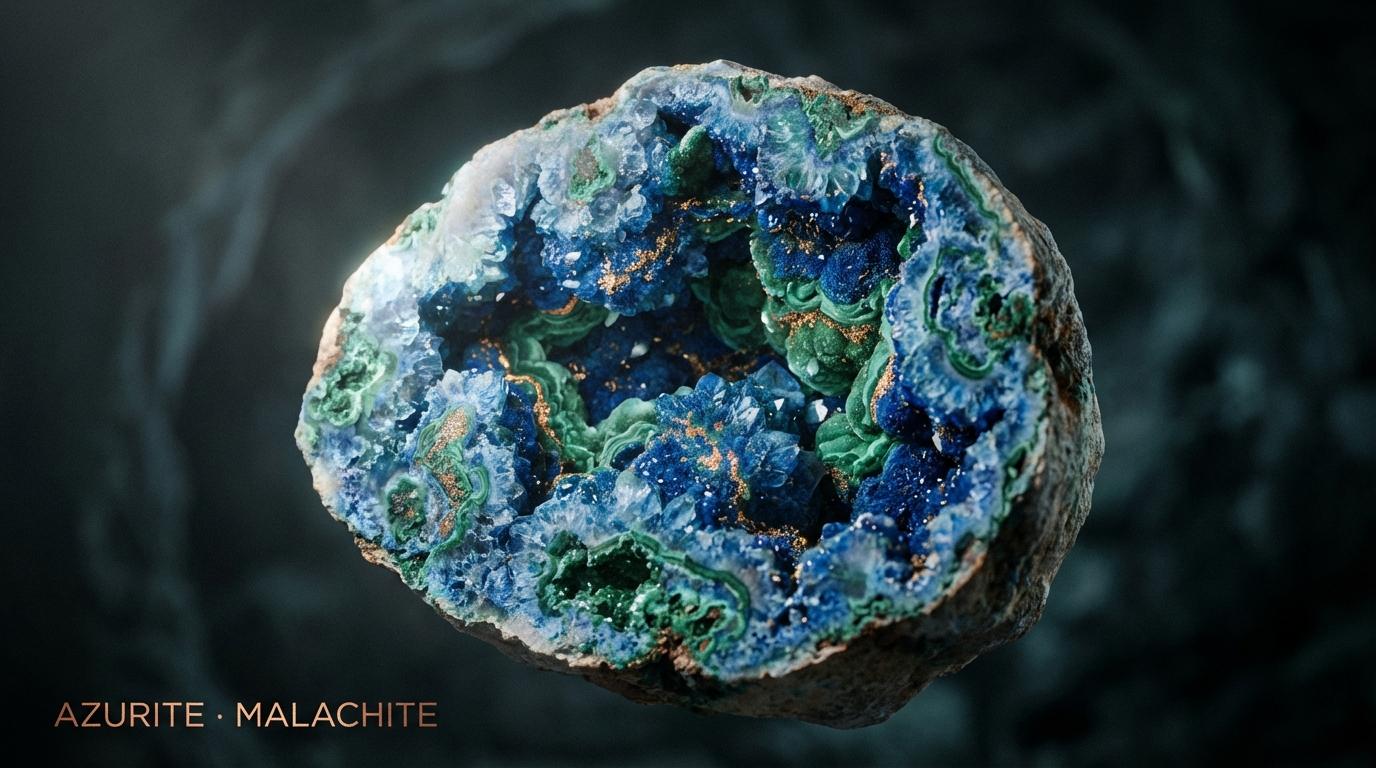
Malachite extract is one of those ingredients that sounds like it belongs in a crystal shop, not a moisturizer. The green stone has been used in jewelry and pigments for thousands of years, and now it’s showing up in serums, masks, and creams marketed as antioxidant-rich skincare. But here’s what’s interesting: unlike a lot of crystal-adjacent beauty trends, malachite actually has a biochemical basis worth examining.
The real story is about copper. Malachite is a copper carbonate mineral, and copper plays a documented role in skin biology. That doesn’t mean every malachite-infused product is going to transform your skin, but it does mean the ingredient deserves a closer look than an eye-roll.
The Copper Connection
Copper is an essential trace mineral that your body needs for several enzymatic processes, including those involved in connective tissue formation. In skin specifically, copper is a cofactor for lysyl oxidase, an enzyme required for collagen and elastin cross-linking. Without adequate copper, your skin literally cannot build and maintain its structural proteins properly.
Malachite extract provides copper in a form that can be processed topically. It also delivers other trace elements like zinc, selenium, and manganese. Each of these minerals has its own role in skin health, particularly in antioxidant defense systems. Zinc supports wound healing and inflammation control. Selenium protects against UV-induced oxidative stress. Manganese is a component of the mitochondrial antioxidant enzyme superoxide dismutase.
So when a product lists malachite extract as an ingredient, it’s essentially delivering a cocktail of trace minerals. Whether those minerals are present at concentrations high enough to make a meaningful difference depends entirely on the formulation, and that’s where things get complicated. Similar questions come up with other trendy botanical ingredients that have real nutrients but uncertain delivery in topical form.
Antioxidant Claims: What the Data Shows
The antioxidant angle is where malachite extract gets the most attention. Ingredient studies have shown that malachite extract can deactivate superoxide radicals with 71 to 99% efficiency depending on concentration. It has also been shown to boost regeneration of glutathione, your skin’s primary internal antioxidant, by approximately 30%.
Those numbers are encouraging, but context matters. These results come from in-vitro testing, meaning they were measured in controlled lab conditions, not on living human faces dealing with sebum, sunscreen layers, and environmental variables. In-vitro results often don’t translate directly to real-world topical use. The concentration of malachite extract in a finished product is usually far lower than what was tested in isolation.
That said, the mechanism is plausible. Copper-dependent antioxidant pathways are well-established in biochemistry. Malachite extract appears to work differently from classic antioxidants like vitamin C or vitamin E. Instead of directly neutralizing free radicals on its own, it supports your skin’s internal defense systems. Think of it as giving your skin’s own antioxidant machinery better raw materials to work with.
Crystal Energy vs. Actual Biology
This is where we need to be honest. A significant portion of malachite skincare marketing leans into “crystal healing” language. Words like “energy,” “vibrations,” and “chakra alignment” pop up on product pages alongside the legitimate mineral content claims.
There is zero scientific evidence that crystals emit healing energy that benefits skin. None. The minerals in malachite work through chemistry, not metaphysics. Copper interacts with enzymes. Zinc participates in inflammatory pathways. These are measurable biochemical processes, not vibrational frequencies.
If a brand is selling malachite extract primarily on crystal energy claims, that’s a red flag for the product’s overall formulation philosophy. If they’re talking about copper content, antioxidant support, and trace mineral delivery, they’re at least grounding their claims in something real.
This distinction matters because products formulated with actual biochemistry in mind tend to use effective concentrations and complementary ingredients. Products built around crystal mythology tend to prioritize aesthetics and storytelling over efficacy. Both can feel nice on your skin, but only one approach is likely to produce measurable changes.
What Malachite Extract Can Realistically Do
Based on available data and the known functions of its mineral components, here’s what malachite extract may contribute to a skincare product:
- Antioxidant support through copper-dependent enzyme activation
- Minor anti-inflammatory effects from zinc and copper
- Support for collagen synthesis pathways (copper’s role in lysyl oxidase)
- Protection against environmental oxidative stress
What it probably won’t do:
- Replace established actives like retinoids, vitamin C, or sunscreen
- Produce dramatic visible changes on its own
- Work as a primary anti-aging ingredient
- Detoxify your skin (your liver does that)
Malachite extract is best understood as a supporting ingredient, not a star player. It adds mineral-based antioxidant support to a formula, similar to how other novel protective ingredients work alongside more established actives to round out a product’s overall profile.
Where You’ll Find It
Malachite extract appears most frequently in products from brands that lean natural or “clean beauty.” You’ll see it in face oils, serums, moisturizers, and mask formulations. Some notable brands using it include Herbivore Botanicals, Graydon Skincare, and Peter Thomas Roth.
It’s rarely the headlining ingredient in a formula. More often, it’s listed somewhere in the middle to lower portion of the ingredient list, which suggests it’s present at relatively low concentrations. This isn’t necessarily a problem for a trace mineral ingredient, since copper and zinc are biologically active in small amounts, but it does mean you shouldn’t expect it to carry the entire formula’s performance.
Is It Worth Adding to Your Routine?
If you’re shopping for a new serum or moisturizer and a well-formulated product happens to contain malachite extract among other quality ingredients, there’s no reason to avoid it. The mineral content is genuinely beneficial, and the antioxidant data is promising even if incomplete.
If you’re considering buying a product specifically because it contains malachite extract, and that product costs significantly more than alternatives with better-studied antioxidants, it’s probably not the best use of your money. Vitamin C, niacinamide, and green tea extract all have stronger evidence bases and more consistent results in topical applications.
Malachite extract occupies an interesting middle ground. It’s not pseudoscience, but it’s also not a proven powerhouse. The copper content gives it real biochemical relevance. The antioxidant data is encouraging but preliminary. And the crystal healing marketing around it muddies what should be a straightforward conversation about trace minerals in skincare.
Use it if it fits. Skip it if something else works better for your skin and budget. But at least now you know the difference between the geology and the marketing.