
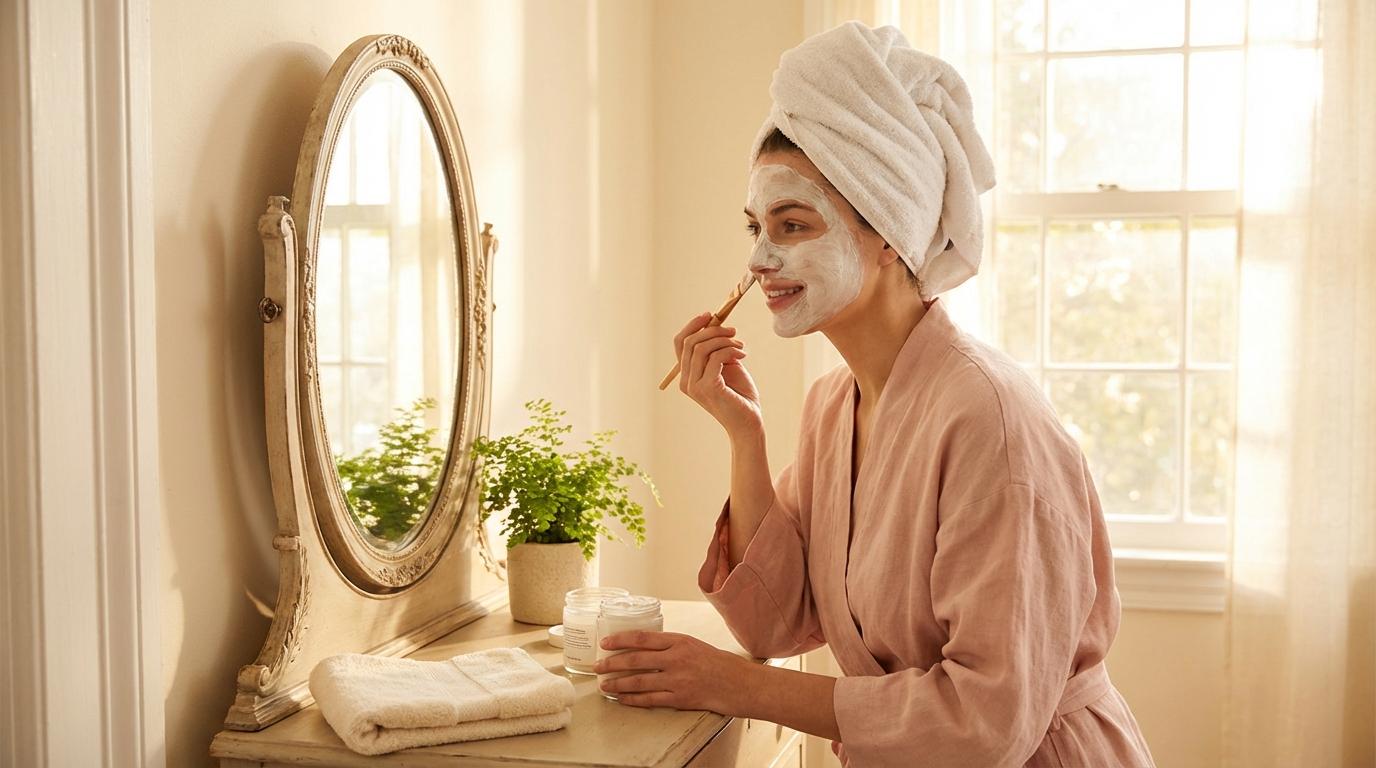
Clay masks are supposed to be skincare’s great equalizer, the one treatment that works for everyone. That is what beauty brands keep telling us anyway. In reality, most clay masks are formulated for oily skin and leave anyone with sensitive or combination skin feeling tight, irritated, and wondering what they did wrong.
Kaolin clay changes this equation. It is the gentlest option in the clay family, and it actually works for skin types that typically cannot tolerate masks at all.
Why Kaolin Is Different From Other Clays
Most clay masks use bentonite as their star ingredient (learn more about how different clays compare). Bentonite is volcanic ash that swells when wet and can absorb more than its own body mass in oil and water. That sounds impressive until you realize your face is not an oil spill that needs industrial-strength cleanup.
Kaolin clay is less absorbent than bentonite. This is actually its strength, not its weakness. It pulls excess sebum from your pores without stripping away the moisture your skin needs to function properly. Think of bentonite as a vacuum cleaner and kaolin as a gentle broom. Both clean, but one does not rip up your carpet in the process.
The difference becomes obvious when you use them. Bentonite masks dry completely on your face, cracking when you try to smile or talk. Kaolin masks stay softer, more pliable. Your skin feels cleansed when you rinse, not tight and desperate for moisturizer.
Combination Skin Finally Gets a Clay Mask That Works
Combination skin creates a frustrating paradox with masks. Your T-zone needs oil control, but your cheeks scream for mercy whenever something drying touches them. Most clay masks force you to choose between leaving your oily areas untreated or torturing your dry areas.
Kaolin solves this because its absorption level hits a useful middle ground. It pulls enough oil to mattify your forehead and nose without dehydrating your cheeks into flaky oblivion. You can actually apply it to your entire face without strategic avoidance maneuvers.
This also makes kaolin suitable for people whose skin changes with the seasons. Winter skin that leans drier can still benefit from occasional clay masking when kaolin is the main ingredient.
How Often Should You Actually Use a Clay Mask
The twice-a-week recommendation you see everywhere assumes you are using a heavy-duty bentonite mask. Kaolin plays by different rules.
For truly oily skin, kaolin masks can be used more frequently, even daily if your skin tolerates it well. Skin experts note that kaolin’s gentle nature means it cleanses without causing irritation even with regular use.
Sensitive skin should still approach with caution. Start with once a week and see how your skin responds over two to three weeks before increasing frequency. Just because something is gentler does not mean your reactive skin cannot find a way to complain about it.
Combination skin usually does well with two to three times weekly, focusing more time on oilier areas and less on dry zones. You can even apply a thicker layer to your T-zone and a thinner wash to your cheeks if you want to get tactical about it.
What to Look for in a Kaolin Mask
Pure kaolin masks exist, but most formulas combine it with other ingredients. Here is what actually helps versus what is just marketing.
Kaolin plus hydrating ingredients like glycerin, hyaluronic acid, or aloe makes sense. These offset any drying potential and leave skin feeling comfortable after rinsing. This combination has become more common as brands figure out that people want results without the desert-face aftermath.
Kaolin plus bentonite is common in masks marketed as “balanced” or “for all skin types.” If you are specifically seeking kaolin’s gentleness, check where each clay falls on the ingredient list. Kaolin should come first if that is what you are really paying for.
Kaolin plus vitamin B5 (panthenol) showed up in a clinical study that found this combination improved both oily skin issues and hydration levels simultaneously. If you spot this pairing, it is not just random ingredient throwing.
The Application Mistakes That Ruin Clay Masks
Letting any clay mask dry completely on your face is the most common error. Once it cracks and pulls, you have moved past cleansing into irritation territory. Kaolin is more forgiving here than bentonite, but it is still not meant to become a second skin.
Watch the mask as it dries. When it shifts from wet-looking to matte but still slightly tacky, that is your removal window. For most kaolin masks, this happens around ten to fifteen minutes depending on how thick you applied it.
Using hot water to rinse amplifies any potential irritation. Lukewarm water dissolves the clay just as effectively without stressing out your skin. Your face is not a dirty dish that needs scalding to get clean.
Skipping moisturizer afterward because your skin feels fine is tempting, especially with gentler masks. Do it anyway. Clay does remove some of your skin’s natural oils, even when it is gentle about it. Sealing in moisture after masking helps your barrier recover faster.
When Kaolin Is Not Enough
If you have truly oily skin that pumps out shine an hour after washing, kaolin alone might leave you underwhelmed. You might want to check out clay masks designed specifically for oily skin. It is not designed for maximum oil absorption. That is precisely why it works for sensitive skin, but it limits what it can do for heavily congested pores.
Very oily skin might benefit from alternating kaolin masks with occasional bentonite treatments. Use kaolin as your regular maintenance and bring out bentonite once every week or two when your skin can handle more intensive treatment.
If you are dealing with active inflammatory acne, clay masks of any kind are secondary to proper acne treatment. A clay mask might help with minor congestion and sebum control, but it is not clearing your cystic breakouts. Get the acne addressed first, then think about clay as a supporting player.
Why Your Sensitive Skin Has Been Failing at Masks
Using the wrong type of clay is the number one reason people with sensitive skin have bad reactions to masks. If you tried one bentonite mask, hated it, and swore off clays forever, you gave up too soon.
Kaolin gives sensitive skin a genuine second chance at enjoying what clay masks can do. It is not magic. It will not transform your skin overnight. But it offers something most clay products cannot: actual compatibility with skin that tends to react to everything.
Start simple. Find a basic kaolin mask without twenty other active ingredients competing for attention. See how your skin responds when clay is the main event rather than one ingredient in a complicated formula. That response tells you whether clay masking has a place in your routine or whether you should move on to other treatments entirely.