
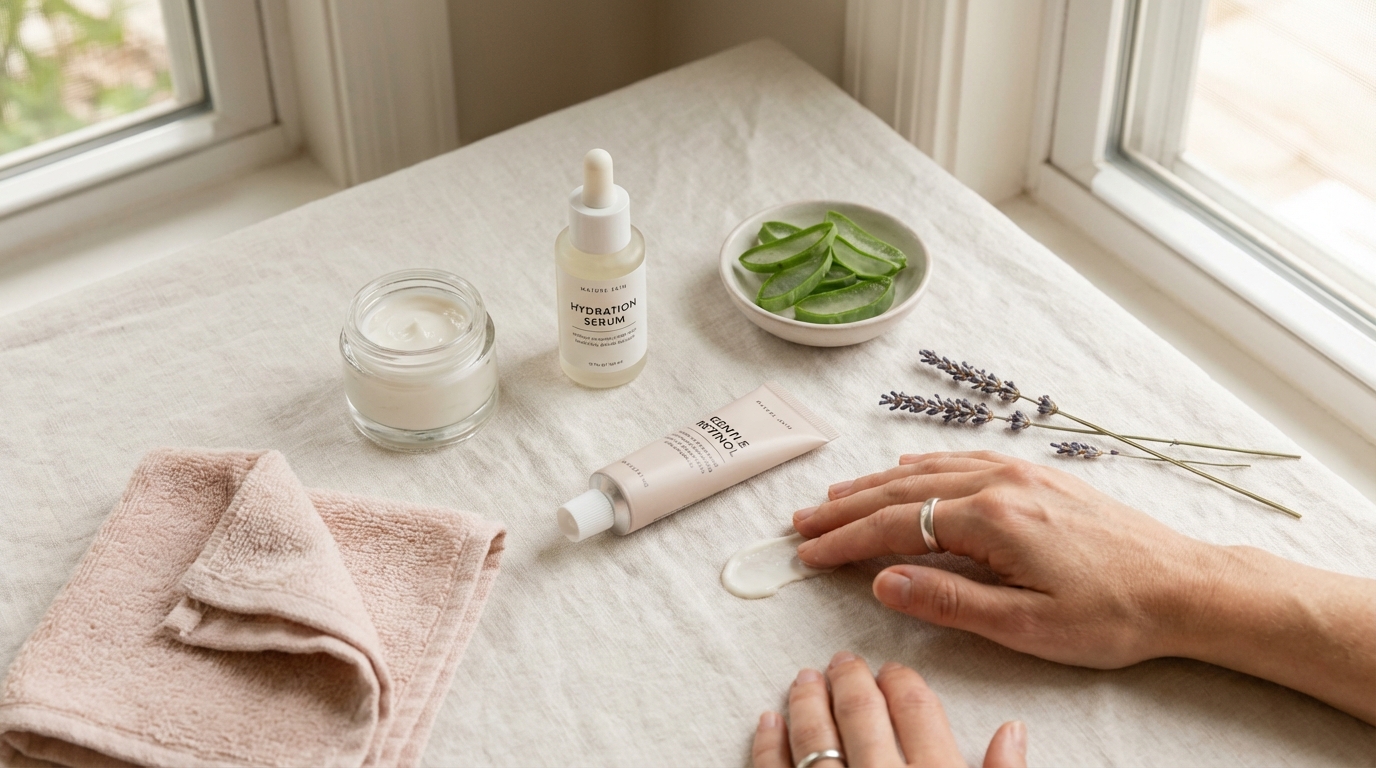
Turning 40 is not a skincare crisis. It is a shift in priorities. Your skin is going through real biological changes, and understanding what is happening at the cellular level will help you adapt your routine in ways that actually make a difference.
Let me walk you through the science of what is changing and which adjustments will serve you best.
What Is Actually Happening to Your Skin After 40
Here is what the research tells us. Starting in your 40s, several processes accelerate:
- Collagen production drops by about 1% per year after age 20, but the effects become more visible after 40. This affects skin firmness and elasticity.
- Natural lipid production decreases. Your skin makes fewer ceramides and fatty acids, which weakens the moisture barrier.
- Cell turnover slows down. Where your skin might have renewed itself every 28 days in your 20s, it can take 45-60 days now.
- Hormonal shifts (especially around perimenopause and menopause) affect oil production, collagen synthesis, and skin thickness.
A study published in the Journal of Clinical and Aesthetic Dermatology found that estrogen decline is directly linked to reduced skin thickness, decreased collagen, and compromised wound healing.
None of this is bad news. It is information you can work with.
Hydration Becomes Your Number One Priority
The biggest mistake I see people make after 40 is continuing to use the same lightweight products that worked in their 30s. Your skin simply cannot hold moisture the way it used to.
What works now:
- Hyaluronic acid serums applied to damp skin. Hyaluronic acid can hold up to 1000 times its weight in water, but it needs water to draw from. Apply it right after cleansing while your face is still wet.
- Ceramide-rich moisturizers. Ceramides make up about 50% of your skin barrier. Replenishing them externally helps compensate for decreased natural production.
- Occlusive layers at night. Products with petrolatum, squalane, or dimethicone seal moisture in while you sleep.
Research from the Journal of the American Academy of Dermatology shows that barrier repair moisturizers containing ceramides, cholesterol, and fatty acids in the right ratio can significantly improve skin hydration and reduce fine lines.
Think of hydration as the foundation. Nothing else you put on your skin will work properly if this step is not handled.
Gentle Actives Only
Your skin after 40 has less tolerance for irritation. The aggressive acids and high-strength retinols that worked in your 30s can now cause inflammation, redness, and even worsen the appearance of aging.
The goal shifts from maximum strength to consistent, gentle progress.
Retinoids: Still the gold standard for aging skin, but choose your formulation wisely. Retinol at 0.3-0.5% or retinaldehyde work well for mature skin without the harsh adjustment period of prescription tretinoin. Use every other night and always follow with a good moisturizer.
Vitamin C: Look for stable forms like ascorbyl glucoside or tetrahexyldecyl ascorbate rather than pure L-ascorbic acid. They are less irritating and still provide antioxidant protection and collagen support.
Peptides: These amino acid chains signal your skin to produce more collagen. Matrixyl and copper peptides have the most research behind them. They are gentle enough for daily use.
Niacinamide: This B vitamin strengthens the skin barrier, evens skin tone, and plays well with everything else in your routine. Most people can use it twice daily without any issues.
Skip the glycolic acid peels and high-percentage AHAs unless you are working with a dermatologist. Your cell turnover is already slower, and aggressive exfoliation can damage your barrier faster than it can repair itself.
Include Your Neck and Chest
Everything you do for your face should extend to your neck and decolletage. The skin in these areas is thin, has fewer oil glands, and shows age just as quickly, sometimes faster.
Many people diligently care for their face and completely ignore their neck until visible damage appears. By then, you are playing catch-up.
Apply your serums, retinoids (at lower frequency), and moisturizers from your jawline down to your chest. Use sunscreen on these areas daily, even when wearing clothes that cover them, as UV penetrates light fabric.
The neck also benefits from products containing firming ingredients like DMAE or caffeine, which can temporarily tighten skin appearance.
Ingredients That Actually Help (With Evidence)
Not all anti-aging ingredients live up to their marketing. Here are the ones with solid scientific backing:
- Retinoids: Proven to increase collagen production, speed cell turnover, and reduce fine lines. The most studied anti-aging ingredient available.
- Vitamin C: Protects against UV damage, inhibits melanin production, and supports collagen synthesis.
- Niacinamide: Improves barrier function, reduces hyperpigmentation, and has anti-inflammatory properties.
- Peptides: Signal skin cells to behave like younger cells, promoting collagen and elastin production.
- Ceramides: Restore barrier function and prevent moisture loss.
- Sunscreen: Still the single most effective anti-aging product. UV exposure causes 80% of visible facial aging according to The Skin Cancer Foundation.
What does not have strong evidence: most plant stem cells, gold-infused products, lifting creams that claim to work like surgery, and anything promising instant results.
A Simple Routine Framework
You do not need 12 products. A focused routine beats an elaborate one.
Morning:
- Gentle cleanser (cream or milk formula)
- Vitamin C serum
- Hydrating serum with hyaluronic acid
- Moisturizer with ceramides
- Broad-spectrum SPF 30 or higher
Evening:
- Cleansing oil or balm (to remove sunscreen)
- Gentle cleanser
- Retinoid (every other night to start)
- Peptide serum (on non-retinoid nights)
- Rich moisturizer or night cream
- Eye cream if desired
Consistency matters more than complexity. Using a few well-chosen products every day will get you better results than an elaborate routine you only follow sometimes.
The Takeaway
Skincare after 40 is not about fighting your skin. It is about supporting it through real biological changes. Prioritize hydration, choose gentle but effective actives, extend your care to your neck and chest, and protect everything with sunscreen.
The goal is healthy, comfortable skin that functions well. That happens to look better than stressed, over-treated skin every time.
For more on building routines for your specific needs, explore our other skincare guides.