
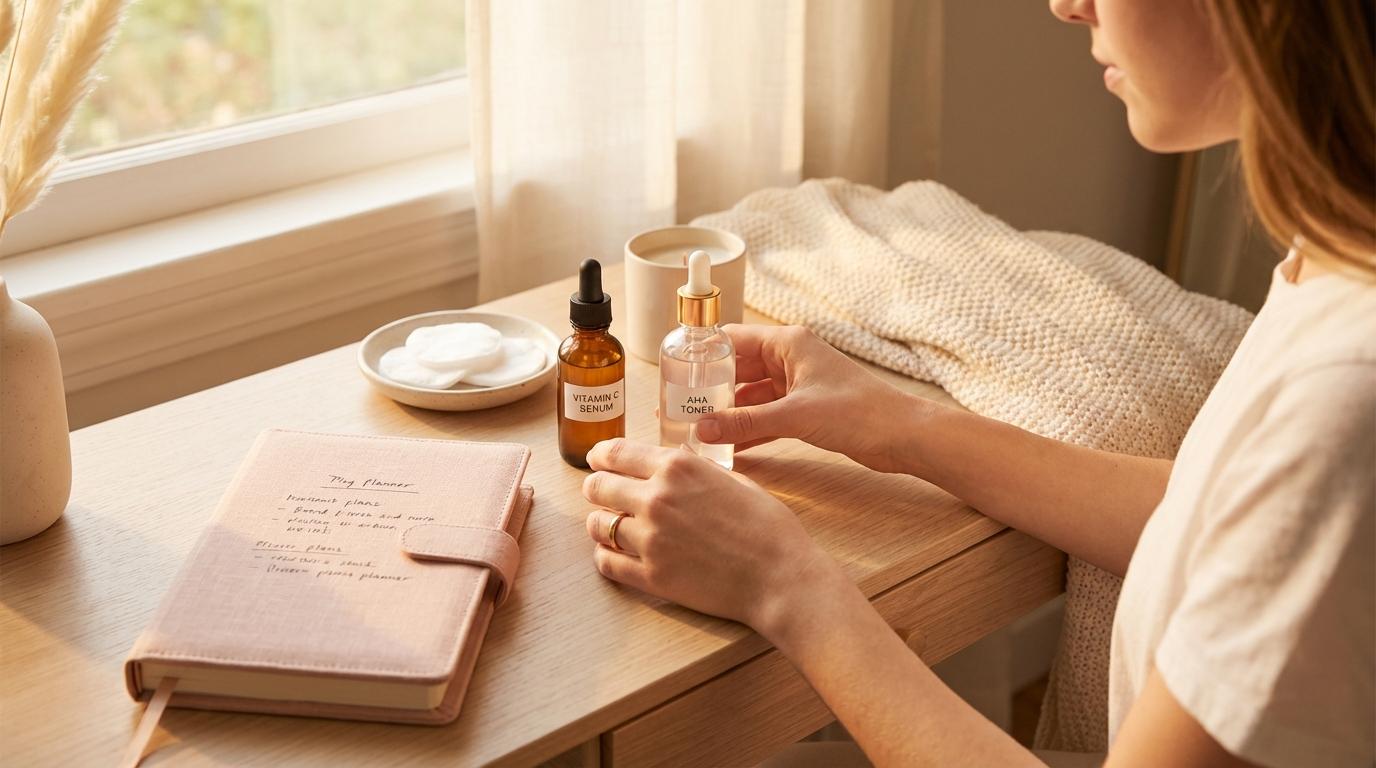
I spent an embarrassing amount of time assuming that the dark spots acne left behind would fade on their own if I just waited long enough. Spoiler: they didn’t. What actually helped was a handful of drugstore products and the willingness to stick with them for longer than two weeks. If you’re staring at post-acne marks and your budget is more “ramen noodles” than “spa weekend,” this one’s for you.
First, Know What You’re Dealing With
Post-acne marks and acne scars are not the same thing. Marks (also called post-inflammatory hyperpigmentation, or PIH) are flat, discolored spots left behind after a pimple heals. They can be pink, red, brown, or purple depending on your skin tone. Scars are textured, like pits or raised bumps. Budget topical products can genuinely fade marks. Scars usually need professional treatment. Know which one you have before you spend money.
If your spots are flat and just a different color from the surrounding skin, you’re dealing with marks. Good news: that’s the thing we can tackle affordably.
Affordable AHAs That Actually Work
Alpha hydroxy acids speed up cell turnover, which means the pigmented skin cells on the surface get replaced by fresher, more evenly toned cells underneath. For post-acne marks, glycolic acid and mandelic acid are the two worth looking at.
Glycolic acid is the smallest AHA molecule, so it penetrates effectively. The Ordinary Glycolic Acid 7% Toning Solution runs around $9-10 for a big bottle. You apply it with a cotton pad after cleansing, a few nights a week. Start with twice a week and build up. If your skin stings badly or gets red and flaky, scale back. More is not better with acids.
Mandelic acid is a larger molecule, which means it penetrates more slowly and is generally gentler. It’s a solid pick if glycolic acid feels too intense for you, or if you have a darker skin tone (mandelic is less likely to cause irritation-related hyperpigmentation in melanin-rich skin). The Ordinary has a Mandelic Acid 10% + HA serum for around $7. It’s honestly one of the best deals in skincare right now.
CosRX AHA 7 Whitehead Power Liquid is another option in the $15-18 range. It uses glycolic acid at 7% and has a nice lightweight texture.
Whichever AHA you pick, use it at night and wear sunscreen during the day. AHAs make your skin more sensitive to UV, and sun exposure will darken the exact marks you’re trying to fade. Non-negotiable.
Budget Vitamin C Options
Vitamin C (L-ascorbic acid) inhibits the enzyme that produces melanin. Translation: it helps prevent existing marks from getting darker while gradually brightening them over time. It also provides antioxidant protection, which is a nice bonus.
The problem with vitamin C is that pure L-ascorbic acid is unstable. It oxidizes when exposed to air and light, turning orange and losing effectiveness. Expensive vitamin C serums use fancy stabilization methods. Budget options require you to be a little more strategic.
The Ordinary Vitamin C Suspension 23% + HA Spheres costs around $6. It feels gritty on application and takes some getting used to, but the concentration is high and the price is unbeatable. Use it at night to avoid the instability issue with sunlight.
The Ordinary Ascorbyl Glucoside Solution 12%. Around $10-12. This uses a more stable form of vitamin C. It won’t oxidize as quickly and the texture is much more pleasant, like a regular serum. The tradeoff is that ascorbyl glucoside is considered somewhat less potent than pure L-ascorbic acid, but at this price and stability, it’s still a good deal.
Melano CC Intensive Anti-Spot Essence. This Japanese vitamin C product is a cult favorite for good reason. It’s usually around $12-15 and uses a stabilized form of ascorbic acid in a tube format that minimizes air exposure. A little goes a long way with this one.
Vitamin C works best in the morning under sunscreen. The antioxidant properties combine with your SPF to give stronger UV protection, and that prevents new marks from forming while the old ones fade.
Niacinamide: The Affordable Workhorse
If there’s one ingredient that deserves the “budget-friendly brightening” title, it’s niacinamide (vitamin B3). Research shows that 5% niacinamide can significantly improve hyperpigmentation within about four weeks of consistent use. It works by preventing pigment transfer from melanocytes to skin cells.
It also helps with oil control, supports the skin barrier, and reduces redness. All of that in products that cost almost nothing.
The Ordinary Niacinamide 10% + Zinc 1%. Around $6. This is probably the most recommended budget skincare product on the internet, and for once the hype is actually justified. The zinc helps with oil control too, making it a good pick if your acne is still active alongside the marks it left behind.
CeraVe PM Facial Moisturizing Lotion. About $15-17. This contains 4% niacinamide plus ceramides and hyaluronic acid. If you want niacinamide in your moisturizer rather than as a separate step, this is the product. It’s lightweight enough for oily skin and moisturizing enough for normal to dry types. Doubles as your routine staple alongside a cleanser.
Naturium Niacinamide Serum 12% Plus Zinc 2%. In the $15 range. Higher concentration of both niacinamide and zinc. If you’ve been using 10% niacinamide and want to try bumping it up, this is the affordable way to do it. Though honestly, for most people, 5-10% is the sweet spot.
Building a Budget Routine for Post-Acne Marks
You don’t need all of these products at once. In fact, throwing every active at your face simultaneously is a fast track to irritation, which can cause more hyperpigmentation. Start simple.
Morning routine:
Gentle cleanser (CeraVe or Cetaphil, $10-14), vitamin C serum, moisturizer, sunscreen (this is the most important step, seriously).
Evening routine:
Same gentle cleanser, niacinamide serum, moisturizer. Add your AHA 2-3 nights a week after cleansing, before niacinamide.
That’s it. A complete simple routine targeting post-acne marks for roughly $40-50 total. Most of these products last 2-3 months, so the monthly cost is pretty manageable even on a tight budget.
The Part Nobody Wants to Hear: Patience
Post-acne marks take time to fade. I mean real time. Not “I used this serum for five days and nothing happened” time. We’re talking weeks to months. Some marks, especially deeper brown or purple ones, can take 3-6 months of consistent treatment to fade significantly.
Cell turnover takes about 28 days for younger skin, longer as you age. AHAs speed that up. Vitamin C and niacinamide work on the pigment production side. But none of them work instantly. If you quit after two weeks because you don’t see dramatic results, you’re throwing away both money and progress.
Take photos in the same lighting every two weeks. You won’t notice gradual changes day to day, but comparing photos a month apart usually shows clear improvement. This is what kept me going when I was convinced nothing was working.
What Won’t Work (Save Your Money)
Lemon juice. Please don’t. The pH is too low and unpredictable, it can cause chemical burns, and the citric acid in lemon juice is not the same as the AHAs in formulated skincare products.
Toothpaste. No.
Expensive “dark spot correctors” that are mostly water and fragrance. Read the ingredient list. If the active ingredients are buried at the bottom, the product is relying on marketing, not chemistry. You can get the same actives for a fraction of the price in the products listed above.
Peel-off charcoal masks. They might pull off dead skin cells dramatically, but they don’t address pigmentation at a cellular level. And they can damage your skin barrier if used too often.
Sunscreen: The Free Upgrade
I’m going to say this one more time because it matters that much. Sunscreen is the single most important product for fading post-acne marks. UV exposure triggers melanin production, which means sun exposure literally makes your marks darker while you’re spending money on products to fade them.
Budget sunscreens that work: Neutrogena Ultra Sheer Dry-Touch SPF 50 (around $10), CeraVe Hydrating Mineral Sunscreen SPF 30 ($14-16), or any SPF 30+ you’ll actually wear every day. The best sunscreen is the one you use consistently.
Apply it every morning, even on cloudy days, even if you’re mostly indoors near windows. Reapply if you’re outside for extended periods. This one habit will do more for your marks than any serum.
When Budget Products Aren’t Enough
Sometimes marks are stubborn, especially if they’ve been there for months or if your skin tone is on the deeper side (more melanin means marks can be darker and more persistent). If you’ve been consistent with the products above for 3-4 months and haven’t seen meaningful improvement, it might be worth seeing a dermatologist.
Professional options like chemical peels and prescription treatments (tretinoin, hydroquinone) can tackle what over-the-counter products can’t. Some clinics offer payment plans. And a single dermatologist visit for a treatment plan is a better investment than buying dozens of random products hoping something sticks. If you’re dealing with active acne alongside the marks, getting the breakouts under control first will prevent new marks from forming while you treat the old ones.
Post-acne marks are annoying, but they’re temporary. With the right cheap products and actual patience, most of them will fade. Your wallet and your skin can both survive this.