
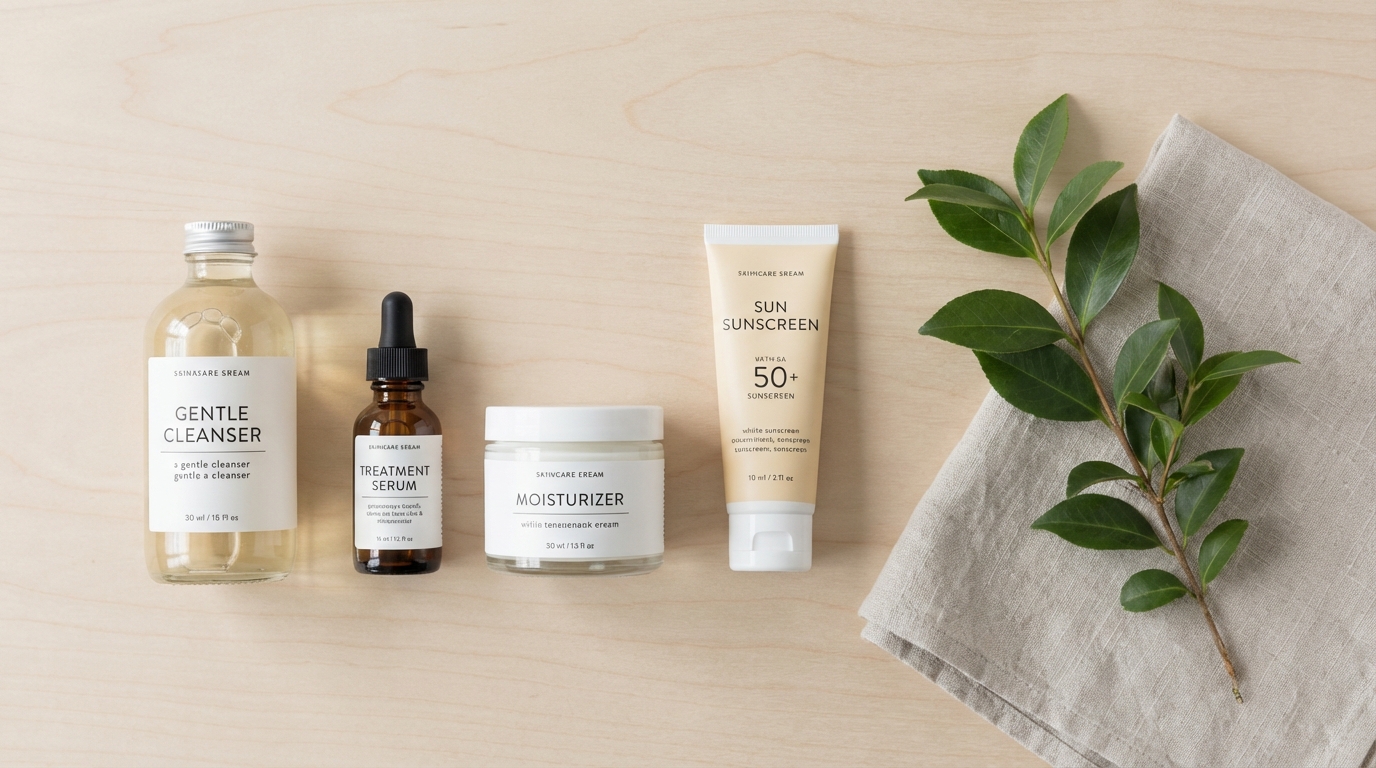
I spent five years as a beauty editor watching people mess up their morning routine order. Not because they used bad products. Because they applied them in the wrong sequence.
Here is the thing: order matters. A lot. Put your sunscreen before your moisturizer and you have just created a barrier that blocks absorption. Apply vitamin C after your heavier serums and you have wasted your money.
Let me break down exactly what goes where, and more importantly, why.
Step 1: Cleanse or Water Rinse
First decision of the day. Do you need to actually cleanse, or is a water rinse enough?
If you did a full routine the night before, your skin is already clean. You slept on it. A water rinse removes any surface oil and prepares your skin for products.
Use a gentle cleanser if you have oily skin, sweat at night, or skipped your evening routine. Otherwise, save your cleanser for nighttime when you are actually removing sunscreen, makeup, and the day’s grime.
Lukewarm water. Always. Hot water strips your skin barrier. Cold water does not remove anything effectively.
Step 2: Toner (If You Use One)
Toner is optional. Full stop.
If you use one, apply it after cleansing while your skin is still slightly damp. This helps with absorption of everything that follows.
Good toners add hydration or light exfoliation. Bad ones strip your skin with alcohol. Check your ingredient list.
Pat it on with your hands or use a cotton pad. Either works.
Step 3: Treatment Serums
This is where most people go wrong. The rule is simple: thinnest to thickest consistency.
Vitamin C Goes First
If you are using vitamin C, it needs to go on clean, dry skin. This antioxidant works best at a low pH, and other products can interfere with its absorption.
Wait about 30 seconds to a minute before moving on. No, you do not need to wait 20 minutes. That is outdated advice.
Water-Based Serums Next
Hyaluronic acid, niacinamide, and other water-based serums come after vitamin C. These are light, absorb quickly, and prep your skin for heavier products.
Apply to damp skin if possible. Hyaluronic acid pulls moisture from the environment, so give it something to work with.
Oil-Based Treatments Last
Any facial oils or oil-based serums go at the end of the treatment stage. Oil creates a barrier. Anything you put over oil will not absorb properly.
Step 4: Eye Cream
Eye cream fans, this is your moment. Apply after serums but before moisturizer.
Use your ring finger. It applies the least pressure. Dab gently around the orbital bone, not directly on your eyelids.
If you do not use eye cream, skip this step. Your regular moisturizer can go around your eyes for most people.
Step 5: Moisturizer
Moisturizer locks in everything you have just applied. It creates a protective layer that keeps hydration in and irritants out.
In the morning, go lighter than your night cream. You are about to put sunscreen over this, possibly makeup too. Heavy creams in the morning lead to pilling and a greasy finish by noon.
Gel moisturizers work great for oily skin. Lotion textures for combination. Creams for dry skin, but keep them lightweight.
Wait about a minute for your moisturizer to absorb before the next step.
Step 6: Sunscreen (Non-Negotiable)
This is your final skincare step. Every single morning. Yes, even on cloudy days. Yes, even if you work from home.
Sunscreen goes last for a reason. It needs to form a uniform film on your skin to protect properly. Applying it under other products breaks up that film.
Use enough. Most people apply about a quarter of what they need. For your face alone, you need about two finger-lengths of product.
Chemical sunscreens absorb into skin and convert UV rays to heat. Mineral sunscreens sit on top and reflect rays. Both work. Chemical absorbs faster if you are putting makeup over it.
Wait two to three minutes before makeup application. This lets the sunscreen set properly.
What About Prescription Treatments?
If you use prescription retinoids, save them for night. They break down in sunlight.
Topical medications like clindamycin or azelaic acid typically go after cleansing, before serums. But check with your prescriber. Some medications have specific instructions.
The Simplified Morning Routine
If that felt like a lot, here is the minimum viable routine:
- Rinse with water
- Moisturizer (if your skin feels dry)
- Sunscreen
That is it. Three steps. You can always add serums later when you have more time or specific concerns to address.
Common Mistakes to Avoid
Skipping sunscreen because your moisturizer has SPF. Those combo products rarely provide enough protection. Use a dedicated sunscreen.
Applying too many actives at once. Your morning does not need acids, vitamin C, and niacinamide stacked together. Pick one or two and move the rest to nighttime.
Rushing through steps. Give each product a moment to absorb. Otherwise, you are just wiping off what you just applied.
Using night products in the morning. Retinol and heavy oils belong at night. They either break down in sunlight or make you look greasy by lunch.
Final Thoughts
Your morning routine should take about five minutes once you have it down. Less if you stick to basics.
The order exists because of product textures and chemistry, not arbitrary rules. Light to heavy. Water-based before oil-based. Sunscreen always last.
Start simple. Build up only if you need to. A three-step routine done consistently beats a ten-step routine you abandon after a week.