
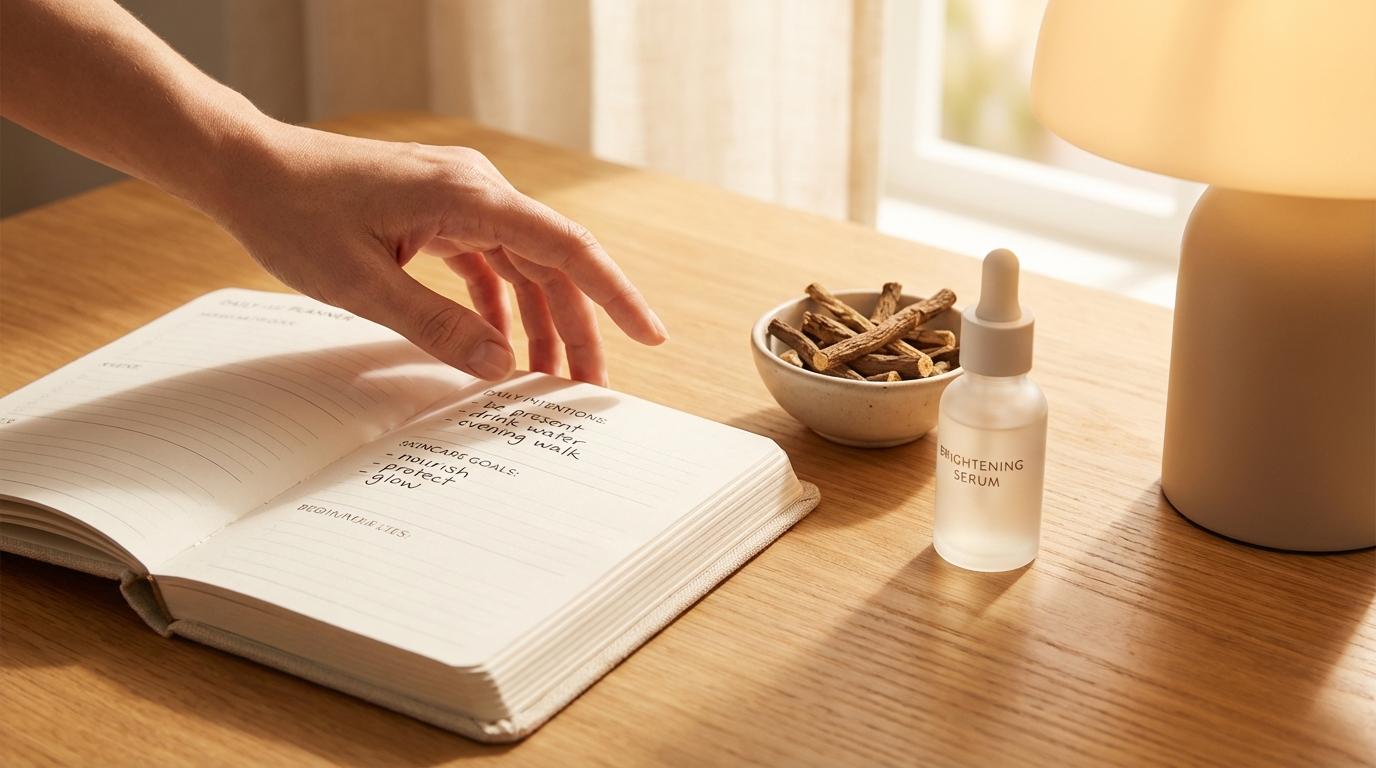
I didn’t know licorice root existed in skincare until six months ago. Honestly, when my dermatology-obsessed roommate first mentioned it, I thought she was talking about the candy. Turns out, this ingredient has been used in Asian skincare formulations for decades, and it’s finally getting the attention it deserves in Western beauty circles. If you’re looking to fade dark spots, even out your skin tone, or just get that lit-from-within brightness without irritating your face off, licorice root extract might be exactly what you need.
What Makes Licorice Root Extract Actually Work
The real star of the show here is a compound called glabridin. This is the active component in licorice root that does the heavy lifting when it comes to brightening. Glabridin works by inhibiting tyrosinase, which is the enzyme responsible for producing melanin in your skin. Less tyrosinase activity means less excess pigmentation forming, which translates to fewer dark spots and a more even complexion over time.
But glabridin isn’t working alone. Licorice root also contains liquiritin, another compound that helps disperse existing melanin in the skin. Think of it as a one-two punch: glabridin helps prevent new dark spots from forming while liquiritin helps fade the ones you already have. According to research published in the Journal of Dermatological Treatment, glabridin can inhibit tyrosinase activity by up to 50% at certain concentrations, making it a genuinely effective option for hyperpigmentation concerns.
What really sets licorice root apart from other brightening ingredients is its anti-inflammatory properties. While it’s working on your pigmentation, it’s also calming your skin down. This is huge because inflammation itself can trigger more melanin production, creating a vicious cycle that licorice root helps break.
Why Sensitive Skin Types Should Pay Attention
Real talk: if you’ve ever tried a vitamin C serum that made your face burn, or used a retinoid that left you looking like you got a chemical peel gone wrong, you know the frustration of wanting results but not wanting to destroy your skin barrier in the process. This is where licorice root extract really shines.
Licorice root is naturally gentle. Unlike hydroquinone, which can cause irritation, rebound hyperpigmentation, and has been banned in some countries, licorice root works gradually without the harsh side effects. It doesn’t increase your skin’s sensitivity to the sun the way some other brightening actives can, although you should still be wearing SPF every day regardless.
For those with rosacea, eczema, or just generally reactive skin, licorice root can be a safe entry point into the brightening game. The glycyrrhizin in licorice root has been shown to have anti-inflammatory effects that can actually help soothe irritated skin while addressing uneven tone. It’s one of the few ingredients that can multitask without making sensitive skin throw a tantrum.
I started using a licorice root serum after a bad reaction to a popular vitamin C product left my cheeks red and irritated for weeks. The difference was noticeable. My skin calmed down, and over about two months, the post-inflammatory hyperpigmentation from the reaction faded significantly. No burning, no stinging, no drama.
Mixing Licorice Root With Other Brightening Ingredients
One of the best things about licorice root extract is how well it plays with others. You’re not limited to using it solo; in fact, combining it with complementary ingredients can boost your results.
Niacinamide and licorice root are like best friends in a bottle. Niacinamide also helps with hyperpigmentation and strengthens the skin barrier, and when paired with licorice root, you’re addressing dark spots from multiple angles. Many affordable serums already combine these two, which makes building a routine easier. If you’re looking at The Ordinary’s lineup, their Alpha Arbutin serum can work beautifully alongside a licorice root product.
Vitamin C and licorice root can also be layered together if your skin tolerates vitamin C. The vitamin C provides antioxidant protection and its own brightening benefits, while licorice root adds the anti-inflammatory backup. Just introduce them slowly if you’re new to actives.
Alpha arbutin is another tyrosinase inhibitor that stacks well with licorice root. They work through similar mechanisms but can enhance each other’s effects without the irritation risk that comes from combining, say, retinol with a strong acid.
What to avoid mixing? High-concentration acids at the same time as your licorice root serum might dilute its effectiveness or increase irritation risk. Use your AHA or BHA at a different time of day, or on alternating days, to get the best of both.
Finding Affordable Licorice Root Products
You don’t need to spend a fortune to get the benefits of licorice root extract. This ingredient shows up in a surprising number of budget-friendly products, you just need to know where to look.
Check the ingredient list for “glycyrrhiza glabra root extract” or “licorice root extract.” You want it to appear in the first half of the ingredients list to ensure there’s enough of it to actually do something. If it’s listed dead last, the product probably contains a negligible amount that won’t move the needle on your hyperpigmentation.
Korean skincare brands have been formulating with licorice root for years, and many of them are extremely affordable. Brands like COSRX, Some By Mi, and Klairs all have products featuring this ingredient at price points that won’t wreck your budget. When you’re comparing Target vs. Sephora prices, keep an eye out for these K-beauty options at Target or on Amazon.
The Ordinary doesn’t have a straight licorice root product, but many of their serums pair well with affordable licorice-containing products from other brands. Building a multi-brand routine is totally normal and often the most budget-conscious approach.
Drugstore brands are catching on too. Look for licorice root in toners, essences, and moisturizers. Sometimes the best approach is finding a lightweight toner or essence with licorice root that you can layer under your existing products without overhauling your whole routine.
Setting Realistic Expectations
Real talk time: licorice root extract is effective, but it’s not instant. This is a marathon ingredient, not a sprint ingredient. You’re looking at about 8 to 12 weeks of consistent use before seeing significant improvements in hyperpigmentation. Some people notice their skin looks calmer and brighter within a few weeks, but actual dark spot fading takes time.
Consistency matters more than concentration here. Using a lower-concentration licorice root product every single day will get you better results than using a stronger one sporadically. Make it part of your routine and stick with it.
Also, sunscreen is non-negotiable. You can use the best brightening ingredients on the market, but if you’re not protecting your skin from UV exposure, you’re essentially undoing your own work. Melanin production gets triggered by sun exposure, so wearing SPF 30 or higher daily is the foundation that makes everything else work.
Licorice root works best on post-inflammatory hyperpigmentation and sun spots. It can help with melasma too, but melasma is notoriously stubborn and usually requires a more comprehensive approach. If you’re dealing with deep or hormonal pigmentation, licorice root can be part of the solution but probably shouldn’t be the only tool in your arsenal.
How to Add Licorice Root to Your Current Routine
The easiest way to incorporate licorice root is through a serum or essence applied after cleansing and before moisturizer. Most licorice root products are lightweight and absorb quickly, making them easy to layer without your routine feeling heavy or complicated.
Morning routine placement works great because you’re then applying sunscreen on top, which protects all that brightening work you’re investing in. However, using it at night is perfectly fine too, especially if your evening routine includes other treatment products that play well with licorice root.
If you’re using prescription treatments or other strong actives, check with a dermatologist before adding anything new. Licorice root is gentle, but everyone’s skin is different, and professional guidance never hurts. Dermstore’s guide on layering actives can also help you figure out what goes with what.
Start with once daily application and see how your skin responds. If everything goes smoothly after a week or two, you can use it morning and night if your products support that frequency. Listen to your skin and adjust accordingly.
Is Licorice Root Worth It?
For a gentle, budget-friendly, sensitive-skin-approved brightening ingredient, licorice root extract is genuinely worth adding to your lineup. It won’t replace professional treatments for severe hyperpigmentation, but for everyday dark spots, uneven tone, and dull skin, it’s a solid performer that won’t break the bank or break your face.
The fact that it’s anti-inflammatory on top of being a brightening agent makes it especially valuable if you’re prone to redness or irritation. You’re getting multiple benefits from one ingredient without the harshness that comes with more aggressive options.
Give it time, pair it with sunscreen, and stay consistent. That’s really the whole formula. Six months ago I had no idea this ingredient existed, and now it’s a permanent part of my routine. Your future, brighter skin will be glad you took the time to learn about it too.