
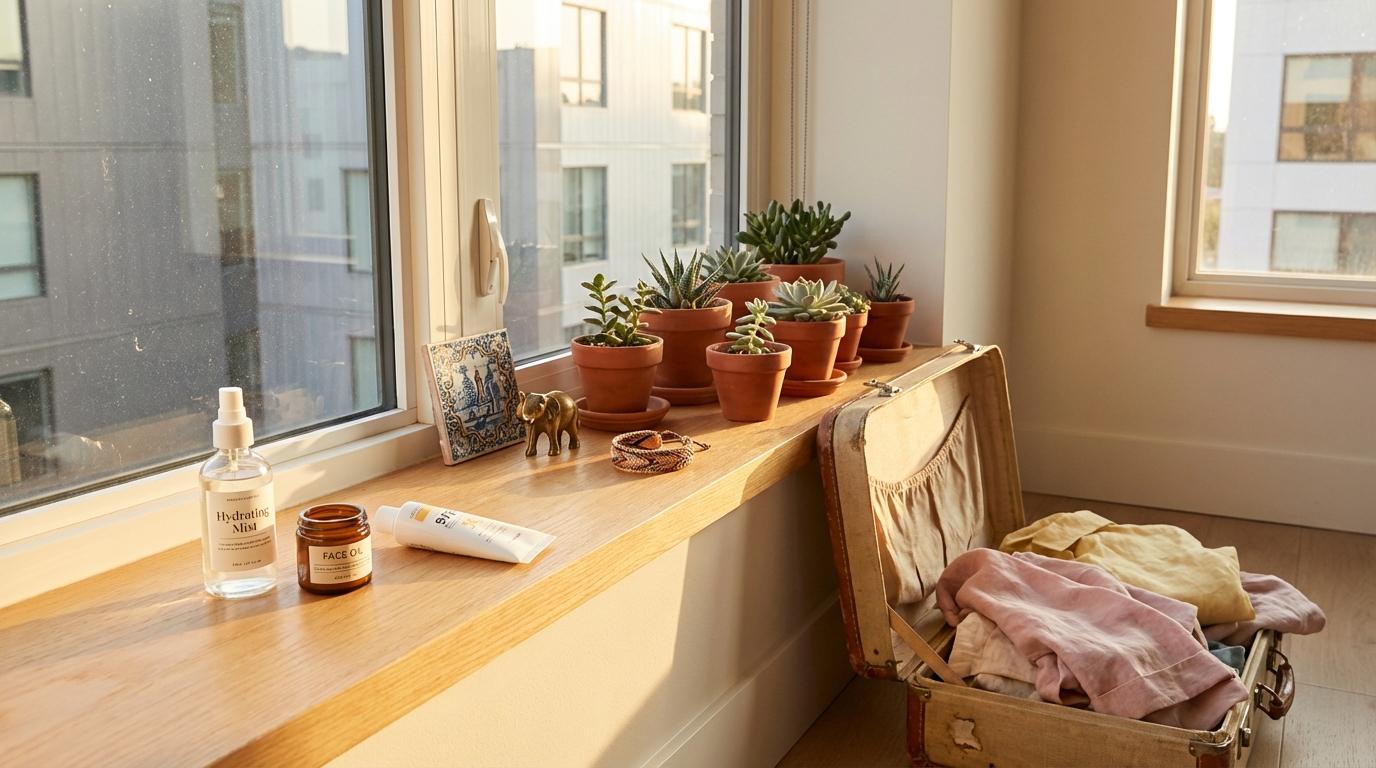
So I moved from humid Atlanta to bone-dry Denver last year, and within three weeks my skin had a full identity crisis. We’re talking breakouts in places I’d never had them, dry patches that made my foundation look tragic, and this weird tightness that no amount of moisturizer seemed to fix. If you’re reading this because you just relocated and your skin decided to rebel, I see you. Let’s talk about what’s actually happening and how to fix it.
Why Your Skin Freaks Out When You Move
Your skin is basically a creature of habit. It spent years adjusting to your old environment, figuring out how much oil to produce, how to stay hydrated, and how to protect itself from whatever was in your local air. Then you packed up and threw it into a completely different situation, and now it’s scrambling to figure out what’s going on.
Three major factors are probably behind your skin meltdown: water quality, climate differences, and pollution levels. Any one of these can cause problems. All three changing at once? Recipe for chaos.
Here’s the thing that nobody tells you: this adjustment period is totally normal. According to dermatologists, your skin can take anywhere from a few weeks to several months to fully adapt to a new environment. That doesn’t mean you have to just suffer through it, though.
Hard Water vs. Soft Water: Yes, It Actually Matters
I never thought about water quality until I moved somewhere with hard water and suddenly my cleanser felt like it wasn’t rinsing off properly. Hard water is basically water with a high mineral content (calcium, magnesium, that sort of thing), and it can leave a film on your skin that messes with everything.
With hard water, your cleanser doesn’t lather as well, and when you rinse, you’re left with residue that can clog pores and make your skin feel weirdly tight. Some people also find that hard water irritates existing skin conditions like eczema.
Soft water has its own issues, though. It can make it feel like soap never fully rinses off, leaving your skin with a slippery feeling. This isn’t necessarily bad, but it might mean you need to adjust how much product you’re using.
How to figure out what you’re dealing with: check your city’s water quality report (usually available online from your water utility), or just look at your faucets and showerhead. Lots of white, chalky buildup? That’s hard water.
Fixes for Hard Water Skin Problems
The gold standard solution is a showerhead filter. You can get a decent one for $20-40 on Amazon, and it filters out a lot of the minerals and chlorine that irritate skin. I was skeptical, but the difference was noticeable within a week.
If a filter isn’t in your budget right now, try using micellar water as a second cleanse after washing your face. It picks up any residue your regular cleanser left behind. Also, consider switching to a gentle, non-foaming cleanser if you’re in a hard water area. The less lather, the less residue.
Climate Changes Hit Different
Moving from a humid climate to a dry one (or vice versa) is probably the biggest adjustment your skin will face. When the humidity drops, the air literally pulls moisture out of your skin. According to dermatologists who practice in dry climates, low humidity can exacerbate inflammatory conditions like eczema and cause even oily skin types to become dehydrated.
And here’s where it gets confusing: dehydrated skin can actually cause breakouts. When your skin is parched, dead skin cells don’t shed properly and can trap oil underneath, leading to clogged pores. So you might be dealing with dry patches AND pimples at the same time (I know, it feels deeply unfair).
Moving to a more humid climate has its own challenges. Your skin might suddenly produce more oil because it’s not working as hard to stay moisturized. Or you might notice more fungal issues because moisture and warmth are bacteria’s favorite playground.
What Actually Helps with Climate Adjustment
First things first: give your skin barrier some extra love during the transition. This is not the time to start a retinol or try a new acid. Stick with gentle, hydrating products while your skin figures out its new normal.
If you moved somewhere drier:
- Layer a hydrating serum (look for hyaluronic acid or glycerin) under your moisturizer
- Switch to a heavier moisturizer, at least at night
- Get a humidifier for your bedroom, seriously
- Shorter, cooler showers (hot water strips your skin’s natural oils faster in dry climates)
If you moved somewhere more humid:
- You might be able to switch to a lighter moisturizer
- Consider adding a BHA (salicylic acid) a few times a week if you’re getting more congestion
- Make sure you’re cleansing thoroughly at night, humidity means more sweat and grime sticking to your face
Pollution Levels: The Silent Skin Saboteur
Moving from a smaller town to a big city (or even between cities with different pollution levels) can absolutely affect your skin. Air pollution contains tiny particles that can penetrate your pores, cause oxidative stress, and accelerate skin aging. A 2025 study on environmental factors and skin health found that air pollution is associated with everything from acne to premature aging.
Signs that pollution might be affecting your skin: dullness, increased sensitivity, and breakouts that seem to appear out of nowhere. Your skin is basically dealing with a constant low-level attack from particulate matter in the air.
Protecting Your Skin from Pollution
Double cleansing is your friend in polluted environments. An oil-based cleanser (or micellar water) followed by your regular cleanser helps make sure you’re actually getting all the gunk off at the end of the day.
Antioxidants are also clutch here. A vitamin C serum in the morning can help neutralize some of the free radicals that pollution generates. You don’t need anything fancy; there are solid vitamin C options at every price point.
And obviously, never skip sunscreen. Pollution and UV rays team up to do even more damage together, so broad-spectrum SPF is non-negotiable.
Rebuilding Your Routine for Your New Environment
Here’s my actual advice for the first few weeks after a move: simplify everything. Go back to basics. Cleanser, moisturizer, sunscreen. That’s it. Give your skin a chance to adjust without throwing a bunch of new variables at it.
Once things settle down (usually 2-4 weeks), you can start reintroducing your actives one at a time. Pay attention to how your skin responds. That vitamin C that worked perfectly in your old city might be too much for your sensitized, adjusting skin right now.
Keep a mental note of what your skin seems to need now versus what it needed before. You might find that your skin type has effectively shifted. People with oily skin in humid climates sometimes become combination or even dry when they move somewhere arid. That’s not a permanent change to your skin type, it’s just your skin adapting to its environment.
The Timeline: How Long Until Things Normalize
Real talk? It can take a few months. I know that’s not what you want to hear when your skin is currently staging a protest, but trying to rush the adjustment often makes things worse.
Here’s roughly what to expect:
Weeks 1-2: This is usually when things are at their worst. Your skin is in full panic mode. Keep things simple and gentle.
Weeks 3-4: You might start seeing some improvement, or at least stabilization. If things are still getting worse, consider whether there’s a specific product that’s not working in your new environment.
Months 2-3: Most people’s skin has mostly adjusted by this point. You can start fine-tuning your routine and bringing back your favorite actives.
If you’re past the three-month mark and still struggling, it might be worth seeing a dermatologist who practices in your new area. They’ll know the specific environmental challenges and can give you targeted advice.
Products That Helped Me Survive My Move
I’m not going to give you a 15-product haul because that’s overwhelming and probably unnecessary. Here’s what actually made a difference for me:
A ceramide-rich moisturizer: Ceramides help repair and protect your skin barrier, which takes a beating during environmental changes. CeraVe and Vanicream are both affordable options with solid ceramide content.
Hydrating toner or essence: Layering hydration was key for me in a dry climate. Something with hyaluronic acid that I could pat on before moisturizer made a noticeable difference.
Gentler cleanser: I switched from a foaming cleanser to a cream or milk cleanser while my skin was adjusting. Less stripping means less irritation.
Facial mist (for dry climates): Sounds bougie, but a quick spritz throughout the day when the air is sucking moisture from your face actually helps. Just make sure to apply moisturizer after if your skin is really dry, or the mist can evaporate and take your skin’s moisture with it.
When to Actually Worry
Some skin changes after a move are normal. But certain things warrant a dermatologist visit:
- A rash that doesn’t go away after a few weeks
- Signs of infection (increased pain, swelling, warmth, or pus)
- Severe, painful cystic acne that’s new for you
- Any dramatic changes to existing moles or new suspicious spots
Your new city might have environmental factors that are triggering something more than just adjustment breakouts. A local derm can test for allergies and rule out anything more serious.
The Bottom Line
Moving wrecks a lot of things: your sleep schedule, your bank account, your sense of where anything is. Your skin joining the chaos is just one more thing on the pile. But unlike trying to find a good Thai place in a new city, your skin situation is actually fixable with some patience and strategic adjustments.
Give yourself grace during the transition. Simplify your routine, address the specific environmental changes you’re dealing with (water, climate, pollution), and remember that this adjustment period is temporary. Your skin figured out how to thrive where you used to live, and it’ll figure out how to thrive here too. It just needs a minute.