
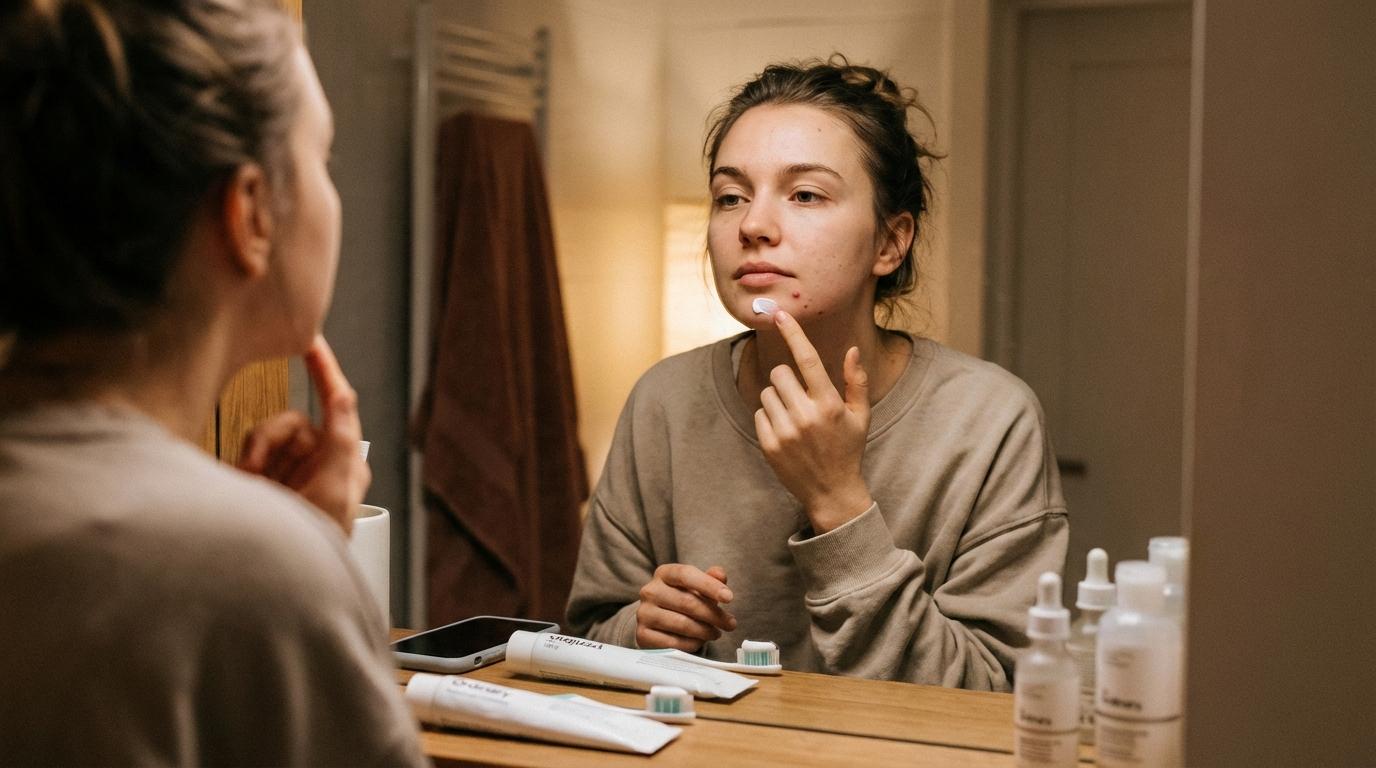
Okay, real talk. If you’ve ever been tempted to dab some toothpaste on a pimple before bed, I need you to put down the Colgate and step away from the bathroom mirror. I get it. We’ve all been there at 11 PM with a massive zit that appeared out of nowhere, desperately Googling “how to get rid of pimples overnight.” And every single time, some random forum or TikTok comment suggests toothpaste like it’s some kind of secret acne weapon.
Spoiler alert: it’s not. And today we’re going to talk about why this outdated skincare hack needs to stay in the past where it belongs.
Why Does Everyone Think Toothpaste Works on Pimples?
Before I completely trash this myth, let’s be fair and understand why people believe in it. There’s actually some logic behind the madness, even if it’s misguided logic.
First up, toothpaste has a drying effect. When you slap some on a pimple, it can physically dry out the surface of the blemish. For people dealing with a big, juicy, pus-filled situation, seeing that thing shrivel up overnight feels like a win. And honestly, in the short term, you might notice your pimple looks smaller or less angry in the morning.
Second, some toothpaste formulas used to contain an ingredient called triclosan, which has antibacterial properties. Since acne is partially caused by bacteria (specifically Cutibacterium acnes), the idea was that toothpaste could kill the bacteria causing your breakout. Made sense in theory.
Third, there’s the menthol and baking soda factor. Both of these ingredients can create a tingling, cooling sensation that makes you feel like “something is happening.” And when you’re desperate to get rid of a pimple, that placebo effect is powerful.
But here’s where everything falls apart.
The Problem: Toothpaste Wasn’t Made for Your Face
This might seem obvious, but I need to say it: toothpaste was formulated to clean your teeth. Your tooth enamel and your facial skin are completely different things with completely different needs. What works for one can absolutely wreck the other.
Your facial skin has a delicate acid mantle with a pH of around 4.5 to 5.5. This slightly acidic environment keeps your skin barrier healthy and protects against bacteria and environmental damage. Toothpaste? It’s formulated to be way more alkaline, often with a pH between 7 and 10, according to research published in the Journal of Clinical and Diagnostic Research.
When you apply something that alkaline to your skin, you’re disrupting your skin barrier. This can lead to dryness, irritation, redness, and even more breakouts. Yes, you read that right. Trying to fix a pimple with toothpaste can actually give you more pimples.
The Ingredient List From Hell
Let’s break down what’s actually in your toothpaste and why none of it belongs on your face.
Sodium Lauryl Sulfate (SLS)
SLS is a surfactant that creates that foamy lather when you brush. It’s great for getting your teeth squeaky clean, but on facial skin? It’s a known irritant. SLS strips away your natural oils, damages your skin barrier, and can cause contact dermatitis in people with sensitive skin. If you’ve ever had peeling or dryness around your mouth, SLS in your toothpaste might actually be the culprit.
Fluoride
Fluoride is essential for preventing cavities, but it doesn’t do anything positive for acne. In fact, some people develop a condition called perioral dermatitis (a bumpy, acne-like rash around the mouth) from fluoride exposure. Putting concentrated fluoride directly on broken skin is asking for irritation.
Menthol and Peppermint Oil
That fresh, tingly feeling when you brush? That’s menthol and peppermint oil at work. While they feel cooling and “medicinal,” they’re actually significant skin irritants. The American Academy of Dermatology recommends avoiding menthol in skincare products if you have sensitive or acne-prone skin because it can trigger inflammation and worsen existing breakouts.
Hydrogen Peroxide and Baking Soda
Whitening toothpastes often contain hydrogen peroxide or baking soda. Baking soda has a pH of around 9, which is way too alkaline for your skin. It can cause significant disruption to your acid mantle. Hydrogen peroxide is an oxidizing agent that, while it does have some antibacterial effects, is far too harsh for routine use on facial skin and can cause chemical burns if left on too long.
Artificial Colors and Flavors
Those blue stripes and minty flavors? They’re often artificial additives that serve zero purpose for your teeth beyond aesthetics. On your skin, artificial dyes can cause allergic reactions and sensitivity, especially if you’re applying them to already-inflamed, broken-out skin.
What Actually Happens When You Use Toothpaste on a Pimple
So you ignore all my warnings and put toothpaste on your pimple anyway. Here’s what’s probably going to happen:
Short term (overnight): The pimple might look slightly smaller because the toothpaste dried it out. You might feel a burning or tingling sensation. The skin around the pimple will likely be red and irritated.
Next day: The pimple itself might look flatter, but the surrounding skin is now dry, flaky, and angry. You might notice new small bumps forming around the area. The redness has spread beyond just the original pimple.
Following days: Your skin barrier is compromised. You’re more vulnerable to further breakouts. You might develop contact dermatitis or a chemical burn if you used a whitening formula. The area where you applied toothpaste may take longer to heal than if you’d just left the pimple alone.
Is a slightly flatter pimple worth all that? I really don’t think so.
But My Friend/Mom/TikTok Influencer Swears By It!
Anecdotal evidence is tricky. When someone tells you “toothpaste totally worked for me,” a few things might be happening:
One, their pimple was probably going to go down on its own anyway. Pimples have a natural life cycle. They emerge, peak, and resolve. If someone applies toothpaste on day three of a pimple’s life and it’s better by day four, the toothpaste might get credit for something that was happening regardless.
Two, they’re not seeing the long-term damage. Sure, the immediate pimple dried up. But the barrier damage, increased sensitivity, and potential for more breakouts aren’t as obvious or immediate. They might not connect their next breakout to their toothpaste habit.
Three, some people just have more resilient skin. If you have tough, oily skin that doesn’t react to much, you might be able to get away with things that would send sensitive skin into a full revolt. That doesn’t mean it’s a good idea.
What to Use Instead: Actual Acne Treatments
Here’s the good news: there are products specifically designed to treat pimples that actually work without destroying your skin in the process.
Benzoyl Peroxide
This is the real antibacterial acne fighter. Benzoyl peroxide kills C. acnes bacteria and helps clear out pores. Start with a lower concentration (2.5% to 5%) to minimize irritation. You can find it in drugstore spot treatments, cleansers, and leave-on treatments. It’s been clinically proven to work, unlike toothpaste.
Salicylic Acid
A beta hydroxy acid that penetrates into your pores and dissolves the gunk causing your breakout. It’s anti-inflammatory and way gentler than toothpaste. Look for concentrations between 0.5% and 2% in spot treatments or toners.
Pimple Patches
Hydrocolloid patches are honestly a miracle. You stick them on a pimple and they absorb fluid and pus while protecting the area from you picking at it. They’re gentle, they work, and they don’t burn your face off. Check out brands like COSRX or Mighty Patch.
Sulfur
Old school but effective. Sulfur has antibacterial and anti-inflammatory properties. It’s drying, yes, but in a controlled way that’s actually formulated for facial skin. You can find it in spot treatments from brands like Kate Somerville and Mario Badescu.
For more info on building an effective anti-acne routine, check out our guide on dealing with breakouts.
The Real Overnight Pimple Strategy
Look, I understand the panic of waking up with a massive pimple before an important day. Here’s what actually helps:
If it’s a whitehead or pustule (you can see the pus), apply a hydrocolloid patch and leave it overnight. The patch will draw out the fluid and flatten the bump significantly by morning.
If it’s a cystic, under-the-skin situation, ice it. Wrap an ice cube in a clean cloth and hold it against the pimple for a few minutes. This reduces inflammation and swelling. Then apply a spot treatment with benzoyl peroxide or salicylic acid.
If you absolutely must have it gone by tomorrow, see a dermatologist for a cortisone shot. This is the only thing that will actually flatten a deep cystic pimple overnight. It’s not cheap, but it works.
And honestly? Sometimes the best thing you can do is leave it alone, get some sleep, and use makeup strategically in the morning. A good color-correcting concealer can work wonders.
Why This Myth Won’t Die
The toothpaste trick has been around for decades, passed down through generations like a bad family recipe. It persists because:
It’s accessible. Everyone has toothpaste. Not everyone has benzoyl peroxide sitting in their bathroom.
It feels like you’re doing something. When you’re stressed about a pimple, taking action feels better than doing nothing, even if that action is counterproductive.
The internet keeps recycling old content. Every year, some new beauty blog republishes the same tired “home remedies for acne” list without fact-checking whether these things actually work or cause harm.
According to dermatologists interviewed by Healthline, there’s no scientific evidence supporting toothpaste as an acne treatment, and the risks of irritation and damage outweigh any potential benefit.
The Takeaway
Please, I’m begging you, stop putting toothpaste on your face. It was never meant to be there. The ingredients are too harsh, the pH is all wrong, and there are so many better options available now.
Your skin deserves products that were actually formulated for skin. Your toothpaste should stay in your mouth where it belongs. And the next time someone suggests this “hack” to you, feel free to send them this article.
Your pimples are temporary. The damage from putting the wrong products on your face can last a lot longer. Let’s leave this outdated myth in the past and treat our skin with products that actually help.