
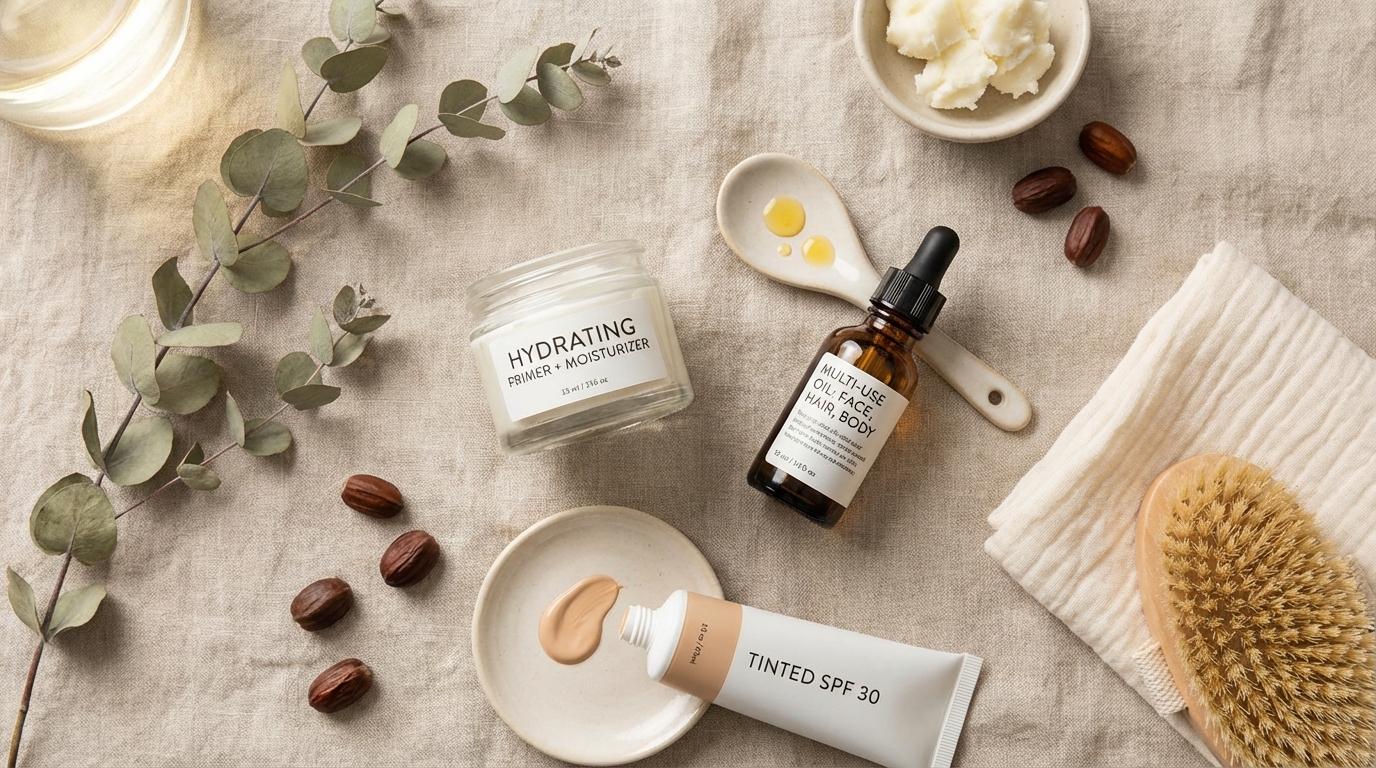
Your bathroom counter is starting to look like a Sephora stockroom. You’ve got a moisturizer, a primer, a face oil, a body oil, a hair oil, three different SPFs, and somehow you’re still not sure if you’re doing this right. Sound familiar?
Here’s the thing: skincare doesn’t have to be complicated or expensive. Some of the smartest products out there pull double (or triple) duty, saving you money, time, and precious shelf space. But not every multi-use product is worth your cash. Let’s break down what actually works and what’s just clever marketing.
Moisturizers That Double as Primers
The line between moisturizer and primer has gotten seriously blurry, and honestly? That’s a good thing. A well-formulated moisturizer should already be creating a smooth base for makeup. The problem is when brands slap “primer” on the label and charge you twice as much.
What makes a moisturizer work as a primer? Look for products with a slightly silicone-based finish (ingredients like dimethicone or cyclopentasiloxane) that blur pores and help makeup grip. Gel-cream formulas tend to work best because they’re hydrating without being greasy.
Some solid picks in this category:
- CeraVe Moisturizing Cream – The thick formula smooths over texture and works under foundation without pilling
- Neutrogena Hydro Boost Gel-Cream – The lightweight texture sits perfectly under makeup and gives a dewy base
- The Ordinary Natural Moisturizing Factors + HA – Budget-friendly and creates a smooth canvas for foundation
Skip the separate primer if your moisturizer already does the job. According to the American Academy of Dermatology, a good moisturizer is the foundation of any skincare routine anyway.
Face, Hair, and Body: The Triple-Threat Oils
This is where multi-use products really shine. Certain oils work beautifully on your face, hair, and body without any reformulation needed. Why buy three separate products when one does it all?
The best multi-purpose oils are:
- Jojoba oil – Closest to your skin’s natural sebum, so it absorbs without clogging pores. Works as a face moisturizer, split-end treatment, and body oil
- Rosehip seed oil – Packed with vitamins A and C, great for face (especially for acne scars), cuticles, and dry patches on the body
- Argan oil – The lightweight texture makes it perfect for frizzy hair ends, dry skin patches, and as a facial oil for non-acne-prone skin
- Squalane – Originally derived from shark liver (now mostly plant-based), this oil hydrates everything without feeling heavy
One bottle of pure jojoba oil from a brand like NOW Solutions costs around $10 and lasts months. Compare that to buying separate face oil, hair serum, and body oil.
Pro tip: For hair, focus the oil on ends only. For face, use 2-3 drops max. For body, go as heavy as you want after the shower while skin is still damp.
Tinted SPF: The Two-in-One Worth Investing In
Sunscreen is non-negotiable. But layering SPF under foundation can feel like too many steps, especially on busy mornings. Enter tinted sunscreens, which combine UV protection with light coverage.
These aren’t the thick, white, streaky sunscreens of the past. Modern tinted SPFs blend like lightweight foundations and often include skincare ingredients. Look for:
- SPF 30 minimum – Anything less isn’t giving you adequate protection
- Broad spectrum – Protects against both UVA (aging) and UVB (burning) rays
- Iron oxide tints – These actually provide additional protection against visible light and blue light
Budget-friendly options that work:
- Australian Gold Botanical Tinted Face SPF 50 – Around $15, matte finish, works for most medium skin tones
- La Roche-Posay Anthelios Tinted Mineral SPF 50 – Pricier but has excellent shade range and formula
- EltaMD UV Clear Tinted SPF 46 – Great for acne-prone skin and sensitive types
According to The Skin Cancer Foundation, tinted sunscreens with iron oxides can offer enhanced protection against visible light damage, making them a smart choice beyond just convenience.
Lip and Cheek Tints: One Product, Two Uses
This category has been around forever, and for good reason. The same pigment that looks good on your lips can work on your cheeks too. Cream and liquid blushes especially translate well as lip colors.
What to look for in a good lip-and-cheek product:
- Creamy, blendable texture – Powder won’t work for lips
- Buildable color – You want sheer on cheeks, more saturated on lips
- Hydrating formula – Dry formulas crack on lips and emphasize texture on cheeks
Honest picks: Milk Makeup Lip + Cheek sticks, Rare Beauty Soft Pinch Liquid Blush (works on lips in a pinch), or even just a dab of your regular lipstick blended on cheeks.
When Multi-Use Products Don’t Make Sense
Here’s where I have to be real with you: not everything should be multi-purpose. Some products need to stay in their lane.
Eye cream as face moisturizer: Eye creams are typically lighter and more expensive per ounce. Using them on your whole face is just wasting money. Most dermatologists, including those at research institutions, suggest that a regular facial moisturizer can work around the eyes for most people anyway.
Body lotion on face: Body lotions often contain fragrances and heavier ingredients that can clog facial pores or cause irritation. Your face has thinner, more sensitive skin than your body.
2-in-1 shampoo/conditioner: These rarely work well for either purpose. Shampoos are designed to cleanse (and lift the hair cuticle), while conditioners are meant to smooth and seal. Asking one product to do both usually means neither job gets done properly.
SPF in makeup only: Unless you’re applying a thick layer of foundation (which most people don’t), you’re not getting the SPF protection advertised on the label. Always use actual sunscreen underneath.
Harsh acne treatments everywhere: Benzoyl peroxide and salicylic acid products are meant for targeted treatment. Using your spot treatment all over your face will just dry everything out and damage your skin barrier.
Building a Streamlined Routine
Here’s what a simplified routine using multi-use products could look like:
Morning:
- Cleanser (this one stays single-purpose)
- Tinted SPF (sun protection + light coverage)
- Multi-purpose oil on dry patches if needed
- Lip and cheek tint for quick color
Evening:
- Oil cleanser or micellar water to remove SPF/makeup
- Regular cleanser
- Moisturizer (same one you’d use as primer)
- Multi-purpose oil on face and ends of hair
That’s it. No 12-step routine needed. According to skincare experts at Byrdie, a simple routine you actually follow beats an elaborate one you skip.
How to Shop Smart for Multi-Use Products
Before you buy anything labeled “multi-use,” ask yourself:
- Would I actually use this for multiple purposes? If you’re only going to use the “hair oil” on your hair anyway, you’re not saving anything
- Is the ingredient list appropriate for all intended uses? Check that face-safe products don’t have pore-clogging ingredients if they claim to work on skin
- Am I paying a premium for the multi-use label? Sometimes single-purpose products are cheaper and work better
- Does the texture work for each use? A thick balm might be great for lips but too heavy for cheeks
The goal isn’t to have the fewest products possible. It’s to have products that actually work for your skin without wasting money on redundant formulas.
The Bottom Line
Multi-use products can genuinely simplify your routine and save you money, but only when they make sense. Moisturizers that work as primers, pure facial oils that hydrate hair and body, and tinted SPFs are all smart investments. But don’t fall for gimmicks that combine things that shouldn’t be combined.
Start by looking at what’s already in your routine. That moisturizer might already be primer-worthy. That face oil might work great on your dry ends. Sometimes the best multi-use product is one you already own.