
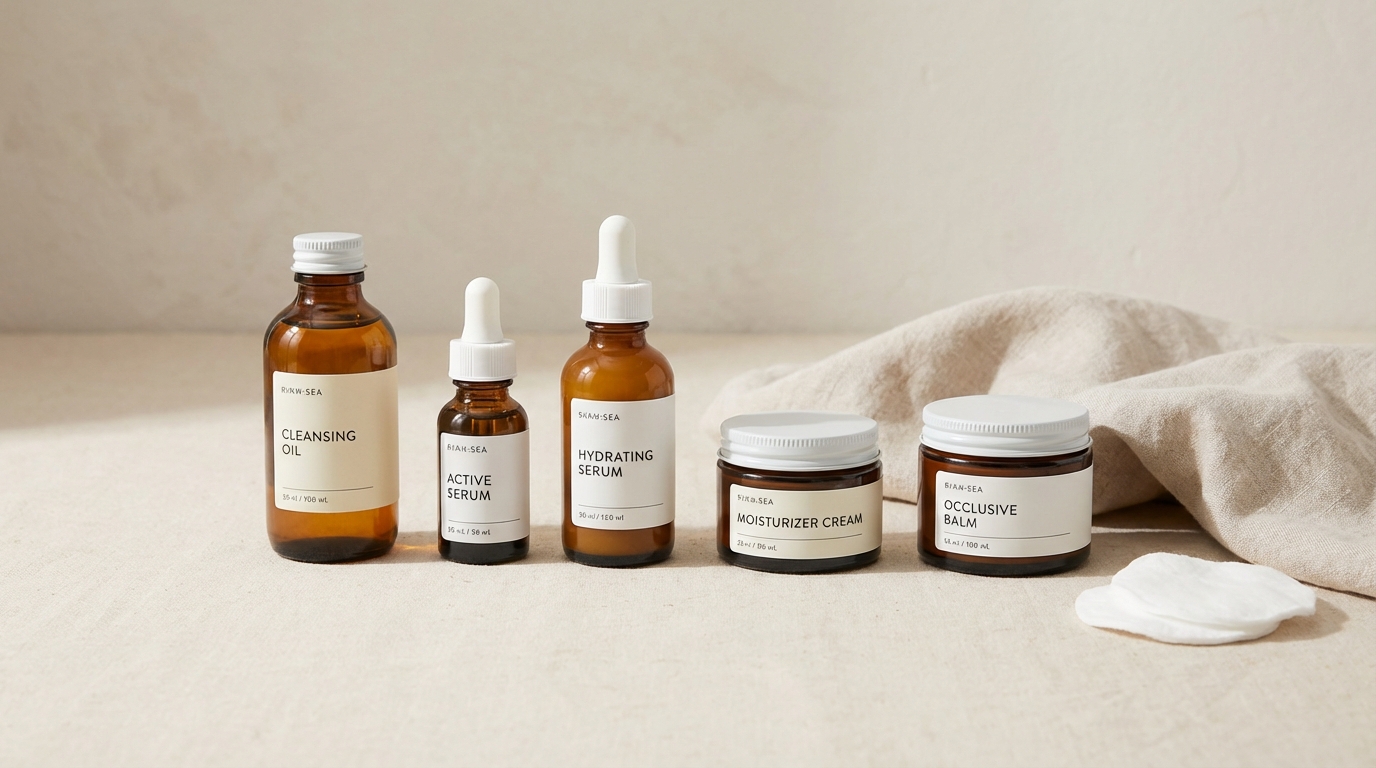
You have a bathroom counter full of products. You have no idea what goes first. Sound familiar?
The order you apply your skincare matters. A lot. Put things in the wrong sequence and you’re basically throwing money down the drain. Let’s fix that.
The Basic Rule: Thin to Thick
Here’s the simplest way to think about it. Water-based products go first. Oil-based products go last. Thin textures before thick ones. That’s it.
Why? Because thicker formulas create a barrier on your skin. If you put a heavy cream on first, everything you layer after can’t get through. Your expensive serum just sits on top doing nothing.
The Actual Order You Should Follow
Let me break this down step by step.
Step 1: First Cleanse (Oil-Based)
If you wore sunscreen or makeup today, start with an oil cleanser, cleansing balm, or micellar water. This dissolves all the gunk that a regular cleanser can’t handle on its own.
Skip this if you’ve been home all day with a bare face.
Step 2: Second Cleanse (Water-Based)
Follow up with your regular cleanser. Gel, foam, cream, whatever works for your skin type. This removes any residue from your first cleanse and actually gets into your pores.
Step 3: Toner or Essence
These are usually watery and help prep your skin to absorb everything else. Pat it on with your hands. Don’t bother with cotton pads, they waste product.
Step 4: Serums and Treatments
This is where your active ingredients go. Vitamin C, niacinamide, hyaluronic acid, whatever you’re using. If you have multiple serums, go thinnest to thickest.
A note on actives: retinol and acids (like glycolic or salicylic) are powerful. Don’t layer them together unless you want irritation. Pick one per night or alternate nights.
Step 5: Eye Cream
If you use one, it goes here. The skin around your eyes is thinner and needs its own formula before you seal everything in.
Step 6: Moisturizer
This hydrates and helps lock in everything you just applied. Even oily skin needs this step. Just use a lighter formula.
Step 7: Face Oil (Optional)
Oils are occlusive, meaning they create a seal. They go after moisturizer, not before. If you put oil first, your moisturizer can’t penetrate.
Step 8: Sleeping Mask or Occlusive (Optional)
Heavy sleeping masks or petrolatum-based products like Vaseline or Aquaphor go dead last. They lock everything in and prevent water loss overnight.
Where Do Prescription Treatments Go?
If you use tretinoin or another prescription, apply it after cleansing on dry skin. Wait a few minutes, then continue with your other products. Some dermatologists recommend “buffering” by putting moisturizer first if you’re sensitive, but that can reduce effectiveness.
Ask your derm what works for your specific prescription.
Common Mistakes That Mess Everything Up
Putting oil before water-based products. Oil creates a barrier. Water can’t get through. Always do water-based stuff first.
Applying too many actives at once. Your skin can only handle so much. Using retinol, vitamin C, and an exfoliating acid in one night is asking for trouble. Spread them out.
Skipping moisturizer because you used a serum. Serums and moisturizers do different jobs. Most serums don’t seal in hydration. You still need that final layer.
Waiting too long between steps. You don’t need to wait 10 minutes between each product. Just let one absorb for 30 seconds to a minute before moving on. The exception is prescription retinoids, which benefit from a few minutes on bare skin.
A Simple Night Routine Example
Here’s what a basic but effective night routine looks like:
- Oil cleanser (if you wore sunscreen or makeup)
- Gel cleanser
- Hydrating toner
- One serum (retinol OR vitamin C OR niacinamide)
- Moisturizer
That’s five products max. You don’t need twelve steps to have good skin.
The Bottom Line
Stop second-guessing yourself. Thin goes before thick. Water-based before oil-based. Actives need space from each other. Occlusives seal everything at the end.
Print this order out if you have to. Tape it to your mirror. Once you get it down, it becomes automatic.