
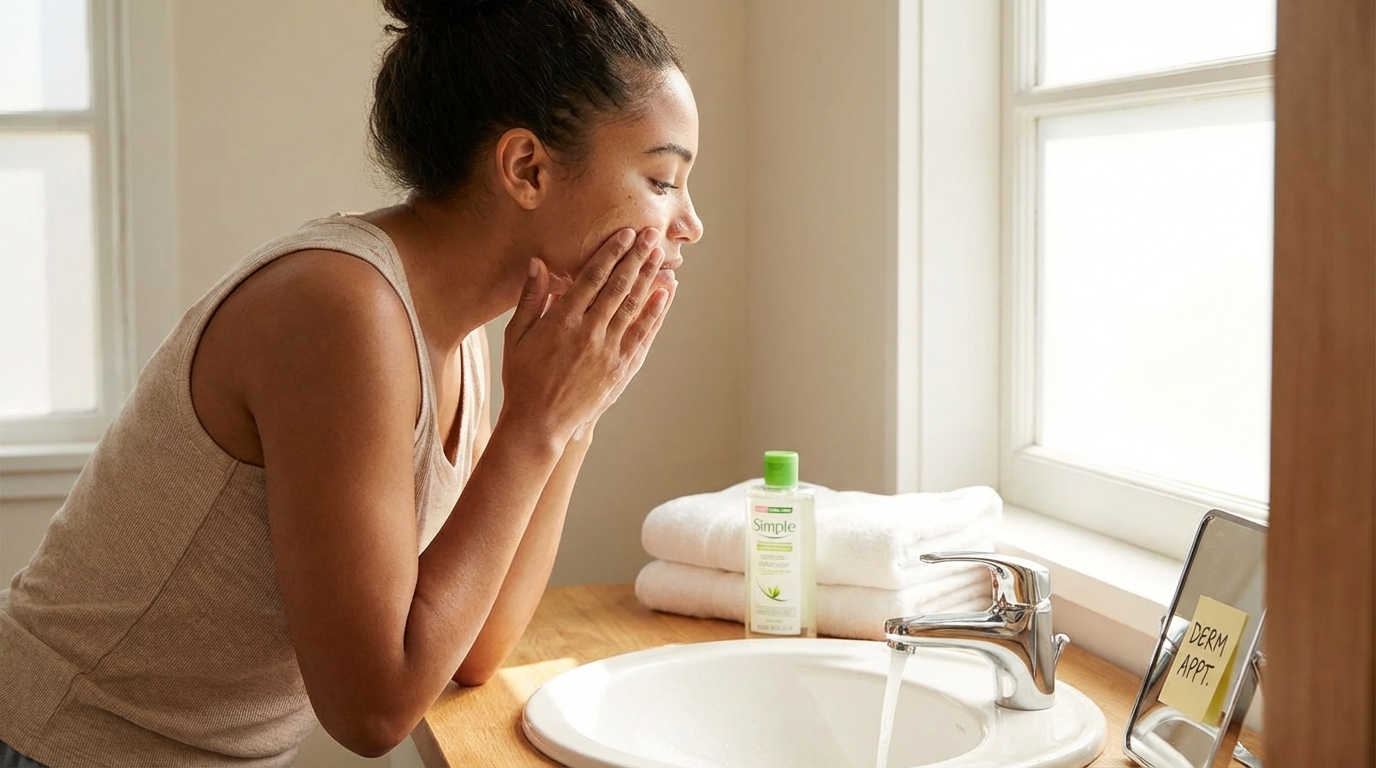
Being a teenager is hard enough without worrying about whether your skincare routine is complicated enough. Spoiler: it does not need to be. In fact, the simpler you keep things right now, the better off your skin will be in the long run.
I remember being 15 and convinced I needed every acne-fighting product I could get my hands on. I was layering benzoyl peroxide, salicylic acid, and some random scrub my friend swore by, all in the same routine. My skin was dry, irritated, and somehow breaking out more than before. Turns out, I was doing way too much.
If you are a teenager dealing with breakouts, oiliness, or just trying to figure out what products actually make sense, this guide is for you. No complicated steps, no expensive products required.
Hormonal Changes Are Normal (And Temporary)
First things first: if your skin is acting up during your teen years, that is completely normal. Your body is producing more androgens (hormones), which stimulate your sebaceous glands to produce more oil. More oil can mean more clogged pores, which can mean more breakouts.
This is not your fault, and it does not mean you are doing something wrong. According to the American Academy of Dermatology, about 85% of people between ages 12 and 24 experience acne. You are not alone in this.
The good news? For most people, hormonal acne improves significantly in their early twenties as hormone levels stabilize. Your job right now is not to fight your skin into submission. It is to support it while it goes through these changes.
Why Harsh Acne Products Often Backfire
Here is something I wish someone had told me: harsh products designed to blast away acne can actually make things worse. When you strip your skin of all its natural oils, your skin responds by producing even more oil to compensate. Then you use more harsh products. It becomes a frustrating cycle.
Products with high concentrations of benzoyl peroxide (10%), alcohol-based toners, physical scrubs with rough particles, and cleansers that leave your skin feeling tight and squeaky can all damage your skin barrier. A compromised barrier means more irritation, more redness, and often more breakouts.
That does not mean these ingredients are bad across the board. Benzoyl peroxide at 2.5% to 5% can be effective without being overly drying. Salicylic acid in gentle formulations helps keep pores clear. The key is moderation and gentleness.
If a product burns, stings excessively, or leaves your skin feeling raw, that is not it working. That is it damaging your skin. Listen to what your face is telling you.
Basic Cleansing Matters Most
You do not need a 10-step routine. You need to cleanse properly. That means washing your face twice a day with a gentle cleanser that does not strip your skin.
Look for cleansers labeled as gentle, non-foaming, or pH-balanced. Drugstore options from brands like CeraVe, Cetaphil, and La Roche-Posay work well and do not cost a fortune. Avoid anything with a long list of fragrances or drying alcohols near the top of the ingredient list.
Here is a simple routine that covers your bases:
Morning: Gentle cleanser, moisturizer (yes, even if you have oily skin), sunscreen.
Evening: Gentle cleanser, any treatment product you are using (one is enough), moisturizer.
That is it. Three products in the morning, three at night. You can always add more later if needed, but start simple and see how your skin responds.
One more thing about cleansing: washing your face more than twice a day will not help. It will just dry out your skin and potentially trigger more oil production. Twice is enough.
The Moisturizer Myth
A lot of teens with oily skin skip moisturizer because they think it will make them more oily. This is one of the biggest skincare mistakes you can make.
When your skin is dehydrated, it produces more oil to compensate for the lack of moisture. Using a lightweight, oil-free moisturizer actually helps regulate your oil production over time. Your skin stops panicking and producing excess sebum because it has the hydration it needs.
Look for moisturizers labeled as oil-free, non-comedogenic (will not clog pores), or gel-based. These are lighter than cream formulas and work well for oily and combination skin types. Apply right after cleansing while your skin is still slightly damp to lock in hydration.
Sunscreen Is Not Optional
I know, I know. Sunscreen feels annoying, especially if you already have oily skin. But hear me out: UV damage adds up over time and contributes to premature aging, hyperpigmentation, and increased skin cancer risk. Protecting your skin now is one of the best things you can do for future you.
The key is finding a sunscreen that works with your skin type. If you have oily skin, look for gel-based or matte-finish sunscreens. Mineral sunscreens with zinc oxide can be less irritating if you have sensitive or acne-prone skin. Apply SPF 30 or higher every morning, even on cloudy days.
Check out options from Neutrogena, La Roche-Posay, and Eucerin for affordable sunscreens that play well with oily and acne-prone skin.
When to See a Dermatologist
Sometimes, no matter what you do, over-the-counter products just are not cutting it. There is no shame in getting professional help. In fact, getting the right treatment early can prevent scarring and long-term skin damage.
Consider seeing a dermatologist if:
- Your acne is painful or cystic (deep, hard bumps under the skin)
- You are developing scars from breakouts
- Over-the-counter products have not helped after 2-3 months of consistent use
- Your acne is affecting your self-esteem or mental health
- You have sudden, severe breakouts that seem unusual
A dermatologist can prescribe treatments that are stronger and more targeted than anything you can buy at a drugstore. This might include prescription-strength retinoids, topical or oral antibiotics, or hormonal treatments depending on your specific situation. According to Mayo Clinic, prescription treatments can make a significant difference for moderate to severe acne.
Do not wait until your acne is unbearable to seek help. Early treatment leads to better outcomes.
The Bottom Line
Teen skincare does not need to be complicated or expensive. Keep it simple: gentle cleanser, lightweight moisturizer, sunscreen, and maybe one treatment product if needed. Give products time to work (at least 6-8 weeks) before deciding they are not working. Be patient with your skin as it navigates hormonal changes.
Your skin is not broken. It is just going through a phase. Treat it gently, and it will thank you later.