
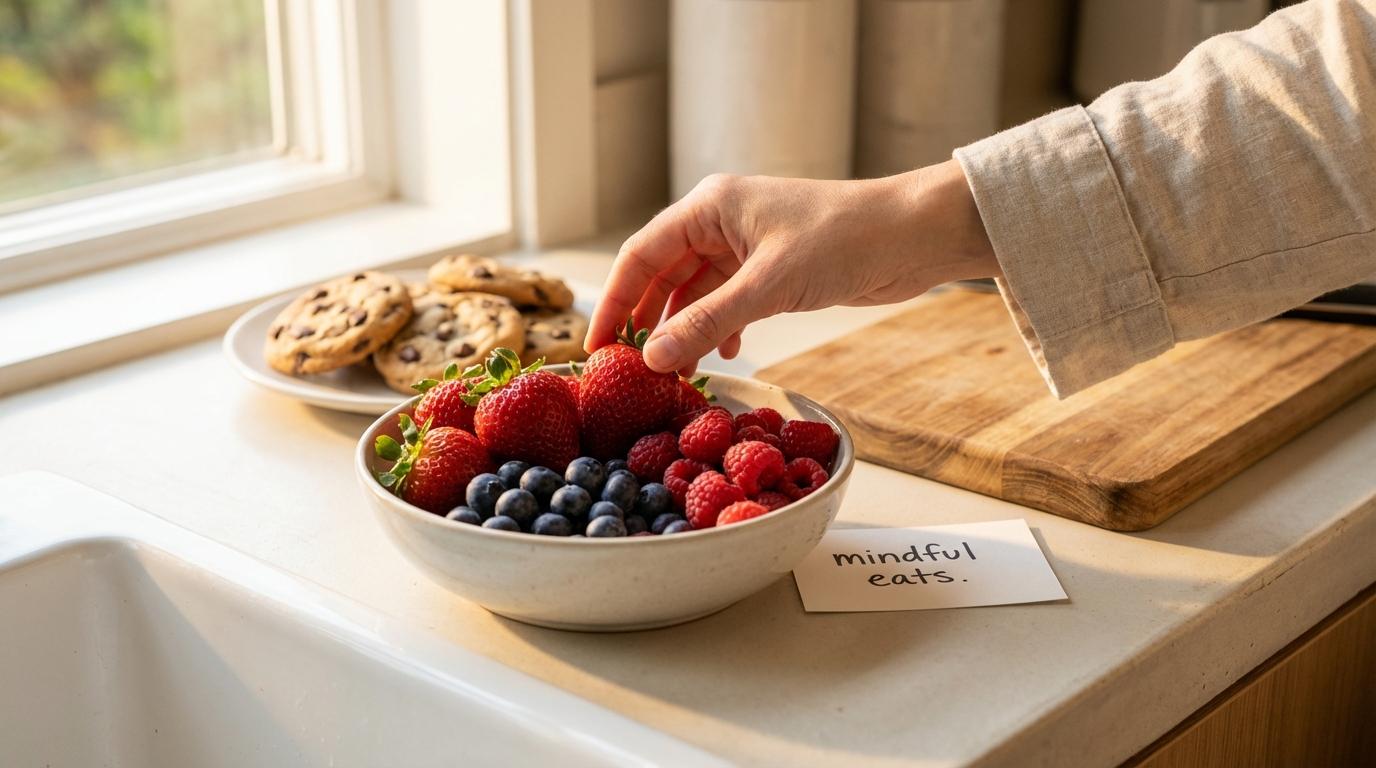
Chocolate causes acne, and everyone’s mom has said it at least once. Except the science doesn’t actually back that up the way you’d think. For years, we’ve been told to put down the candy bar if we want clear skin, but the research tells a much more complicated (and honestly kind of frustrating) story. Spoiler alert: your post-breakup chocolate binge probably isn’t the villain here, but there ARE some foods quietly sabotaging your face.
The Chocolate Myth, Explained
Real talk: the whole “chocolate = zits” thing has been floating around since the 1960s, when a study claimed to prove the connection. The problem? That study was literally funded by the chocolate industry and had some serious methodology issues. Since then, researchers have actually looked into this properly, and the findings are… complicated.
A 2024 study found that eating dark chocolate daily did worsen acne in people who already had breakouts. But here’s the thing: the cocoa itself isn’t really the problem. It’s the sugar and dairy that typically comes packaged with it. Pure cocoa actually has antioxidants that are technically good for your skin (the irony is not lost on me).
So can you eat chocolate and have clear skin? Probably, yes. The researchers from these studies have been pretty clear that chocolate doesn’t CAUSE acne. It might make existing acne worse in some people, but it’s not going to spontaneously summon pimples onto your face like some kind of dairy-based curse.
What Actually Triggers Breakouts (The Real Tea)
If chocolate is getting a bad rap, what’s actually causing those annoying breakouts? Let me introduce you to the actual suspects, because your skin has been trying to tell you something and it’s not about that Halloween candy.
High Glycemic Foods Are the Main Character
High glycemic foods are basically anything that spikes your blood sugar fast. We’re talking white bread, white rice, sugary cereals, potato chips, and yes, those pastries you’ve been pretending are a “treat yourself” moment every single day (no judgment, I do it too).
Here’s what happens: you eat something with a high glycemic index, your blood sugar shoots up, your body releases a bunch of insulin to deal with it, and that insulin triggers your skin to produce more oil. More oil means more clogged pores. More clogged pores means more breakouts. It’s an annoying chain reaction that nobody asked for.
According to the American Academy of Dermatology, following a low-glycemic diet can actually help reduce breakouts. One study found that after 12 weeks on a low-glycemic diet, participants had significantly clearer skin. That’s not nothing! If you’re interested, check out our piece on sugar and breakouts.
And get this: populations that eat traditional diets low in processed foods and sugar basically don’t have acne. Like, researchers studied communities eating mostly fish, vegetables, and unprocessed foods, and found virtually zero acne cases. Meanwhile, the rest of us are over here with our sugary lattes wondering why our chin looks like a constellation.
The Dairy Situation Is Messy
Okay, so dairy and acne have a relationship status that’s definitely “complicated.” A massive meta-analysis looking at over 78,000 people found a connection between milk consumption and acne. But (and this is a big but) not all dairy is created equal in the acne department.
Weirdly, skim milk seems to be worse for your skin than whole milk. I know, it makes no sense. One theory is that skim milk has a higher glycemic index. Another is that the processing removes fats that might actually be protective. Either way, if you’re drinking skim milk thinking you’re being healthy and wondering why you’re breaking out, this might be your sign.
Cheese and yogurt? The research didn’t find a significant connection there. So your cheese obsession might actually be safe (thank goodness, because I was NOT prepared to give up cheese).
A systematic review found that women who drank more milk during their teenage years were 50% more likely to experience acne than those who drank less. That’s a pretty significant number, and it makes me retroactively annoyed at every glass of milk I was told to drink “for strong bones.”
Sugar Is Doing More Damage Than Cocoa
Let’s circle back to chocolate for a second, because I think we need to have a conversation about sugar specifically. Most chocolate bars aren’t just cocoa. They’re cocoa plus a ton of sugar, plus milk, plus whatever else they throw in there. When you eat a regular milk chocolate bar, you’re basically combining multiple potential acne triggers into one delicious package.
Dark chocolate (like 70% cocoa or higher) has way less sugar and usually no dairy. Some studies have still found it can aggravate existing acne, but the effect is much smaller than what you’d get from a sugar-loaded milk chocolate bar. So if you’re going to eat chocolate (and let’s be honest, you are, because we’re human), darker is probably better for your skin.
The sugar problem goes way beyond chocolate though. It’s in your morning coffee drink (some of those have more sugar than a candy bar), your “healthy” smoothie, your granola bars, basically everything. And every time your blood sugar spikes, your skin pays for it.
Foods That Might Actually Help
Okay, enough doom and gloom. Let’s talk about what you can eat that might actually be good for your skin, because I refuse to leave you just feeling bad about your diet choices.
Low glycemic foods are your friends here. Think whole grains, most vegetables, legumes, and foods that release energy slowly instead of all at once. These keep your blood sugar stable, which keeps your insulin chill, which keeps your oil production normal.
Omega-3 fatty acids (found in fatty fish, walnuts, and flax seeds) have anti-inflammatory properties that might help calm down angry skin. Some research suggests they can help reduce acne severity, though we need more studies to say for sure.
Zinc-rich foods like pumpkin seeds, chickpeas, and cashews might also help. Zinc has been shown to have some acne-fighting properties, and people with acne often have lower zinc levels. Coincidence? Probably not.
And weirdly, green tea might be helpful too. It has antioxidants that could reduce sebum production. Plus it’s basically just hot leaf water with no sugar (unless you add some), so it’s not going to spike your blood sugar.
What This Means For Your Diet
I’m not here to tell you to overhaul your entire diet because of acne. That’s exhausting, and honestly, the evidence isn’t strong enough to justify making yourself miserable over food. But if you’re dealing with persistent breakouts and you’ve already tried all the topical stuff, looking at your diet might be worth it.
Some things to try (if you want to, no pressure):
- Swap high-glycemic snacks for lower-glycemic ones. Instead of white bread, try whole grain. Instead of sugary cereal, try oatmeal. Small switches, not a complete overhaul.
- Pay attention to skim milk specifically. If you’re drinking it daily and breaking out, try switching to whole milk or a non-dairy alternative for a few weeks and see what happens.
- Don’t blame the chocolate first. If you’re eating a balanced diet and having some chocolate occasionally, it’s probably not the main issue. Look at your overall sugar intake instead.
- Keep a food diary if you’re really curious. Sometimes the connection between specific foods and breakouts is individual. What triggers one person might be fine for another.
As dermatologists point out, correlation doesn’t equal causation. Just because studies show a link between certain foods and acne doesn’t mean those foods will definitely cause breakouts for you. Bodies are weird and individual.
The Takeaway (Not From a Restaurant, The Other Kind)
Chocolate has been blamed for acne for decades, but the evidence just doesn’t support it being a major cause. The real culprits are more likely high-glycemic foods that spike your blood sugar and possibly dairy (especially skim milk) for some people.
Your best bet is to focus on overall diet quality rather than eliminating specific “bad” foods. Eat more whole foods, fewer processed ones, keep an eye on sugar intake, and don’t stress too much about the occasional chocolate bar. Stress also causes breakouts, and I’m not about to add “guilt about chocolate” to your stress list.
Also, and I cannot emphasize this enough, if you’re dealing with serious acne, food changes alone probably won’t fix it. Diet can be ONE piece of the puzzle, but it’s not a substitute for actual skincare or seeing a dermatologist if you need one. Don’t let anyone convince you that you just need to “eat clean” and your skin problems will disappear. That’s not how this works.
Now if you’ll excuse me, I’m going to eat some dark chocolate and not feel guilty about it. Because science.