
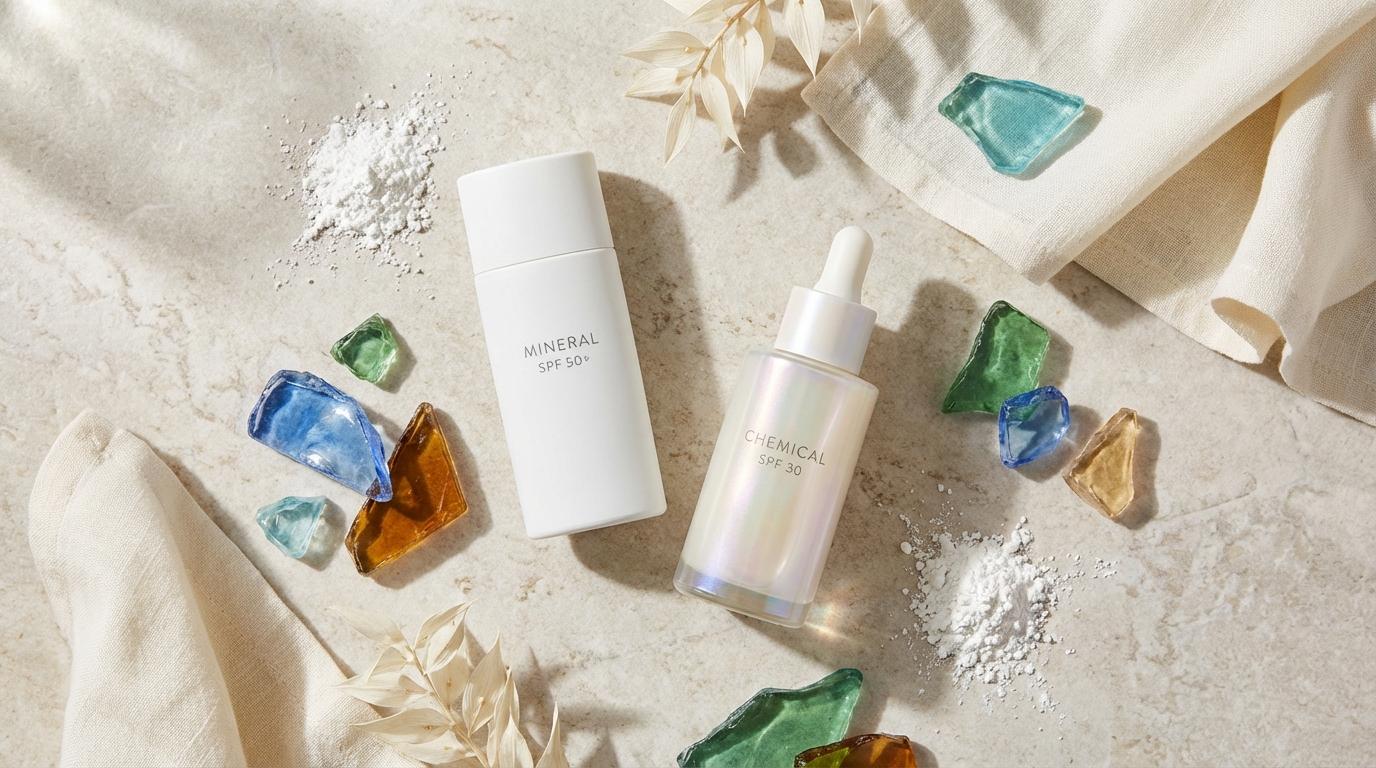
Everyone says mineral sunscreen is “safer” because it sits on your skin and reflects UV rays. That’s actually not how it works.
Recent research from UNSW confirmed what sunscreen formulators have known for years: both mineral and chemical filters primarily absorb UV radiation. The whole “physical blocker” thing? Mostly marketing.
Let me break this down properly.
How Chemical Sunscreens Actually Work
Chemical sunscreens contain carbon-based compounds like avobenzone, octocrylene, and oxybenzone. These molecules absorb UV radiation and convert it to heat, which dissipates from your skin.
Avobenzone handles UVA rays. Octocrylene targets UVB and helps stabilize other ingredients. Oxybenzone covers UVB. Different filters, different jobs.
The advantage? Chemical filters typically provide broader spectrum coverage, especially against long-wave UVA rays that contribute to premature aging. They also absorb better into skin, making them easier to apply evenly without that chalky mess.
How Mineral Sunscreens Actually Work
Mineral sunscreens use two ingredients: zinc oxide and titanium dioxide. These are inorganic compounds that sit on your skin’s surface.
The old explanation was that they “reflect” UV rays like tiny mirrors. The reality is more complex. According to research published in the National Library of Medicine, these particles work through a combination of reflection, scattering, AND absorption of UV radiation.
Zinc oxide is the workhorse. It covers both UVA and UVB rays effectively. Titanium dioxide is better at blocking UVB but struggles with long UVA rays, which is why you’ll often see them combined.
The downside? Getting adequate protection often requires 15-20% mineral concentration. That’s a lot of particles, and they can leave visible white residue, especially on deeper skin tones.
Why Chemical Filters Cause Reactions
This is where things get real.
Oxybenzone is the most commonly reported sunscreen allergen. According to Cleveland Clinic, it causes both allergic contact dermatitis and photoallergic reactions, where the ingredient becomes sensitizing only when exposed to sunlight.
Other problem ingredients include:
- Octinoxate – causes allergic reactions and absorbs into bloodstream at levels 16 times the FDA safety threshold
- Octocrylene – absorbs at 14 times the FDA cutoff and can contain benzophenone contamination
- Homosalate – another common sensitizer for some people
Then there are the preservatives. Sunscreens need stabilizers to maintain their effectiveness, and some of these preservatives activate in sunlight, triggering sensitivity.
Fragrance compounds make things worse. If you’ve ever had a sunscreen make your face burn or break out, the fragrance was likely the culprit.
Mineral Filters Rarely Cause Issues
Zinc oxide and titanium dioxide have zero reported cases of allergic contact dermatitis or photoallergic reactions. Zero.
They’re inert. They sit on your skin without being absorbed significantly. This makes mineral formulas the obvious choice for anyone with sensitive skin, rosacea, eczema, or a history of sunscreen reactions.
The catch? “Mineral” on the label doesn’t always mean mineral-only. That same UNSW study found one in three products labeled as mineral-only actually contained chemical UV-absorbing compounds. Always check the active ingredients list.
Understanding SPF Numbers
SPF measures protection against UVB rays only. SPF 30 means it takes 30 times longer to burn than with no protection. SPF 50 means 50 times longer.
The difference in actual protection is smaller than the numbers suggest:
- SPF 15 blocks about 93% of UVB rays
- SPF 30 blocks about 97%
- SPF 50 blocks about 98%
Going from SPF 30 to 50 gets you one extra percentage point. Not nothing, but not dramatic either.
SPF doesn’t tell you anything about UVA protection. For that, you need “broad spectrum” on the label. Without it, you’re only getting half the protection you need.
Finding What Works For Your Skin
If you have sensitive skin: Start with mineral. Look for zinc oxide as the primary active, fragrance-free, and minimal ingredient lists. Skip anything with oxybenzone entirely.
If you have oily or acne-prone skin: Chemical formulas often work better because they absorb cleanly without leaving residue that can clog pores. Look for oil-free, non-comedogenic labels.
If you have dark skin: The white cast from mineral sunscreens is real and annoying. Tinted mineral formulas or chemical sunscreens typically work better. Some newer mineral formulas use micronized particles that reduce the white cast significantly.
If you’ve had reactions before: Patch test everything. Apply a small amount behind your ear or on your inner arm for a few days before committing to full-face application.
The Hybrid Option
Many modern sunscreens combine chemical and mineral filters. You get the elegant texture of chemical formulas with some of the gentleness of mineral ingredients.
These work well for people who haven’t tolerated either type perfectly on its own. The mineral component reduces the total amount of chemical filters needed, potentially reducing sensitivity risk.
What About Reef Safety?
Oxybenzone and octinoxate have been banned in Hawaii and some other locations due to potential coral reef damage. If you’re swimming in the ocean, mineral options or newer chemical filters without these ingredients are better choices.
Non-nano zinc oxide is generally considered the safest option for marine environments.
New Developments Worth Knowing
The FDA recently proposed adding bemotrizinol to the approved list. This filter has been used in Europe and Asia for years and offers some advantages: larger molecules that don’t absorb into blood as easily, less irritation potential, and protection against both UVA and UVB.
If approved, this could be a meaningful improvement for people who react to current chemical options.
The Practical Takeaway
The best sunscreen is one you’ll actually use. SPF 30+ broad spectrum, applied generously and reapplied every two hours when in sun. That matters more than the chemical vs mineral debate.
But if you’re dealing with reactions, go mineral. If you want elegance and broader UVA coverage, go chemical. If neither has worked perfectly, try a hybrid.
And for the basics on SPF and how to pick the right protection level, check out our guide on SPF basics. For specific product picks, see our sunscreen recommendations.