
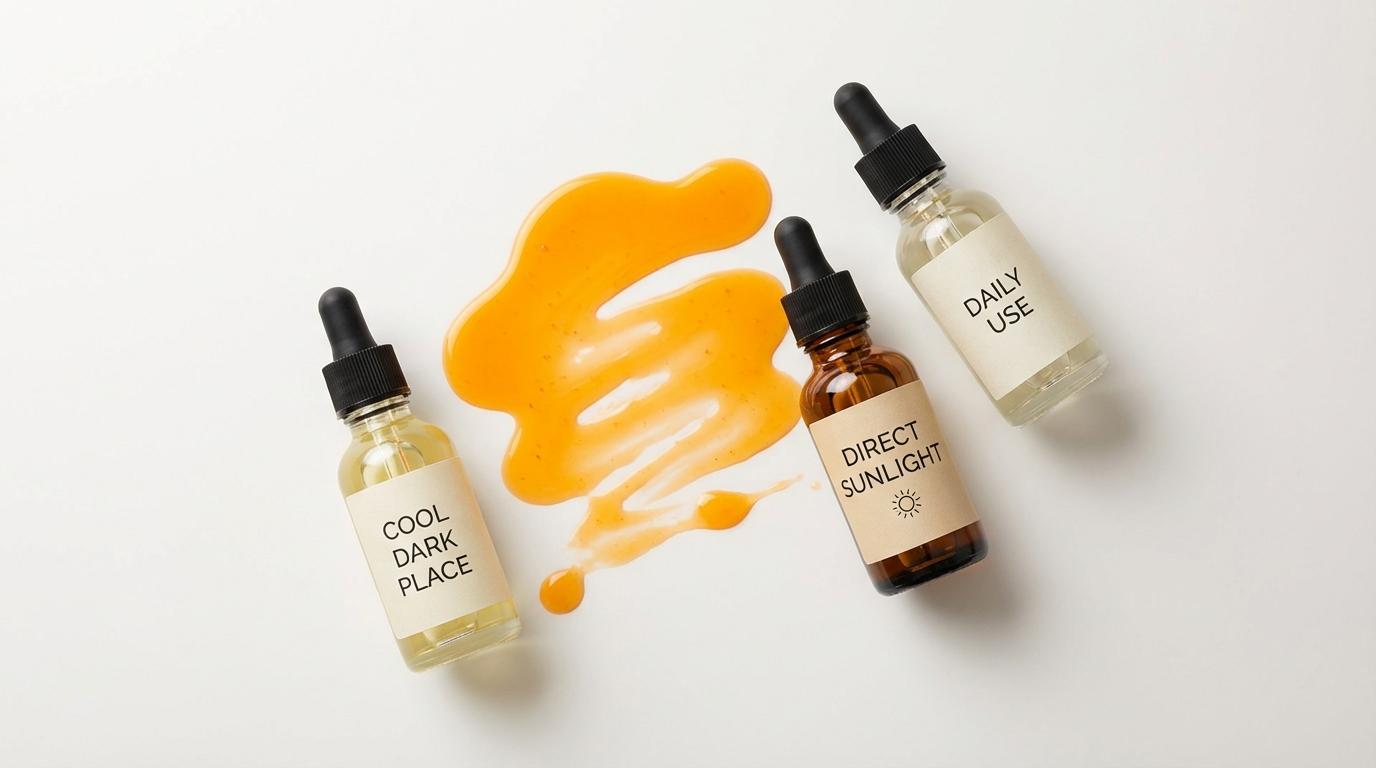
Electrons are being stripped from molecules inside your vitamin C serum right now, a chemical reaction that transforms the potent L-ascorbic acid into a less effective, discolored compound. This process, called oxidation, is one of the most frustrating realities of skincare, and understanding it can save you from wasting products and money on ingredients that have already lost their punch.
The Chemistry of Oxidation in Skincare
Oxidation occurs when a molecule loses electrons, typically through exposure to oxygen, light, heat, or certain metals. In skincare terms, this means your carefully formulated actives are literally breaking down and changing their chemical structure. The antioxidants we love, like vitamin C, are particularly vulnerable because their whole purpose is to donate electrons to neutralize free radicals. The problem is they can’t tell the difference between a free radical on your skin and oxygen in the air.
When L-ascorbic acid (the most potent form of vitamin C) oxidizes, it first converts to dehydroascorbic acid, which still has some activity. But continued oxidation transforms it into diketo-L-gulonic acid and eventually erythrulic acid, which has no beneficial effects and can actually cause irritation. That amber or dark orange color in your serum? That’s a visual indicator of this chemical degradation happening in real time.
According to research published in the Journal of Clinical and Aesthetic Dermatology, vitamin C serums can lose up to 50% of their potency within three months of opening, depending on formulation and storage conditions. The rate of degradation accelerates exponentially once a product is exposed to air.
Signs Your Products Have Gone Bad
Learning to identify oxidation can prevent you from applying products that won’t work or might even harm your skin. The signs vary depending on the ingredient and formulation, but there are some universal red flags to watch for.
Color changes are the most obvious indicator. Vitamin C serums should be clear to very pale yellow. If your serum has turned orange, dark yellow, or brown, oxidation has occurred. The deeper the color, the more advanced the degradation. Some people still use lightly oxidized vitamin C thinking it’s fine, but even a subtle color shift indicates reduced efficacy.
Texture changes also signal problems. Oils that have gone rancid from oxidation may feel thicker, stickier, or leave a different finish on your skin than when first opened. Retinol products might separate or develop an unusual consistency when their active ingredients break down.
Smell is another diagnostic tool. Fresh vitamin C typically has a faint metallic or slightly acidic scent. Oxidized vitamin C often smells sharper, almost vinegar-like. Oils containing vitamin E, squalane, or plant-based ingredients develop a distinctly unpleasant, crayon-like or rancid odor when oxidized.
Performance decline is harder to quantify but important to notice. If a product that previously delivered visible results stops working, oxidation might be the culprit. Your skin hasn’t necessarily built tolerance, the product may have simply degraded beyond usefulness.
Stable vs Unstable Ingredients
Not all active ingredients oxidize at the same rate. Understanding which ones require careful handling versus which ones are more forgiving helps you build a practical routine and make smarter purchasing decisions.
Highly unstable (oxidize quickly):
- L-ascorbic acid (pure vitamin C) – oxidizes within weeks to months once opened
- Retinaldehyde – more unstable than retinol, light-sensitive
- Hydroquinone – oxidizes to benzoquinone, which can actually darken skin
- Certain plant extracts with high antioxidant content
Moderately stable:
- Retinol – more stable than retinaldehyde but still light-sensitive
- Ferulic acid – degrades with light exposure but more slowly than vitamin C
- Resveratrol – moderately light-sensitive
Relatively stable:
- Ascorbyl glucoside – a vitamin C derivative that resists oxidation better
- Magnesium ascorbyl phosphate – water-stable vitamin C form
- Niacinamide – very stable across pH and temperature ranges
- Hyaluronic acid – not an antioxidant, minimal oxidation concerns
- Adapalene – significantly more stable than retinol
The American Academy of Dermatology recommends considering vitamin C derivatives for those who struggle to use up products quickly or have difficulty maintaining proper storage conditions.
Storage Strategies That Actually Work
How you store your products matters as much as which products you buy. Proper storage can extend shelf life significantly and ensure you’re actually getting the benefits you paid for.
Light protection: UV and even visible light accelerate oxidation. Store light-sensitive products in opaque containers when possible, and keep them in a dark cabinet or drawer rather than on a sunny bathroom shelf. Some brands use amber or opaque packaging specifically for this reason. If your vitamin C comes in a clear bottle, consider wrapping it in aluminum foil or storing it in a makeup bag.
Air exposure: Every time you open a product, you introduce oxygen. Pump dispensers and airless packaging significantly reduce oxidation compared to jars or open bottles. If you’re decanting products or using droppers, work quickly and close containers immediately. Some skincare enthusiasts spray a layer of wine preserver (inert argon gas) into bottles before closing to displace oxygen.
Temperature control: Heat accelerates chemical reactions, including oxidation. Room temperature is fine for most products, but refrigeration can extend the life of unstable actives like vitamin C and retinol. A dedicated skincare fridge isn’t necessary, but if you have space in your regular fridge, it can help. Just be consistent, as temperature fluctuations from moving products in and out repeatedly can be problematic.
Metal contamination: Certain metals, particularly copper and iron, catalyze oxidation reactions. This is why some vitamin C formulations are less stable than others, depending on what they’re packaged in or what trace metals are present. Avoid letting metal tools contact your products, and be aware that some tap water contains metals that could affect water-based formulations.
Why Formulation Matters More Than You Think
Two vitamin C serums at the same concentration can have wildly different stability profiles based on their formulation. This is where the science gets interesting and where smart shopping can save you frustration.
pH plays a critical role in vitamin C stability. L-ascorbic acid is most stable at a pH below 3.5, but this acidity can irritate sensitive skin. Formulators balance efficacy and stability against user experience. Products at higher pH levels may feel nicer but degrade faster. Some brands include pH information on packaging, but many don’t.
Antioxidant synergy can enhance stability. The famous Skinceuticals patent combines L-ascorbic acid with vitamin E and ferulic acid at specific ratios. Research in the Journal of Investigative Dermatology showed this combination doubles photoprotection and improves stability compared to vitamin C alone. Many brands now use similar formulations.
The base formulation also matters. Anhydrous (water-free) vitamin C formulations are generally more stable than water-based serums because water facilitates oxidation. Silicone-based or oil-based vitamin C products can remain effective longer, though they have different textures and absorption characteristics.
Individual Variation Factors
Your personal circumstances affect how quickly products oxidize in your possession, which is why blanket expiration guidelines don’t always apply.
Climate makes a difference. If you live somewhere hot and humid, your products face tougher conditions than someone in a cool, dry environment. Bathroom storage in humid climates is particularly problematic because moisture accelerates many degradation reactions beyond just oxidation.
Usage frequency matters for oxidation rate. Someone who uses a vitamin C serum daily will likely finish it before significant degradation occurs. If you’re only using a product once or twice a week, it’s exposed to air many more times over its lifespan and sits around longer between uses.
Container handling affects air exposure. If you leave lids off while completing your routine, shake products vigorously (introducing air), or frequently pump extra product back into bottles, you’re accelerating oxidation. Deliberate, minimal handling extends product life.
Your skin’s needs might also influence how you perceive efficacy changes. If your skin barrier is compromised, you might react to oxidation byproducts more noticeably. If your skin has adjusted to an ingredient and you’re seeking diminished returns anyway, it’s easy to blame tolerance when oxidation might be the real issue.
Practical Approaches to Managing Oxidation
Given everything we’ve covered, here’s how to approach oxidation practically without becoming obsessive about it.
Buy sizes you’ll actually finish. That jumbo bottle of vitamin C serum might seem economical, but if you won’t use it within three months, you’re wasting money on product that will degrade before you finish it. Smaller bottles used consistently outperform large bottles that sit around.
Consider stable alternatives. If proper storage is challenging for your lifestyle, vitamin C derivatives like ascorbyl glucoside or tetrahexyldecyl ascorbate offer vitamin C benefits with far less oxidation worry. They’re not as potent drop-for-drop as L-ascorbic acid, but they’re effective enough for many people and much more forgiving.
Track when you open products. A small piece of tape with the date helps you monitor how long products have been in use. After a few months, inspect vitamin C products critically before each use.
Trust your senses. You don’t need a chemistry degree to identify oxidation. If something looks wrong, smells wrong, or has stopped working, it’s probably time to replace it. The psychological discomfort of using a potentially degraded product isn’t worth the minimal savings.
Dermatologists like Dr. Sam Ellis often remind their followers that a less potent but stable ingredient you use consistently will outperform a potent but degraded one. Consistency and product integrity matter more than chasing the highest concentration.
What Oxidation Teaches Us About Skincare
Understanding oxidation reveals something important about skincare in general: these are real chemical compounds that behave according to chemical principles. The ingredients in your serums aren’t magic, they’re molecules with specific behaviors, vulnerabilities, and interactions. Respecting this reality helps you get better results.
Oxidation also highlights the importance of reasonable expectations. Products have finite effective lifespans. Hoarding skincare or buying backups of items you won’t use for months rarely makes sense for unstable actives. The skincare industry’s push toward larger sizes and bulk buying doesn’t always align with product chemistry.
Finally, oxidation reminds us that more isn’t always better. A 20% vitamin C serum that oxidizes before you finish it delivers less total vitamin C to your skin than a 10% serum you use up while it’s fresh. Matching your products to your actual usage patterns and storage capabilities is the real optimization strategy.
Your vitamin C turning orange isn’t a mystery or a manufacturing defect. It’s chemistry doing exactly what chemistry does. Now that you understand the mechanism, you can work with it instead of against it, choosing products and practices that deliver what they promise for as long as possible.