
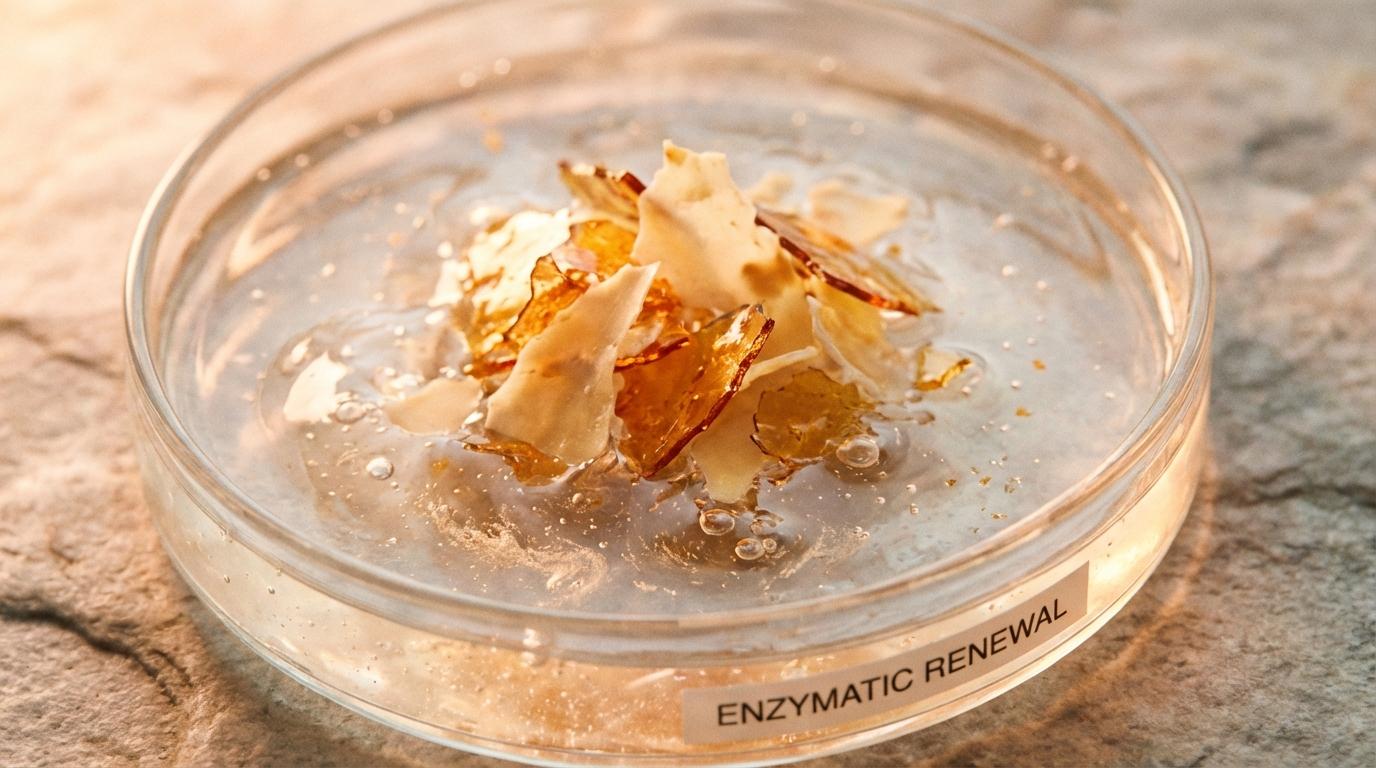
Chemical exfoliants work by dissolving the glue that holds dead skin cells together. That’s the short version. But understanding how these acids actually function at a molecular level can help you make smarter choices about which ones to use and how often to reach for them.
What Holds Dead Skin Cells Together
Your skin naturally sheds dead cells through a process called desquamation. In healthy skin, this happens seamlessly. Cells form at the deepest layer, migrate upward over about four weeks, die, and eventually slough off. The problem is that this process doesn’t always work perfectly.
Dead skin cells are held together by proteins called desmosomes and corneodesmosomes. Think of these as tiny rivets connecting each cell to its neighbors. When everything functions well, enzymes naturally break down these connections, and dead cells release from the surface. When this breakdown fails or slows down, dead cells accumulate. The result is dull skin, clogged pores, and uneven texture.
This is where acids come in.
Breaking the Bonds Between Dead Cells
Chemical exfoliants work by weakening those protein connections between dead cells. Rather than physically scrubbing cells away, acids dissolve the “cement” holding them in place. The cells then release on their own, often during cleansing or throughout normal daily activity.
Different acids accomplish this through slightly different mechanisms:
- AHAs (alpha hydroxy acids) like glycolic and lactic acid work on the skin’s surface. They break down the ionic bonds between corneocytes, those flat dead cells on your outermost layer.
- BHAs (beta hydroxy acids) like salicylic acid are oil-soluble, meaning they can penetrate into pores. They break the same types of bonds but can reach deeper into follicles where sebum accumulates.
- PHAs (polyhydroxy acids) like gluconolactone have larger molecules. They work more slowly and gently, making them suitable for sensitive skin that can’t tolerate stronger acids.
The chemistry is elegant. By targeting those specific protein connections, acids encourage what your skin is already trying to do. They just speed up the process.
Why Acid Type Matters
Not all exfoliating acids behave the same way, and choosing the right one depends on what your skin needs.
Glycolic acid has the smallest molecular size among common AHAs. This means it penetrates most effectively but can also cause more irritation. It’s excellent for addressing fine lines, sun damage, and overall dullness, but sensitive skin types may find it too aggressive.
If you’re curious about building a routine that includes brightening acids without overdoing it, you might find Building a Brightening Routine Without Irritation helpful.
Lactic acid has larger molecules and also attracts moisture. It exfoliates more gently while providing some hydrating benefit. This makes it a good starting point for acid beginners or anyone dealing with dry skin alongside dullness.
Salicylic acid is the go-to for oily and acne-prone skin. Because it’s oil-soluble, it can dissolve sebum plugs inside pores. It also has anti-inflammatory properties, which helps calm active breakouts rather than just preventing new ones.
Mandelic acid falls between glycolic and lactic in terms of molecular size. It’s often recommended for darker skin tones because it carries a lower risk of triggering post-inflammatory hyperpigmentation compared to stronger glycolic formulas.
How Concentration and pH Interact
Percentage isn’t everything. A 10% glycolic acid product might be gentler than a 5% one depending on the formulation’s pH level.
Acids need to remain in their “free acid” state to exfoliate effectively. When pH rises too high, acids become neutralized and lose their exfoliating ability. Most effective AHA products sit between pH 3 and 4. Salicylic acid works best around pH 3 to 4 as well.
This is why some budget products with high acid percentages don’t deliver results. If the pH is too high, that 20% glycolic toner might be doing almost nothing. Meanwhile, a well-formulated 8% serum at the right pH will actually exfoliate.
The relationship works like this:
- Lower pH = more free acid = stronger exfoliation (but also more potential for irritation)
- Higher pH = less free acid = gentler effect (but potentially ineffective if too high)
Professional peels use very low pH levels, which is why they deliver dramatic results but require trained application. At-home products balance efficacy with safety by keeping pH in a moderate range.
Finding Your Balance
The goal with acid exfoliation isn’t maximum strength. It’s finding what works consistently without damaging your moisture barrier.
Start with lower concentrations and work up gradually. Once or twice weekly is enough for most people to see results without over-exfoliating. Your skin should look brighter and feel smoother, not tight, red, or sensitized.
Signs you’re overdoing it include persistent redness, increased sensitivity to products that didn’t bother you before, and a tight or “squeaky” feeling after cleansing. If this happens, take a break. Your barrier needs time to recover before reintroducing acids.
Consider incorporating rest days into your routine to give your skin time to rebuild between active treatments.
Layering Acids Safely
Using multiple acids in one routine isn’t automatically dangerous, but it does require intention. The main risk is over-exfoliation, which can compromise your skin barrier and lead to irritation, breakouts, or increased sensitivity.
A few guidelines:
- Avoid using AHAs and retinoids on the same night until your skin has adjusted to each separately
- If using vitamin C in the morning, AHAs work well in the evening
- Salicylic acid and niacinamide layer nicely together without issues
- Always apply sunscreen the morning after using any exfoliating acid, as they can increase photosensitivity
When in doubt, simplify. One well-chosen acid used consistently will outperform a cabinet full of products used sporadically.
What to Expect Over Time
Results from chemical exfoliation aren’t instant. Your skin needs time to cycle through cells, and the improvements happen gradually.
In the first week or two, you might notice slightly increased sensitivity as your skin adjusts. Some people experience minor purging if they’re prone to congestion. This typically resolves within a few weeks.
By week four to six, most people see noticeable improvement in texture and brightness. Continued use over months can address deeper concerns like fine lines, mild sun damage, and stubborn hyperpigmentation.
The key is patience and consistency. Acids work with your skin’s natural renewal process. They don’t force dramatic change overnight, which is actually what makes them safer for regular use than harsh physical scrubs or aggressive treatments.
Understanding the science behind these ingredients helps you use them more effectively. When you know why acids work, you can troubleshoot problems, adjust your routine thoughtfully, and avoid the common trap of using too much, too often. Sometimes the simplest approach, one good acid product used with restraint, delivers the best results.