
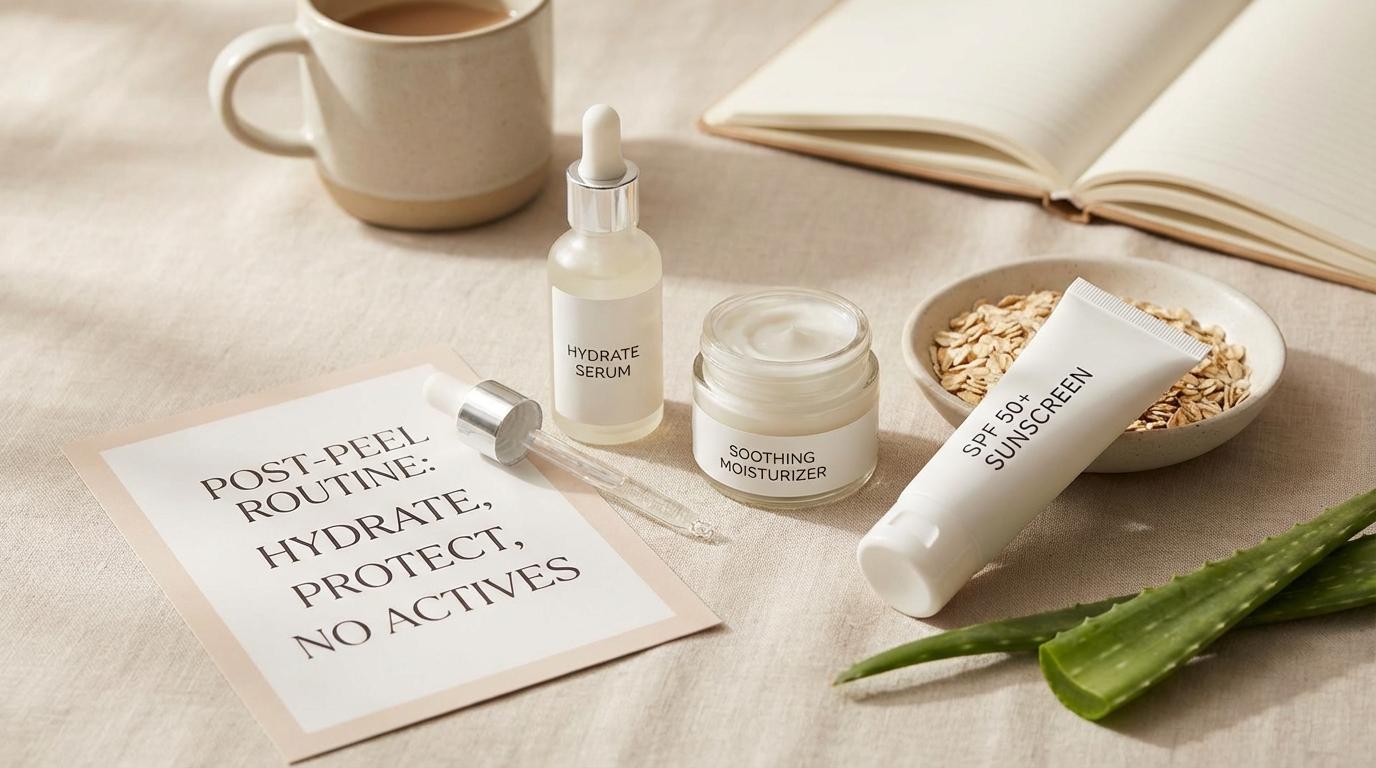
You just did a chemical peel. Good for you. Now comes the part where a lot of people undo all that work by doing exactly the wrong things.
Here is the deal: a peel strips away the top layer of your skin. That fresh layer underneath? It is vulnerable. Treat it like a baby’s skin for the next few days, and you will get the results you paid for. Treat it like regular skin, and you will probably end up with irritation, hyperpigmentation, or worse.
What to Avoid Immediately After Your Peel
Put down the actives. All of them.
That means no retinol, no vitamin C serums, no AHAs, no BHAs, no benzoyl peroxide. Nothing that exfoliates, brightens, or treats. Your skin just went through a controlled injury. It does not need more stress.
This includes physical exfoliation too. No scrubs, no cleansing brushes, no washcloths rubbed across your face. For at least 5-7 days after a light peel, and potentially 2+ weeks after a medium peel, your job is to be boring.
Also skip:
- Hot water on your face
- Steam rooms and saunas
- Intense workouts that make you sweat heavily (for the first 24-48 hours)
- Touching your face more than necessary
- Picking at any peeling skin
That last one is important. When your skin starts to peel, let it fall off naturally. Pulling at it risks scarring and uneven healing.
Hydration Is Everything
Your post-peel skin is essentially a moisture desert. The barrier is compromised, which means water escapes faster than usual.
Here is your hydration strategy:
Step 1: Use a gentle, fragrance-free cleanser. Something like CeraVe Hydrating Cleanser or La Roche-Posay Toleriane works well. No foaming cleansers right now.
Step 2: Apply a hydrating serum while your skin is still damp. Look for hyaluronic acid or glycerin as the main ingredients. Skip serums with niacinamide for the first few days if your skin is sensitive.
Step 3: Layer on a thick, occlusive moisturizer. Ceramides are your friend here. The point is to seal in that hydration and support your barrier repair.
Some people swear by applying healing ointments like Aquaphor or CeraVe Healing Ointment on top of everything at night. This creates a seal that prevents moisture loss while you sleep. It feels greasy, but it works.
Drink more water than usual too. Hydration from the inside helps.
Sun Sensitivity Timeline: This Is Non-Negotiable
Fresh post-peel skin burns faster and more severely. It is also more prone to hyperpigmentation if you expose it to UV rays.
Here is the timeline you need to follow:
Days 1-7: Stay out of direct sunlight as much as possible. If you must go outside, wear a hat, seek shade, and apply SPF 50 mineral sunscreen every two hours. Mineral (zinc oxide or titanium dioxide) is gentler than chemical sunscreen on healing skin.
Days 7-14: You can gradually return to normal sun exposure, but keep up the SPF 50 sunscreen habit. Reapply if you are outside for extended periods.
Weeks 2-4: Your skin is still more sensitive than baseline. Continue being diligent with sunscreen, even on cloudy days.
After a deeper peel, extend these timelines. Some dermatologists recommend 6-8 weeks of strict sun protection after medium-depth peels.
This is not optional. UV damage after a peel can cause permanent dark spots that are harder to fix than whatever you were treating with the peel in the first place.
When Can You Go Back to Your Normal Routine?
It depends on the peel strength and how your skin is healing.
Light peels (lactic acid, low-percentage glycolic): Wait 5-7 days before reintroducing gentle actives. Start with every other day and watch how your skin responds.
Medium peels (TCA, Jessner’s): Wait at least 2 weeks. Some people need 3-4 weeks before their skin can handle actives again.
Deep peels: Follow your dermatologist’s specific instructions. These require medical supervision during recovery.
Signs your skin is ready:
- No more visible peeling or flaking
- Skin feels comfortable, not tight or irritated
- Redness has mostly resolved
- Your skin looks and feels like normal skin again
When you reintroduce actives, do it slowly. One product at a time, starting with the gentlest options. If you were using retinol before, start at a lower percentage than your normal dose and build back up.
The Bottom Line
A chemical peel is a commitment. The treatment itself is the easy part. The real work is the aftercare.
Keep it simple, keep it gentle, and protect yourself from the sun like your results depend on it, because they do.
Do this right, and in a few weeks you will see the fresh, smooth skin you were hoping for. Rush it, and you will probably be dealing with damage control instead.
Your call.