
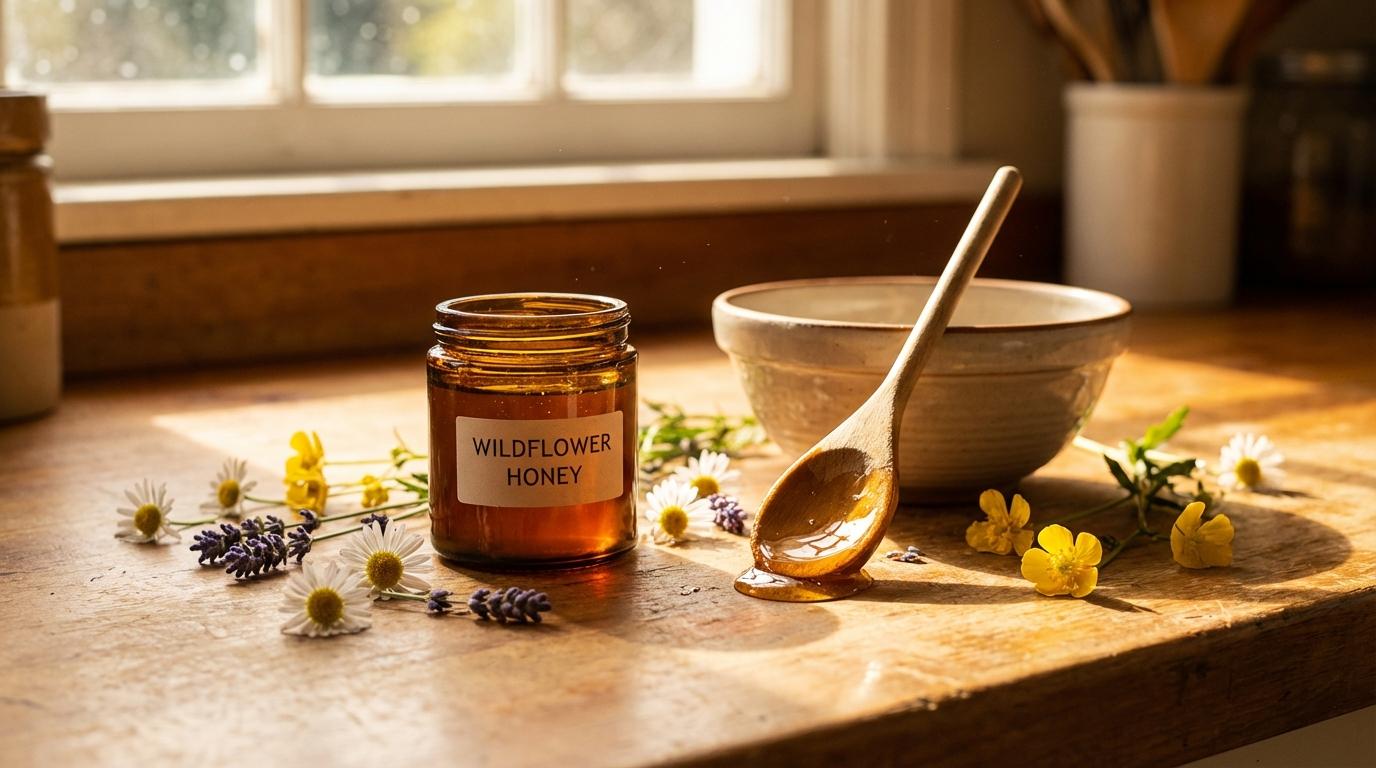
Honey works like nature’s own multitasking serum, doing about five different jobs at once while costing less than a coffee. I stumbled onto raw honey masks during my freshman year when my skin was freaking out from stress and I had exactly $12 in my bank account. Turns out, that sticky golden stuff my roommate used for tea was actually one of the most legit skincare ingredients out there.
Before you start slathering your breakfast condiment all over your face, though, there’s some stuff worth knowing. Not all honey is created equal, and the difference between a drugstore squeeze bear and what dermatologists actually recommend is pretty significant.
What Makes Honey Actually Work on Skin
Honey has two main things going for it: it’s antibacterial and it’s a humectant. The antibacterial properties come from a few different sources. Honey is naturally acidic with a pH around 3.5 to 4, which creates an environment where bacteria struggle to survive. It also produces small amounts of hydrogen peroxide when it comes into contact with your skin’s moisture. According to research published in the Journal of Cosmetic Dermatology, these properties make honey genuinely useful for acne-prone skin.
The humectant part is where honey gets really interesting for those of us dealing with dehydrated skin on a budget. Humectants pull moisture from the air and hold it against your skin. Honey does this naturally because of its sugar content, so when you apply it, you’re essentially creating a moisture-attracting layer. It’s similar to what glycerin or hyaluronic acid does in your serums, just in a much stickier package.
There’s also the wound-healing angle. Multiple studies have shown that honey can speed up skin healing and reduce inflammation. This is why you’ll sometimes see it recommended for post-acne marks or irritated skin. It’s not going to perform miracles, but it does create a protective, moisturizing environment where your skin can do its repair thing.
The Manuka Difference
You’ve probably seen Manuka honey mentioned in skincare and wondered if it’s worth the insane price tag. Manuka comes from bees that pollinate the Manuka bush in New Zealand, and it has something regular honey doesn’t: methylglyoxal (MGO). This compound gives Manuka significantly stronger antibacterial properties than your average clover honey.
The MGO rating matters. Manuka honey is graded by its MGO content, with higher numbers indicating more potent antibacterial activity. For skincare, most dermatologists suggest looking for at least MGO 100+, though MGO 250+ or higher is often recommended for actively treating acne or problem skin. The American Academy of Dermatology has acknowledged honey’s potential benefits, particularly for its antibacterial and wound-healing properties.
Is Manuka worth it? That depends on what you’re trying to do. For general hydration and a nice weekly mask, regular raw honey works fine. If you’re specifically targeting bacterial acne or want maximum antibacterial benefits, Manuka might be worth the splurge. A small jar lasts forever since you only need a thin layer for masks.
Raw vs. Processed: Actually Matters
This is where a lot of people mess up. That honey bear from the grocery store has usually been heated and filtered, which destroys a lot of the enzymes and beneficial compounds. You want raw, unfiltered honey for skincare. It should look cloudy and might have some crystallization, that’s normal and actually indicates it hasn’t been over-processed.
When I first started using honey masks, I grabbed whatever was cheapest and wondered why it felt like I was just making myself sticky for no reason. Switching to raw honey from a local farmers market made a noticeable difference. The texture was different, my skin felt more hydrated after, and I actually saw some improvement in my breakouts.
Look for labels that say “raw” or “unpasteurized.” Local honey is often a good bet because small producers are less likely to over-process. If you’re serious about getting Manuka, buy from reputable sources because there’s a lot of fake Manuka on the market.
DIY Honey Masks vs. Formulated Products
This is the real question for budget-conscious skincare: should you just use straight honey, or invest in products that contain it?
DIY honey masks are dead simple. Apply a thin layer of raw honey to clean, damp skin, wait 15 to 20 minutes, rinse off. That’s it. You can add things to it if you want, like a bit of cinnamon for extra antibacterial action (patch test first, cinnamon can be irritating) or some oatmeal for extra soothing. The main downside is the mess and the time commitment.
Formulated products with honey have some advantages. They’re more convenient, less sticky, and often combine honey with other beneficial ingredients in a way that’s easier to use daily. You’ll find honey in cleansers, serums, and masks from brands at every price point. The downside is that honey is sometimes included at tiny percentages just for marketing, so check the ingredient list to see where honey falls. If it’s near the bottom, you’re not getting much actual honey benefit.
My take: use raw honey as a weekly mask (it’s cheap and effective), but don’t stress about finding honey in every product. If your skin responds well to it, maybe pick up a honey-based cleanser or mask for convenience. But you don’t need a full honey routine to get the benefits.
Who Should Skip the Honey
Honey is generally gentle, but it’s not for everyone. If you’re allergic to bees or pollen, patch test very carefully or skip it entirely. Some people with sensitive skin find honey irritating, especially if they’re using it too often or leaving it on too long.
Also, honey is sticky. Really sticky. If you have a lot of facial hair or just don’t love the texture of things on your face, you might find the DIY mask experience unpleasant. No judgment if you’d rather just buy a formulated product.
For building your overall routine without spending too much, check out how to build a complete routine under $30. Honey masks fit nicely into a budget routine as a weekly treat.
How to Actually Use Honey for Skincare
If you want to try honey masks, here’s what actually works:
- Start with clean, slightly damp skin. The moisture helps the honey spread and activates its humectant properties.
- Apply a thin, even layer. You don’t need to glob it on. A thin layer works just as well and is easier to rinse.
- Leave it on for 15 to 20 minutes. You can do 30 if you want, but you don’t need to.
- Rinse with lukewarm water. It might take a minute to get all the stickiness off, that’s normal.
- Follow with your regular routine. Your skin might feel moisturized enough to skip heavy creams, but do whatever feels right.
Once or twice a week is plenty for most people. You don’t need to do this daily to see benefits.
Combining Honey with Other Ingredients
Honey plays well with a lot of stuff. Some combinations that actually work:
Honey and oatmeal: Soothing and great for irritated or sensitive skin. Grind oatmeal fine, mix with honey, apply as a gentle mask.
Honey and yogurt: The lactic acid in yogurt adds gentle exfoliation. Good for dull skin, but don’t overdo the yogurt if you’re acne-prone.
Honey and turmeric: Turmeric is anti-inflammatory, but it will temporarily stain your skin yellow. Use sparingly and rinse well.
Skip mixing honey with harsh exfoliants or strong actives. If you’re using acids or retinoids in your routine, keep the honey mask on a different day or use it as a soothing step after your actives have absorbed.
Speaking of budget-friendly options, there are actually some solid finds at your grocery store skincare aisle that pair well with DIY honey treatments.
Worth the Stickiness?
For a kitchen-cabinet ingredient that costs practically nothing, honey punches above its weight. It’s legitimately antibacterial, genuinely hydrating, and backed by actual research for skin benefits. The fact that you can grab a jar of raw honey for under $10 and have months worth of face masks makes it one of the most cost-effective skincare ingredients around.
Will it replace your entire skincare routine? No. Should it be the star of every product you own? Also no. But as a weekly mask or occasional spot treatment, honey is one of those rare things that’s actually as good as the internet says it is. And when your skincare budget is tight, that kind of effective, affordable option is worth knowing about.
Just maybe put on an old shirt before you start slathering it on. The drips are inevitable.