
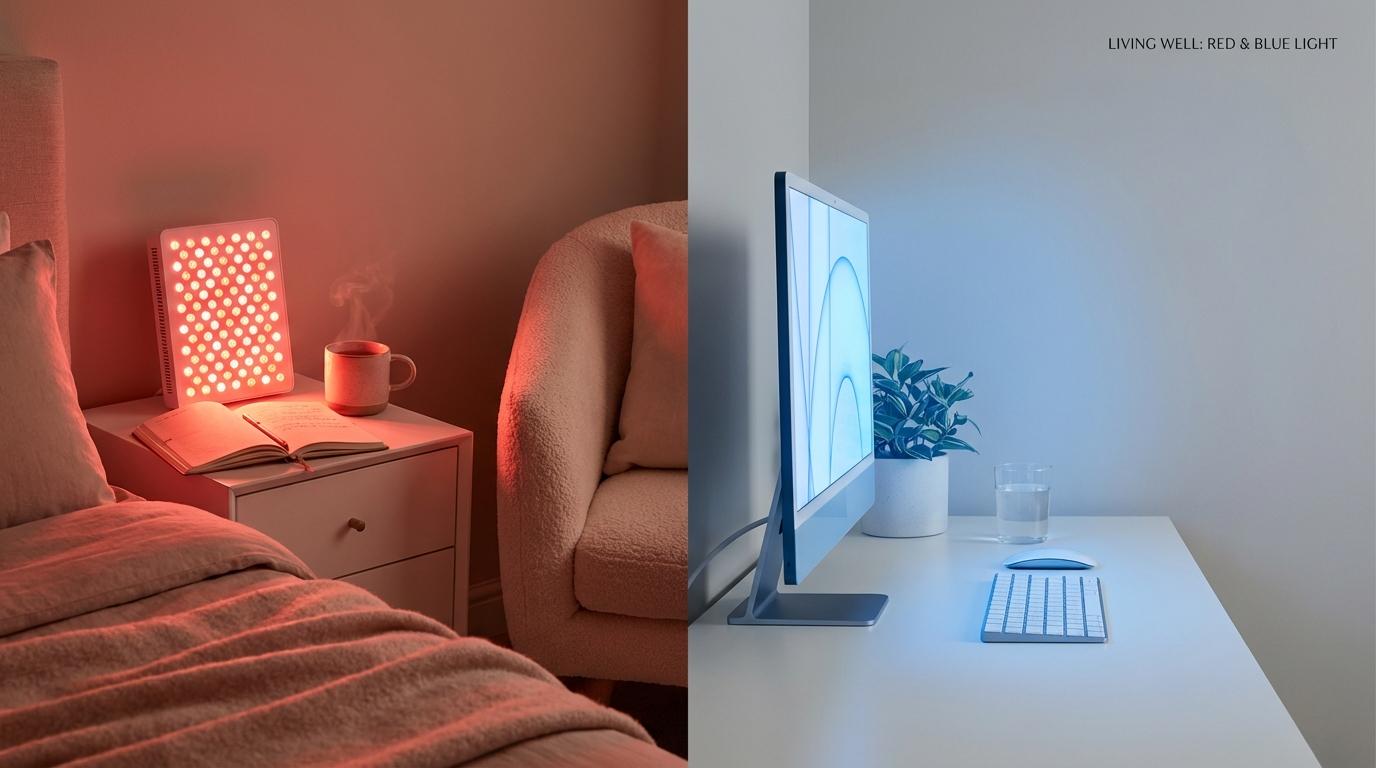
More people are reaching for LED light therapy devices as part of their skincare routines, drawn by the promise of treating acne without harsh chemicals or drying side effects. The technology itself is well established in dermatology clinics, but the conversation around home devices tends to blur the line between what red light and blue light actually do. They work through entirely different mechanisms, target different aspects of acne, and knowing which one (or both) to use makes the difference between seeing results and wasting your time.
How Blue Light Targets Acne
Blue light therapy operates within the 405 to 420 nanometer wavelength range. At this frequency, the light is absorbed by porphyrins, which are naturally occurring compounds produced by Cutibacterium acnes (the primary bacterium involved in inflammatory acne). When porphyrins absorb blue light, they generate reactive oxygen species that destroy the bacterial cell from the inside.
This is a genuinely elegant mechanism. You are not applying anything to the skin. You are not disrupting the microbiome broadly. You are activating a self-destruct switch that exists within acne-causing bacteria because of their own metabolic byproducts.
Clinical studies have shown that blue light therapy can reduce inflammatory acne lesions by 60 to 70 percent over the course of several weeks of consistent use. The treatment works best on mild to moderate inflammatory acne, the red, swollen papules and pustules that are driven primarily by bacterial activity.
Where blue light falls short is with non-inflammatory acne. Blackheads and closed comedones are not caused by bacterial overgrowth. They are structural issues, pores clogged with dead skin and sebum, and blue light does not address that mechanism.
How Red Light Works Differently
Red light therapy uses wavelengths between 620 and 700 nanometers, with some devices extending into the near-infrared range (700 to 850 nm). Rather than killing bacteria, red light penetrates deeper into the skin and works on the inflammatory and healing processes occurring in the dermis.
At the cellular level, red light is absorbed by cytochrome c oxidase, an enzyme in the mitochondria. This absorption enhances cellular energy production (ATP synthesis), which accelerates healing, reduces inflammation, and supports collagen production. For acne specifically, the anti-inflammatory effect is the primary benefit. Red light calms the redness, swelling, and tenderness associated with active breakouts and post-inflammatory marks.
Red light also promotes wound healing, which is particularly useful for acne scars and post-breakout hyperpigmentation. If you are dealing with the aftermath of acne, marks that linger long after the pimple itself has resolved, red light therapy addresses that recovery phase.
Comparing the Two Side by Side
- Blue light: Kills acne-causing bacteria. Best for active inflammatory breakouts. Does not penetrate deeply. No effect on scarring or redness after the bacteria are gone.
- Red light: Reduces inflammation and accelerates healing. Best for calming active inflammation and improving post-acne marks. Does not directly reduce bacterial populations.
Neither one is universally “better.” They complement each other by targeting different stages and mechanisms of the acne cycle.
Using Both Together
Many dermatology clinics use combination blue and red light therapy for exactly this reason. Blue light handles the bacterial component while red light manages the inflammatory response. Some home devices, like the Omnilux and CurrentBody LED masks, offer both wavelengths in a single treatment session.
A practical at-home protocol might look like this:
- Blue light sessions three to four times per week, targeting active breakout zones. Most home devices recommend 10 to 20 minutes per session.
- Red light sessions three to five times per week, applied broadly to the face. Sessions typically run 10 to 20 minutes.
- If your device offers both, alternating or combining in one session is fine. There is no negative interaction between the two wavelengths.
Consistency matters more than intensity with LED therapy. Using a device for 15 minutes five times a week will outperform using it for an hour once a week. The cumulative effect of regular, repeated exposure is what produces visible results.
What to Expect Realistically
LED therapy is not a replacement for topical acne treatments in moderate to severe cases. It works best as a complement to a solid routine. If you are already using an exfoliating acid like mandelic acid or a retinoid, adding LED therapy can enhance your results. It should not be the only tool in your approach if your acne is persistent.
Results from LED therapy are gradual. Most clinical trials show meaningful improvement after four to eight weeks of consistent use. Some people notice reduced redness and fewer new breakouts within the first two weeks, but the full anti-inflammatory and healing benefits take longer to build.
Home devices are generally lower-powered than clinical devices, which means results may take longer to appear. That does not mean they are ineffective. It means patience is part of the process.
Choosing a Home Device
The market for at-home LED devices has expanded significantly, and quality varies widely. When evaluating a device, the key specifications to look for are wavelength (should specify the exact nanometer range, not just “blue” or “red”), irradiance (measured in mW/cm2, higher means more energy delivery per session), and FDA clearance.
Paula’s Choice has reviewed the evidence behind LED therapy and provides a useful framework for evaluating device claims. The short version is to be skeptical of devices that make broad promises without specifying their technical parameters.
Price ranges widely, from $30 handheld wands to $300+ full-face masks. The more expensive full-face devices generally deliver more uniform coverage and higher irradiance, which translates to more consistent results. Budget handheld devices can still be effective for spot-treating specific breakout areas.
Safety and Limitations
LED therapy at the wavelengths and intensities used in skincare devices is considered very safe. There is no UV radiation involved, no thermal damage at standard treatment times, and no known long-term side effects from the visible light spectrum used.
The main limitation is that LED therapy does not address the root causes of acne: hormonal fluctuations, genetic predisposition to excess sebum production, or stress-related triggers. It manages symptoms, particularly bacterial load and inflammation, effectively and without chemicals, but it works best as one component of a broader approach.
People taking photosensitizing medications (certain antibiotics, retinoids taken orally, some antidepressants) should check with their dermatologist before starting LED therapy, as these medications can alter the skin’s response to light exposure.
Where Light Therapy Fits in Your Routine
If you decide to incorporate LED therapy, the standard recommendation is to use it on clean, bare skin before applying serums or moisturizers. Products on the skin’s surface can scatter or absorb light before it reaches the target tissues, reducing effectiveness. After your LED session, proceed with your regular routine.
For anyone dealing with both active breakouts and lingering marks from previous ones, the combination of blue and red light offers a genuinely useful two-pronged approach. Blue light works on what is happening now. Red light works on what already happened and helps prevent the inflammatory damage from getting worse. Together, they cover more of the acne cycle than either wavelength alone, and they do it without adding another product to your shelf.