
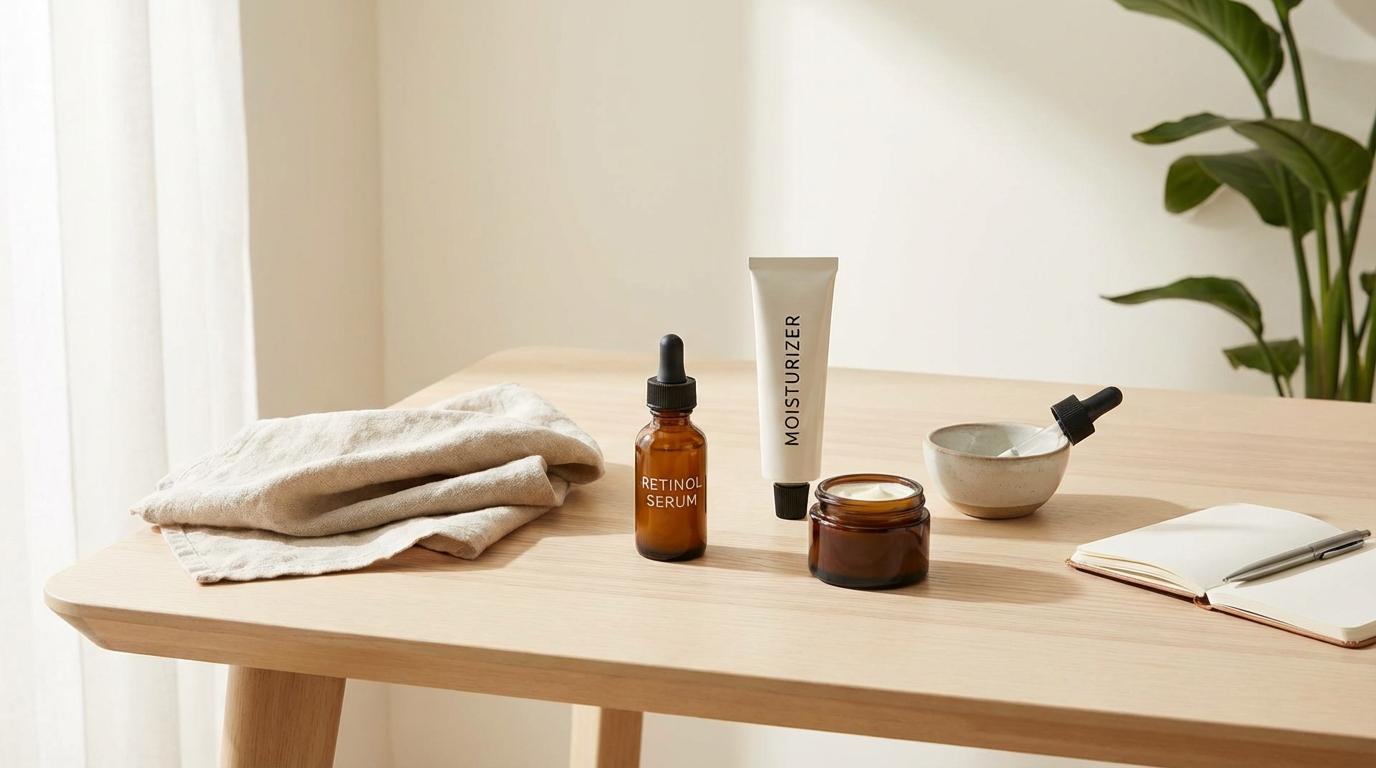
Retinol has earned its reputation as one of the most effective skincare ingredients for addressing multiple concerns, from fine lines to uneven texture to acne. But here is the thing: how you introduce retinol matters just as much as using it in the first place. Rush in too fast, and you will end up with irritated, flaky skin that makes you want to throw the whole bottle away.
I want to break down exactly how retinol works, why timing matters, and how to build it into your routine without the dreaded retinol uglies. Because understanding the science behind an ingredient helps you use it smarter.
Understanding What Retinol Actually Does
Retinol is a form of vitamin A that converts to retinoic acid in your skin. This conversion process is why retinol takes longer to show results compared to prescription retinoids, but it is also why it tends to be gentler for most people.
Once converted, retinoic acid binds to specific receptors in your skin cells and essentially tells them to behave like younger cells. This means faster cell turnover, increased collagen production, and better regulation of oil production. The catch? Your skin needs time to adjust to this increased activity.
Research published in the Journal of Investigative Dermatology has consistently shown that retinoids improve signs of photoaging, but the studies also emphasize that consistent, long-term use delivers the best results. We are talking months, not weeks.
The Start Low and Slow Approach
Your skin has never experienced retinol before (or maybe it has been a while), so jumping in with a high concentration every night is asking for trouble. The retinization period, that adjustment phase where your skin learns to tolerate retinol, typically lasts 4 to 6 weeks.
Here is a realistic starting schedule:
Week 1-2: Apply retinol once, maybe twice. Yes, really. Start with one application and see how your skin responds over the next few days before adding another.
Week 3-4: If no significant irritation, move to twice weekly applications.
Week 5-8: Gradually increase to every other night.
Week 9+: If tolerated well, you can move toward nightly use, though some people find every other night works perfectly for them long-term.
Concentration matters too. Start with 0.25% or 0.3% retinol if you have never used it. Products from brands like CeraVe and The Ordinary offer low-concentration options that will not break the bank.
Buffering: Your Secret Weapon Against Irritation
Buffering means applying moisturizer before or mixed with your retinol to dilute its intensity. This is not cheating or making your retinol less effective. It is a legitimate technique dermatologists recommend for sensitive skin.
There are two main buffering methods:
The Sandwich Method: Apply moisturizer, wait a few minutes for it to absorb, apply retinol, then apply another layer of moisturizer on top. This creates a protective barrier on both sides.
The Mix Method: Mix a pea-sized amount of retinol with your moisturizer in your palm before applying. This dilutes the retinol throughout the application.
As your skin builds tolerance, you can drop the buffer. Many people transition to applying retinol on bare skin after moisturizer-only routine becomes too mild. Listen to your skin. If it is happy with buffering, there is no rule that says you need to stop.
Why Night-Only Application Is Not Negotiable
Retinol breaks down when exposed to sunlight. Applying it in the morning means you are wasting product and money while getting minimal benefits. The UV exposure degrades the retinol before it can do its job.
Beyond stability, your skin does most of its repair work at night. Cell turnover naturally increases while you sleep, making nighttime the ideal window for retinol to work alongside your body repair processes.
Your evening routine with retinol should look something like this:
Cleanse thoroughly. Wait until skin is completely dry (wet skin increases penetration and irritation). Apply retinol (with or without buffer depending on tolerance). Follow with a basic moisturizer. That is it.
The next morning, sunscreen becomes absolutely essential. Retinol increases your skin sensitivity to UV rays. The American Academy of Dermatology recommends SPF 30 or higher daily when using any retinoid.
Building Tolerance Over Time
Some peeling and dryness during the first few weeks is normal. Your skin is adjusting. However, persistent redness, burning, or excessive flaking means you need to scale back.
Signs you are overdoing it:
Skin feels tight and uncomfortable throughout the day. Flaking that does not improve with extra moisturizer. Redness that lasts more than a day or two after application. Breakouts in areas where you do not normally break out (this is different from purging, which happens in your usual breakout zones).
If you experience these, skip retinol for a few days. Focus on barrier repair with gentle, hydrating products. Ingredients like ceramides, hyaluronic acid, and niacinamide can help your skin recover. Once your skin calms down, restart at a lower frequency.
True purging, where existing clogged pores come to the surface faster due to increased cell turnover, usually resolves within 6 to 8 weeks. If breakouts persist beyond that, the product might not be right for you.
Ingredients to Avoid Layering With Retinol
Not every active plays nice with retinol. Using too many irritating ingredients together overwhelms your skin barrier.
Skip these on retinol nights: vitamin C (use in the morning instead), AHAs like glycolic acid, BHAs like salicylic acid, and benzoyl peroxide. These can all be part of your routine, just not applied at the same time as retinol.
Safe to layer: hyaluronic acid, niacinamide, peptides, and ceramides. These support hydration and barrier function, which helps your skin tolerate retinol better.
Realistic Expectations
Retinol is effective, but it requires patience. Most people notice texture improvements around the 8 to 12 week mark. Fine lines and hyperpigmentation improvements take longer, often 3 to 6 months of consistent use.
The research backs this up. A study in the Archives of Dermatology found that significant improvement in fine wrinkles required at least 12 weeks of retinoid use, with continued improvement over longer periods.
Consistency beats intensity. Using a lower concentration retinol regularly will give you better results than using a high-strength formula sporadically because your skin keeps freaking out.
Retinol is not magic, and it is not right for everyone. Pregnant and breastfeeding women should avoid it entirely. People with very sensitive skin conditions like rosacea might need to stick with gentler alternatives. But for most people willing to put in the slow, steady effort, retinol delivers on its promises.
Start small. Be patient. Pay attention to what your skin tells you. That is the real formula for making retinol work.